
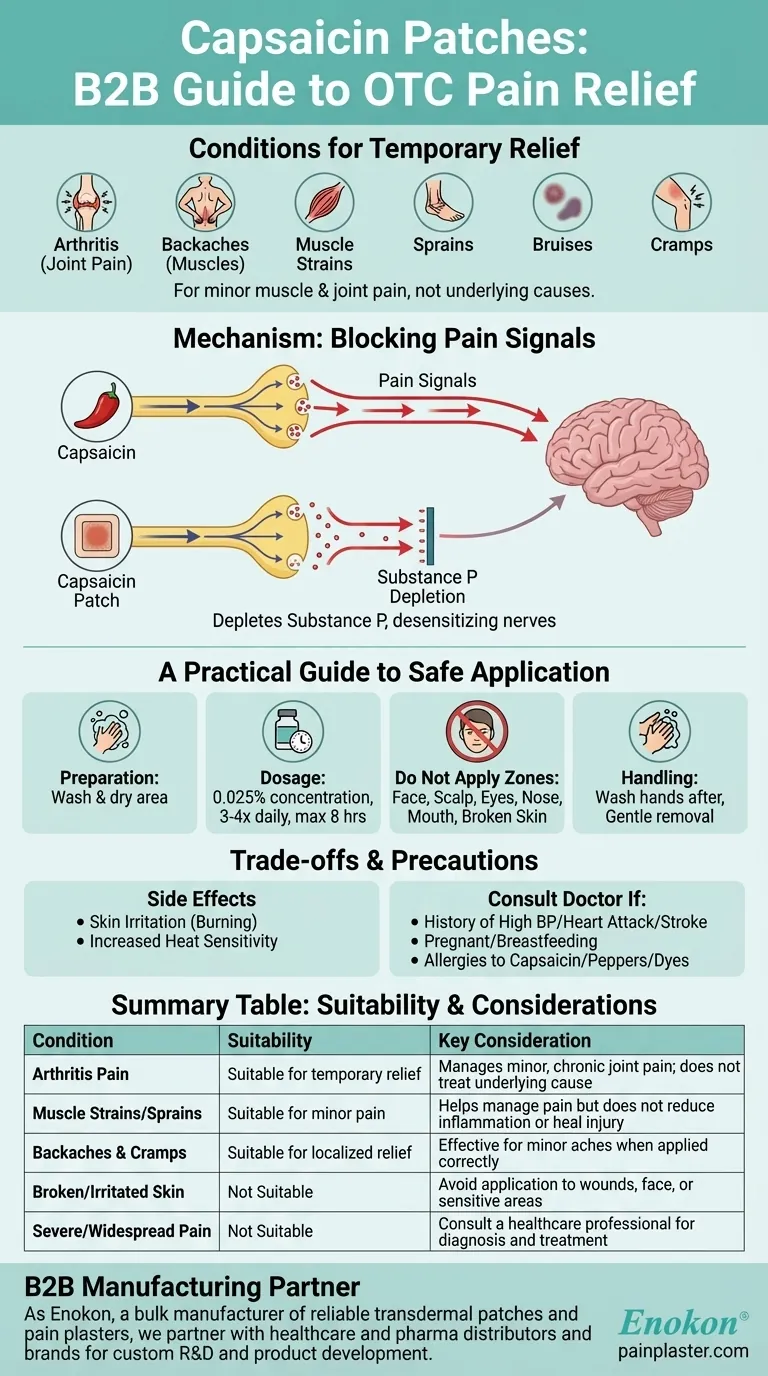
To be clear, over-the-counter (OTC) capsaicin patches are designed to provide temporary relief from minor muscle and joint pain. They are most commonly used for conditions like arthritis, backaches, muscle strains, sprains, bruises, and cramps.
Capsaicin patches offer targeted relief for minor aches by depleting the chemical that sends pain signals to your brain. However, their effectiveness hinges on correct application and understanding that they treat the symptom—pain—not the underlying cause of the condition.

How Capsaicin Targets Localized Pain
To use capsaicin patches effectively, it's helpful to understand their mechanism. They don't just mask pain; they actively interfere with the signals being sent by your nerves.
The Depletion of Pain Signals
The active ingredient, capsaicin, is the same compound that makes chili peppers hot. When applied to the skin, it initially causes a warming or burning sensation by activating nerve cells.
With repeated application, capsaicin depletes a chemical in those nerve cells known as Substance P, which is a key neurotransmitter responsible for sending pain signals to the brain.
A Temporary Numbing Effect
By reducing the amount of Substance P in the local area, the patch effectively desensitizes the nerve endings. This blockage of pain signals results in temporary relief from minor aches.
The effect lasts only as long as Substance P levels remain low, which is why the patches must be reapplied according to the package directions to maintain relief.
A Practical Guide to Safe Application
Correct use is critical for both effectiveness and safety. Always adhere to the specific instructions provided on the product packaging.
Preparation and Dosage
Most OTC capsaicin patches contain a 0.025% concentration of the active ingredient. Before applying, wash your hands and thoroughly clean and dry the affected area.
The standard recommendation is to apply a patch up to 3 or 4 times daily, but you should never wear one for more than 8 hours at a time.
Critical "Do Not Apply" Zones
Never apply capsaicin patches to your face, scalp, eyes, nose, or mouth. It is crucial to avoid applying them to skin that is broken, irritated, or wounded.
Careful Handling and Removal
Wash your hands thoroughly with soap and water after handling a patch. When removing it, do so gently to avoid causing the capsaicin particles to become airborne, which can irritate your eyes and respiratory tract.
Understanding the Trade-offs and Precautions
While generally safe for minor pain, capsaicin patches are not without potential side effects and are not suitable for everyone.
Skin Irritation and Burning
A burning or stinging sensation at the application site is a common and expected side effect, especially during the first few uses. However, if this becomes severe or is accompanied by blistering, remove the patch and consult a professional.
Increased Heat Sensitivity
For a few days after using a patch, the treated skin may become more sensitive to heat. Be cautious with hot showers or baths, avoid direct sun exposure on the area, and note that exercise may make the skin feel hotter.
When You Must Consult a Doctor
Before using these patches, you should speak with your care team if you have a history of high blood pressure, heart attack, or stroke.
You should also seek medical advice if you are pregnant or breastfeeding, or if you have known allergies to capsaicin, hot peppers, dyes, or other medications.
Making the Right Choice for Your Pain
Use this guidance to determine if OTC capsaicin patches are the right tool for your specific goal.
- If your primary focus is managing chronic, minor joint pain from arthritis: Capsaicin patches can be a useful tool for temporary, localized relief when used consistently as directed.
- If your primary focus is treating an acute injury like a muscle strain or sprain: The patches can help manage the immediate minor pain, but they do not reduce inflammation or heal the underlying injury.
- If your pain is severe, widespread, or on broken skin: OTC capsaicin is inappropriate; you must consult a healthcare professional to diagnose the root cause and find a suitable treatment.
Used correctly for the right conditions, capsaicin patches can be an effective part of your strategy for managing localized, minor pain.
Summary Table:
| Condition | Suitability for Capsaicin Patches | Key Consideration |
|---|---|---|
| Arthritis Pain | Suitable for temporary relief | Manages minor, chronic joint pain; does not treat underlying cause |
| Muscle Strains/Sprains | Suitable for minor pain | Helps manage pain but does not reduce inflammation or heal injury |
| Backaches & Cramps | Suitable for localized relief | Effective for minor aches when applied correctly |
| Broken/Irritated Skin | Not Suitable | Avoid application to wounds, face, or sensitive areas |
| Severe/Widespread Pain | Not Suitable | Consult a healthcare professional for diagnosis and treatment |
Looking for a reliable manufacturing partner for your pain relief patch needs?
As Enokon, a bulk manufacturer of reliable transdermal patches and pain plasters, we partner with healthcare and pharma distributors and brands to bring effective OTC solutions to market. Benefit from our technical expertise for custom R&D and product development tailored to your specific requirements.
Contact our experts today to discuss how we can support your product development goals.
Visual Guide
Related Products
- Capsaicin Chili Medicated Pain Relief Patches
- Heat Relief Capsicum Patch for Lower Back Pain Relief
- Menthol Gel Pain Relief Patch
- Icy Hot Menthol Medicine Pain Relief Patch
- Lidocaine Hydrogel Pain Relief Patch for Pain Relief
People Also Ask
- What conditions should be reported to a care team before using capsaicin patches? Ensure Safe Pain Relief
- What conditions can capsaicin creams and patches help relieve? Find Targeted Pain Relief for Nerves & Joints
- What are the uses of nonprescription capsaicin patches? Natural Pain Relief for Muscles & Joints
- What should be avoided while using capsaicin patches? Essential Safety Tips for Effective Pain Relief
- What precautions should be taken when using capsaicin patches? A Guide to Safe and Effective Pain Relief



















