
Transdermal estradiol is primarily prescribed to manage the disruptive symptoms of menopause and to address conditions caused by a lack of natural estrogen. It effectively treats moderate to severe symptoms like hot flashes and vaginal dryness, helps prevent postmenopausal osteoporosis, and serves as a hormone source for individuals with estrogen deficiency.
The core function of transdermal estradiol is hormone replacement. By delivering a steady, controlled dose of estrogen through the skin, it compensates for the body's decreased natural production, thereby alleviating the direct physiological consequences of this hormonal shift.
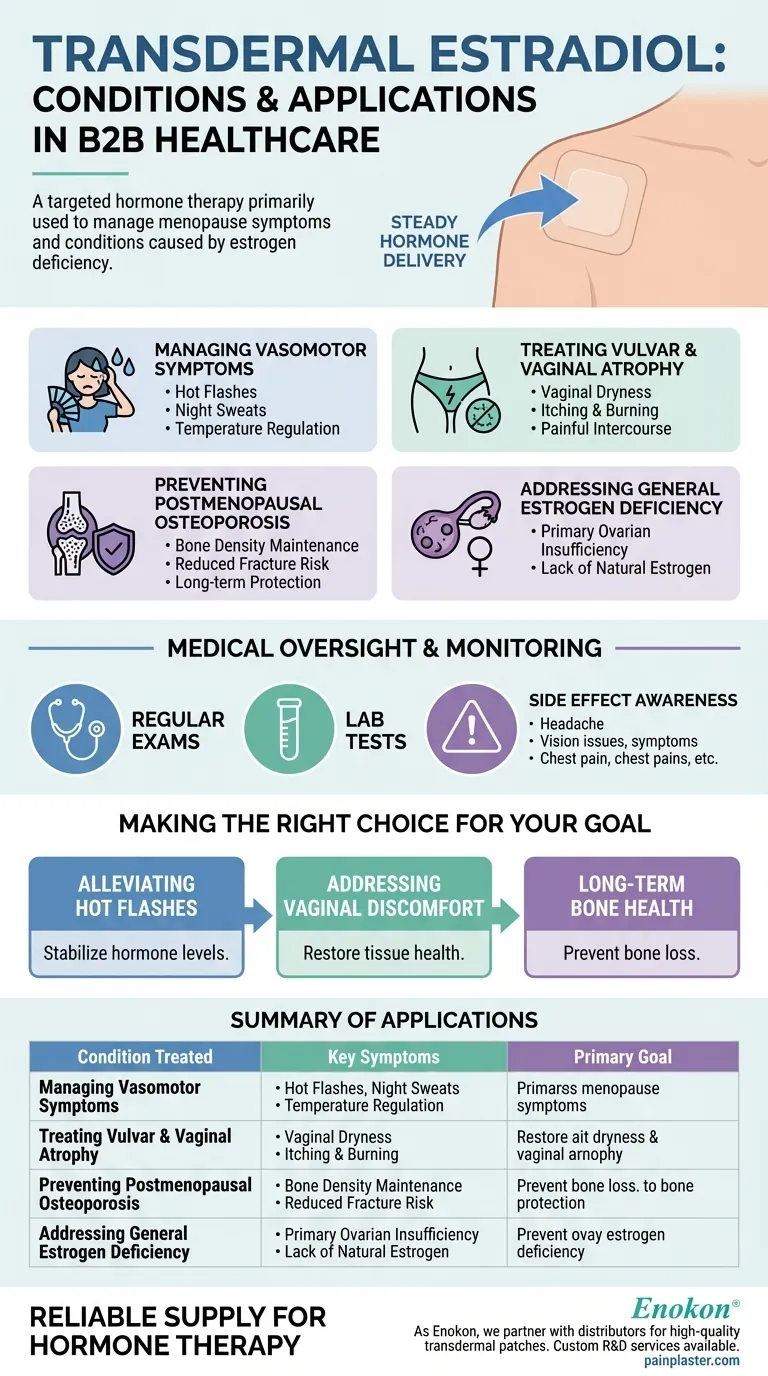
The Core Applications of Transdermal Estradiol
Transdermal estradiol is a targeted therapy. Its use cases are centered around the biological role that estrogen plays in the body.
Managing Vasomotor Symptoms of Menopause
The most common use is to treat moderate to severe vasomotor symptoms, which are caused by fluctuating hormone levels affecting the body's temperature regulation.
This includes relieving disruptive hot flashes and night sweats that are characteristic of the menopausal transition.
Treating Vulvar and Vaginal Atrophy
A decline in estrogen can lead to the thinning and drying of vaginal tissues, a condition known as atrophy.
Transdermal estradiol is prescribed to treat the resulting symptoms, which include vaginal dryness, itching, burning, and pain during sexual intercourse.
Preventing Postmenopausal Osteoporosis
Estrogen is critical for maintaining bone density. After menopause, the sharp drop in estrogen levels significantly increases the risk of osteoporosis.
This medication is used as a preventative measure to help protect against bone loss and reduce the future risk of fractures.
Addressing General Estrogen Deficiency
Beyond menopause, transdermal estradiol is also used to treat conditions where the body does not produce enough of its own estrogen.
This can include primary ovarian insufficiency or other medical situations that result in a significant lack of natural estrogen.
Understanding the Medical Oversight Required
While effective, using any form of hormone therapy requires careful management and an understanding of potential risks.
The Importance of Regular Monitoring
Your physician will require regular check-ups, often including a complete physical and pelvic exam, at least once a year.
Your doctor may also order specific lab tests to monitor your body's response to the medication and ensure the dosage is appropriate for your needs.
Recognizing Potential Serious Side Effects
It is critical to be aware of symptoms that require immediate medical attention.
These include sudden severe headache, vision or speech problems, chest pain, shortness of breath, breast lumps, or severe pain and redness in a leg.
Informing All Healthcare Providers
You must always inform any doctor, specialist, or laboratory personnel that you are using transdermal estradiol.
The presence of supplemental hormones can affect the results of certain medical tests, and this knowledge is essential for accurate diagnosis and care.
Making the Right Choice for Your Goal
Discussing your specific symptoms and long-term health objectives with your healthcare provider is the essential next step.
- If your primary focus is alleviating hot flashes and night sweats: Transdermal estradiol directly addresses these vasomotor symptoms by stabilizing declining hormone levels.
- If your primary focus is addressing vaginal dryness and discomfort: This treatment effectively restores vaginal tissue health, directly combating the symptoms of atrophy.
- If your primary focus is long-term bone health: Transdermal estradiol is a proven preventative strategy for reducing the risk of postmenopausal osteoporosis.
Understanding these applications and the required oversight empowers you to have a productive discussion with your healthcare provider about your specific needs.
Summary Table:
| Condition Treated | Key Symptoms Addressed | Primary Goal of Treatment |
|---|---|---|
| Vasomotor Symptoms | Hot flashes, night sweats | Stabilize hormone levels for symptom relief |
| Vulvar/Vaginal Atrophy | Dryness, itching, pain during intercourse | Restore vaginal tissue health and comfort |
| Postmenopausal Osteoporosis | Bone density loss | Prevent bone loss and reduce fracture risk |
| General Estrogen Deficiency | Symptoms due to low estrogen (e.g., from ovarian insufficiency) | Replace essential hormones the body lacks |
Need a reliable supply of transdermal patches for hormone therapy?
As Enokon, a bulk manufacturer of reliable transdermal patches and pain plasters, we partner with healthcare and pharmaceutical distributors and brands. Our technical expertise ensures high-quality, consistent delivery systems ideal for hormone replacement therapies like estradiol.
Benefit from our custom R&D and development services to create a product that meets your specific market needs.
Contact our experts today to discuss your project and how we can support your product development.
Visual Guide
Related Products
- Menthol Gel Pain Relief Patch
- Far Infrared Heat Pain Relief Patches Transdermal Patches
- Icy Hot Menthol Medicine Pain Relief Patch
- Silicone Scar Sheets Patch Transdermal Drug Patch
- Mugwort Wormwood Pain Relief Patch for Neck Pain
People Also Ask
- How do pain relief patches compare to other pain relief methods? Discover Targeted, Long-Lasting Relief
- How effective are pain relief patches for muscle pain? Target Localized Pain with Transdermal Delivery
- Who should consult a healthcare professional before using pain relief patches? Ensure Your Safety with Medical Advice
- What are some common applications of pain relief patches? Effective Relief for Muscle & Joint Pain
- What are pain relief patches and how do they work? Discover Non-Invasive Pain Management




