
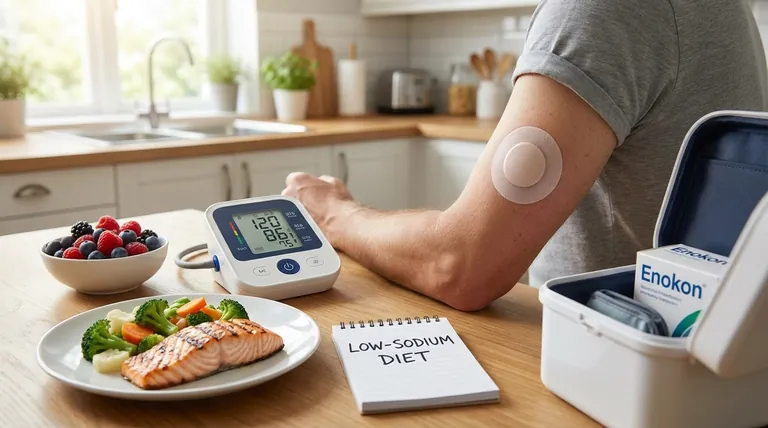
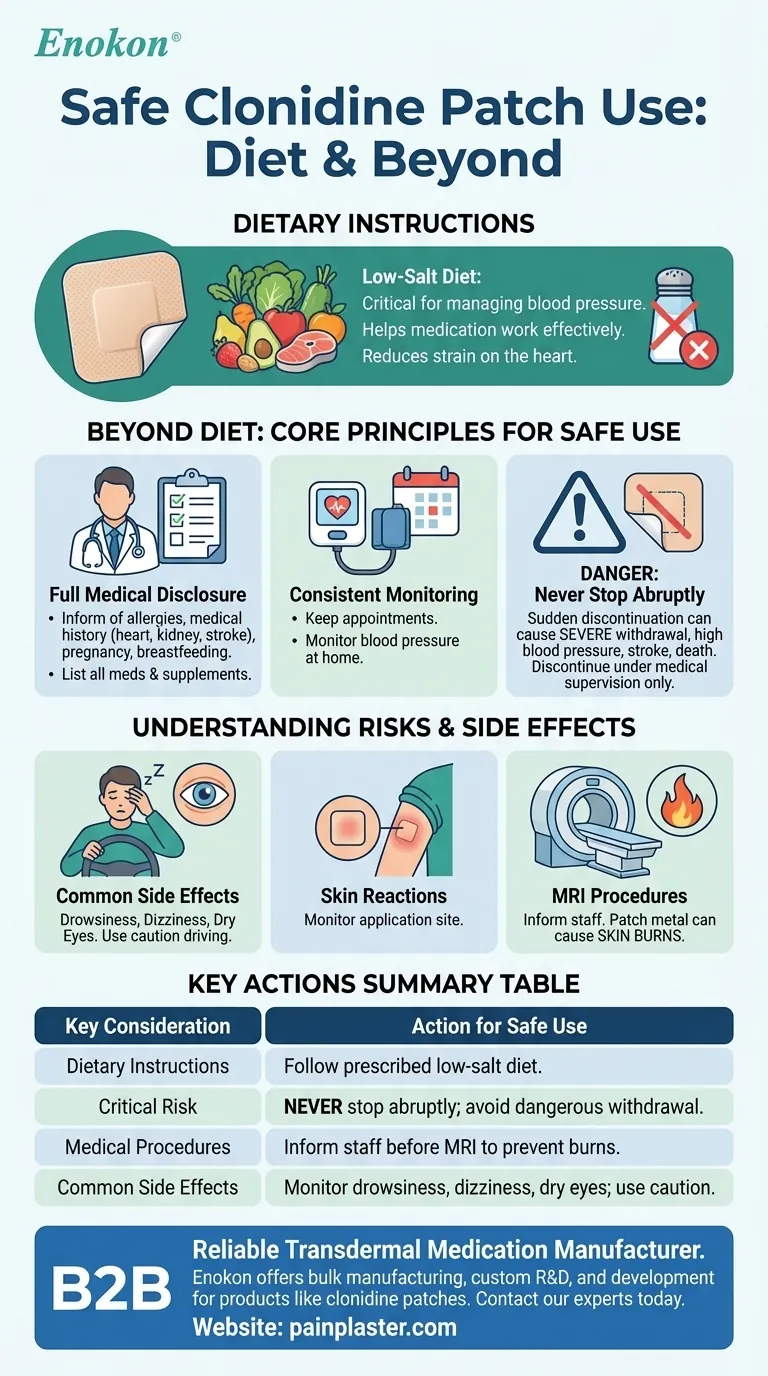
While using the clonidine patch, your physician may prescribe a specific low-salt or low-sodium diet to help manage your blood pressure. It is critical to follow these dietary instructions carefully, as they are a key component of your overall treatment plan designed to make the medication as effective as possible.
The primary dietary instruction is often a low-salt diet, but this is just one piece of a comprehensive safety strategy. Effective treatment with the clonidine patch depends on strict adherence to all medical advice, consistent health monitoring, and a full understanding of the medication's potential risks.
Beyond Diet: Core Principles for Safe Clonidine Use
While diet is important, managing your condition with a clonidine patch requires a broader commitment to safety and communication with your healthcare provider. The medication's effectiveness is tied directly to how it is managed in the context of your overall health.
The Role of a Low-Sodium Diet
A low-salt or low-sodium diet is a standard recommendation for managing hypertension. Excess sodium can cause your body to retain water, which increases blood volume and forces your heart to work harder, raising blood pressure.
Following this diet reduces the overall strain on your cardiovascular system, allowing the clonidine to work more effectively at a stable dose.
Full Medical Disclosure is Non-Negotiable
Before you begin treatment, your doctor must have a complete picture of your health.
Be sure to inform them of any allergies, your full medical history (especially heart disease, kidney disease, or a past stroke), and whether you are pregnant or breastfeeding. You must also provide a complete list of all other medications and supplements you are taking.
Consistent Monitoring and Appointments
The clonidine patch requires active management and supervision.
You must keep all scheduled appointments with your doctor to monitor your blood pressure's response to the treatment. Your doctor may also ask you to check your own blood pressure or pulse at home daily.
Understanding the Risks and Side Effects
To use the clonidine patch safely, you must be fully aware of its potential side effects and the serious risks associated with improper use. This knowledge is crucial for preventing adverse outcomes.
The Danger of Sudden Discontinuation
Never stop using the clonidine patch abruptly or without explicit instructions from your doctor.
Sudden cessation can trigger severe withdrawal symptoms, including nervousness, agitation, headache, and a rapid, dangerous rise in blood pressure. This risk is higher for patients on larger doses.
In rare cases, this has led to severe outcomes like hypertensive encephalopathy, stroke, and even death. Discontinuation must be done gradually over 2-4 days under medical supervision.
Common Side Effects to Monitor
The patch can cause drowsiness or dizziness, which can impair your ability to drive or operate heavy machinery. Use caution until you know how the medication affects you.
It may also cause dry eyes, which can be particularly noticeable for those who wear contact lenses. You should also monitor the application site for any signs of a skin reaction.
A Critical Note on MRI Procedures
You must inform medical staff that you are wearing a clonidine patch before undergoing an MRI. The patch contains metal components that can heat up during the procedure and cause skin burns at the patch site.
Key Actions for Safe Clonidine Patch Use
To ensure the safe and effective use of your clonidine patch, align your actions with your primary health goals.
- If your primary focus is maximizing treatment effectiveness: Strictly adhere to any prescribed low-salt diet and never miss a scheduled doctor's appointment for blood pressure monitoring.
- If your primary focus is preventing dangerous side effects: Never stop using the patch suddenly without medical guidance, and always inform healthcare professionals about it before any procedure, especially an MRI.
- If your primary focus is day-to-day safety: Be cautious about drowsiness when driving, monitor your skin for reactions, and ensure used patches are disposed of where children and pets cannot reach them by folding the sticky sides together.
Your active participation and transparent communication with your healthcare provider are the cornerstones of successful treatment.
Summary Table:
| Key Consideration | Action for Safe Use |
|---|---|
| Dietary Instructions | Follow a prescribed low-salt diet to help manage blood pressure effectively. |
| Critical Risk | Never stop using the patch abruptly to avoid dangerous withdrawal symptoms. |
| Medical Procedures | Inform healthcare staff about the patch before an MRI to prevent skin burns. |
| Common Side Effects | Monitor for drowsiness, dizziness, and dry eyes; use caution when driving. |
Need a reliable supplier for your transdermal medication needs?
As Enokon, a bulk manufacturer of reliable transdermal patches for healthcare and pharmaceutical distributors, we combine manufacturing excellence with deep technical expertise. We can support your brand with custom R&D and development for products like clonidine patches, ensuring quality, safety, and efficacy.
Contact our experts today to discuss how we can partner to bring your transdermal solutions to market.
Visual Guide
Related Products
- Lidocaine Hydrogel Pain Relief Patch for Pain Relief
- Herbal Medicated Anti Diarrhea Patch for Digestive Relief
- Menthol Gel Pain Relief Patch
- Asthma Cough and Pain Relief Patch for Adults and Kids
- Capsaicin Chili Medicated Pain Relief Patches
People Also Ask
- How does the aqueous base in a lidocaine patch contribute to drug delivery? Unlocking Sustained Pain Relief Technology
- What are the advantages of topical anesthetics over invasive Lidocaine infiltration? Discover Safer, Scalable Relief
- Which pain patch is most effective for arthritis? Find the Best Relief for Your Joint Pain
- Will a GP routinely continue prescribing lidocaine patches after the initial period? Understanding Short-Term Pain Relief
- Why are lidocaine patches preferred over oral medications? Targeted Relief & Scale Your Brand with OEM R&D Solutions



















