
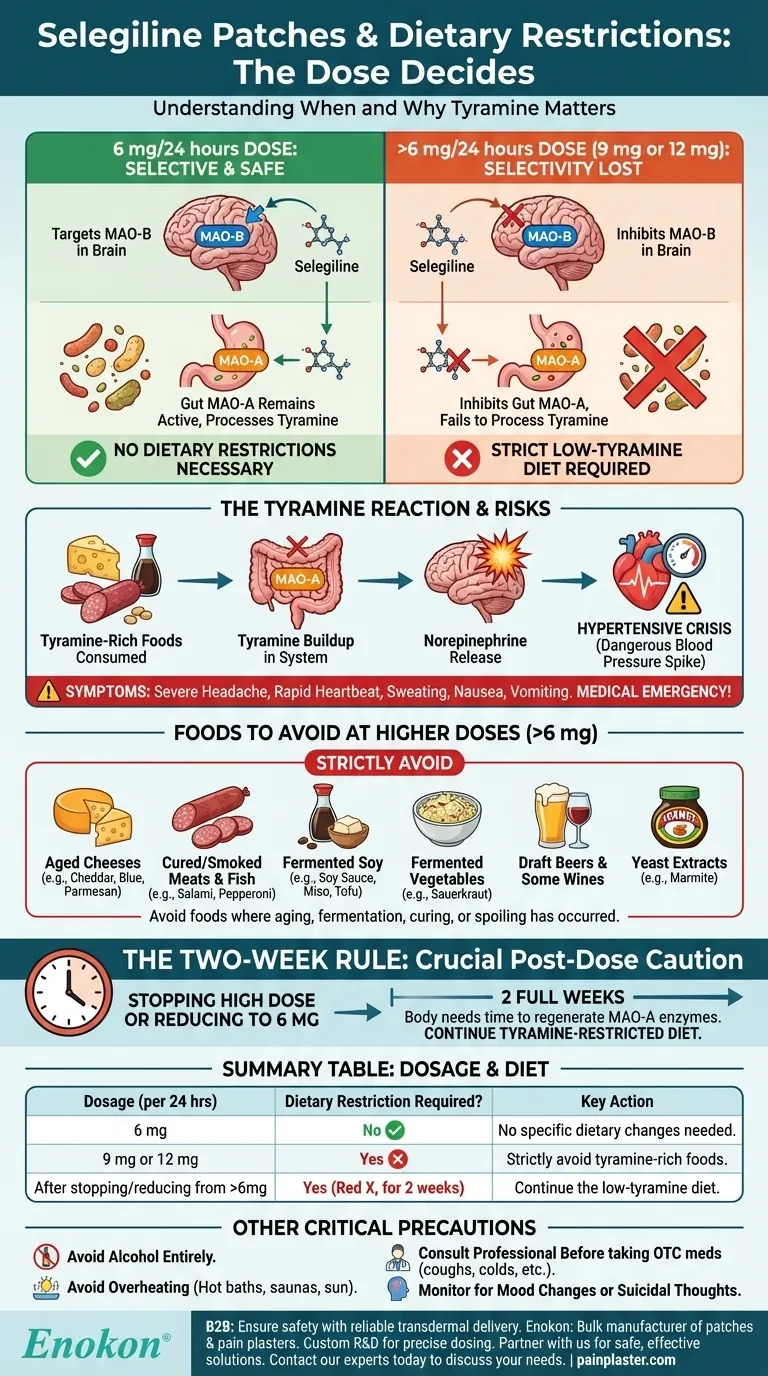
When using selegiline patches, dietary restrictions are only necessary when your dose exceeds 6 mg per 24 hours. At these higher doses (such as 9 mg or 12 mg), you must strictly avoid foods rich in an amino acid called tyramine to prevent a dangerous spike in blood pressure. This restriction must be maintained for two weeks after stopping the medication or reducing the dose back to 6 mg.
The core issue is dose-dependent selectivity. At the standard 6 mg dose, the selegiline patch primarily targets a brain enzyme (MAO-B), leaving the gut enzyme (MAO-A) that processes tyramine from food unaffected. At higher doses, this selectivity is lost, requiring a low-tyramine diet to ensure your safety.

The Mechanism: Why Dose Dictates Your Diet
The selegiline patch is a monoamine oxidase inhibitor (MAOI). Understanding how it works at different doses is critical to using it safely.
The Role of MAO Enzymes
Your body has two primary types of monoamine oxidase enzymes: MAO-A and MAO-B.
MAO-A is found heavily in your gastrointestinal tract, where its main job is to break down tyramine from the foods you eat. Tyramine is a compound that can significantly affect blood pressure.
MAO-B is concentrated in the brain and is the primary target for treating conditions like depression and Parkinson's disease.
Selegiline's Dose-Dependent Action
At the 6 mg per 24 hours dose, the selegiline patch is considered selective. It delivers enough medication through the skin to inhibit MAO-B in the brain without significantly affecting the MAO-A enzymes in your gut.
When the dose is increased to 9 mg or 12 mg per 24 hours, the patch loses this selectivity. It begins to inhibit MAO-A in the gut as well, preventing it from breaking down tyramine effectively.
The Tyramine Reaction
If MAO-A is inhibited and you consume tyramine-rich foods, tyramine can build up in your system. This buildup triggers a massive release of norepinephrine, a powerful hormone that causes a rapid and dangerous increase in blood pressure known as a hypertensive crisis.
Foods to Avoid at Higher Doses
A tyramine-restricted diet is essential when using selegiline patches at doses above 6 mg. This involves avoiding foods where aging, fermentation, curing, or spoiling has occurred.
Key Food Categories
The highest concentrations of tyramine are found in aged, fermented, and cured products. This includes:
- Aged cheeses (e.g., cheddar, blue cheese, Swiss, Parmesan)
- Cured or smoked meats and fish (e.g., salami, pepperoni, aged sausages)
- Fermented soy products (e.g., soy sauce, miso soup, tofu)
- Fermented vegetables (e.g., sauerkraut)
- Draft beers and some wines
- Yeast extracts (e.g., Marmite)
The Two-Week Rule
It is critical to understand that the effects of an MAOI last longer than the medication itself. After you stop a high dose or reduce it to 6 mg, your body needs time to regenerate its MAO-A enzymes.
For this reason, you must continue the tyramine-restricted diet for two full weeks after the dose change to prevent a delayed reaction.
Understanding the Risks and Broader Precautions
Failing to adhere to the diet at higher doses can have severe consequences. You must also be aware of other interactions and side effects.
Symptoms of a Hypertensive Crisis
Be vigilant for the warning signs of a tyramine reaction, which include:
- A sudden, severe headache
- A rapid or irregular heartbeat
- Sweating, nausea, and vomiting
- A sharp rise in blood pressure
This is a medical emergency that requires immediate attention.
Other Critical Precautions
Beyond diet, your healthcare provider will advise you on other safety measures:
- Avoid alcohol entirely.
- Avoid overheating from sources like hot baths, saunas, or prolonged sunbathing, as this can increase medication absorption.
- Consult a professional before taking any over-the-counter medications for coughs, colds, allergies, or weight loss, as many contain compounds that interact dangerously with MAOIs.
- Monitor for mood changes or suicidal thoughts and report them immediately.
Making the Right Choice for Your Safety
Your dose is the only factor that determines the need for dietary changes. Follow these simple rules in close consultation with your healthcare provider.
- If your dose is 6 mg/24 hours: No dietary restrictions are necessary.
- If your dose is 9 mg/24 hours or 12 mg/24 hours: You must strictly follow a low-tyramine diet.
- If you are stopping or reducing a dose from above 6 mg: You must continue the low-tyramine diet for two weeks after the change.
Always maintain open communication with your healthcare provider about your dose, diet, and any other medications you are taking.
Summary Table:
| Dosage (per 24 hours) | Dietary Restriction Required? | Key Action |
|---|---|---|
| 6 mg | No | No specific dietary changes needed. |
| 9 mg or 12 mg | Yes | Strictly avoid tyramine-rich foods. |
| After stopping/reducing from >6mg | Yes (for 2 weeks) | Continue the low-tyramine diet. |
Ensure your patients' safety with reliable transdermal delivery. Adhering to dosing and dietary guidelines is critical for MAOI therapies like selegiline patches. At Enokon, we are a bulk manufacturer of reliable transdermal patches and pain plasters for healthcare and pharma distributors and brands. Our technical expertise supports custom R&D and development to create patches with precise, consistent dosing. Partner with us to enhance your product line with safe, effective transdermal solutions. Contact our experts today to discuss your needs.
Visual Guide
Related Products
- Silicone Scar Sheets Patch Transdermal Drug Patch
- Far Infrared Heat Pain Relief Patches Transdermal Patches
- Menthol Gel Pain Relief Patch
- Icy Hot Menthol Medicine Pain Relief Patch
- Mugwort Wormwood Pain Relief Patch for Neck Pain
People Also Ask
- What role does a silicone-based transdermal delivery system play in Parkinson's? Enhancing Early-Stage Patient Care
- How is the long-term skin tolerance of silicone-based transdermal patches evaluated in clinical settings? R&D and Safety
- Why is a polarizing microscope used to evaluate the long-term stability of transdermal drug patches? Ensure Efficacy.
- What are common adverse effects of transdermal drug delivery? Risks & Prevention Tips
- What are the advantages of transdermal drug patches? Optimize Medication Delivery with Patches











