
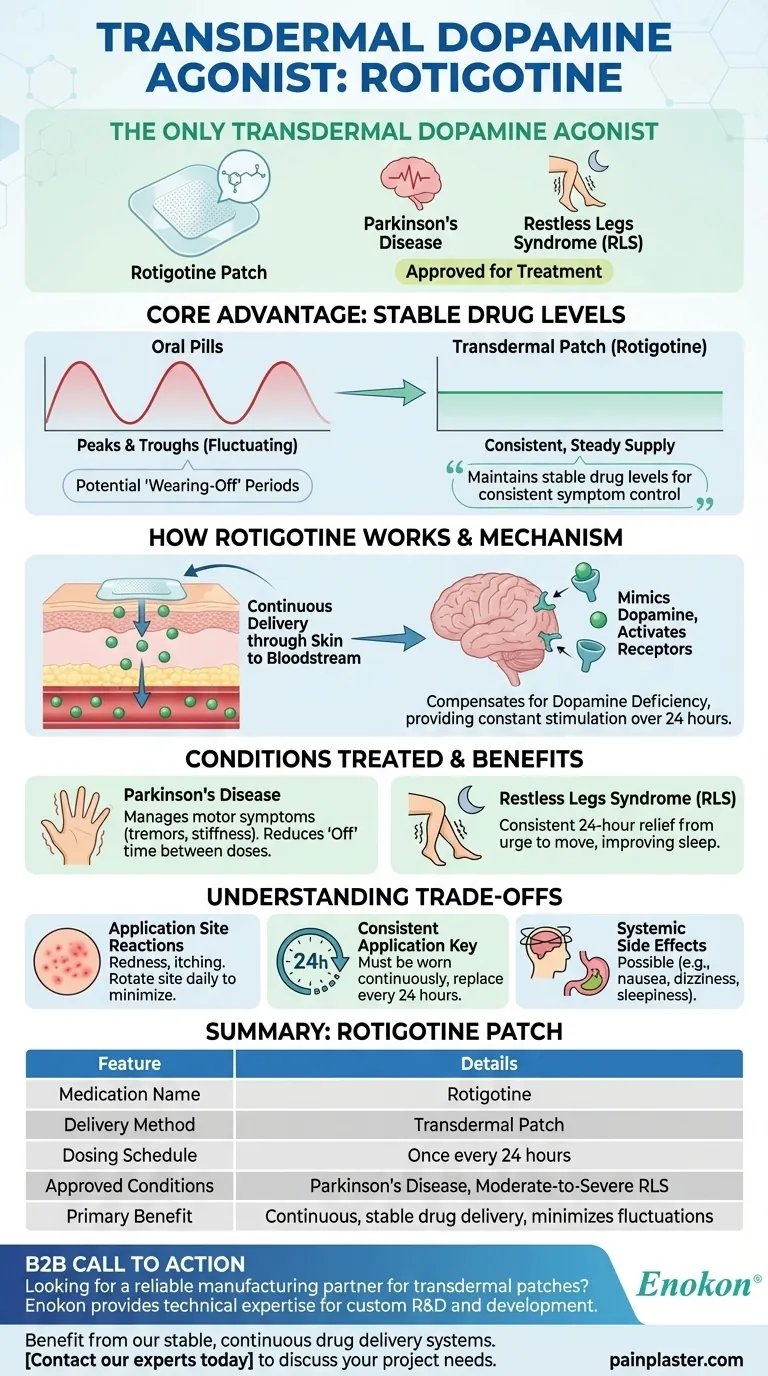
The only dopamine agonist currently available in a transdermal patch is Rotigotine. It is a prescription medication approved for the treatment of Parkinson's disease and moderate-to-severe primary Restless Legs Syndrome (RLS). This delivery system is specifically designed to provide a steady, continuous supply of the medication through the skin over a 24-hour period.
The core advantage of a transdermal dopamine agonist like Rotigotine is its ability to maintain stable drug levels in the bloodstream. This helps avoid the fluctuating "peaks and troughs" common with oral pills, offering more consistent symptom control for neurological conditions.

The Unique Mechanism of a Transdermal Patch
A transdermal patch represents a significant shift from traditional oral medication. Instead of being processed through the digestive system, the active drug is absorbed directly through the skin into the bloodstream.
Why Continuous Delivery Matters
Many neurological conditions, particularly Parkinson's disease, are sensitive to fluctuating levels of medication. Oral dopamine agonists can cause sharp increases in drug concentration after a dose, followed by a decline before the next one is due.
This fluctuation can lead to inconsistent symptom control, contributing to "wearing-off" periods where symptoms return or worsen. A transdermal patch smooths out these variations.
How Rotigotine Works
Rotigotine is a dopamine agonist, meaning it mimics the action of dopamine in the brain. By activating dopamine receptors, it helps compensate for the dopamine deficiency that underlies the symptoms of both Parkinson's and RLS.
The patch ensures this stimulation is constant, providing a more stable and predictable therapeutic effect throughout the day and night.
Conditions Treated with Rotigotine
The Rotigotine patch is specifically indicated for two distinct neurological disorders where dopamine regulation is a key factor.
Managing Parkinson's Disease
For Parkinson's, the patch helps manage motor symptoms like tremors, stiffness, and slowness of movement. Its continuous delivery is particularly valuable for reducing "off" time, the periods when symptoms are poorly controlled between oral medication doses.
Alleviating Restless Legs Syndrome (RLS)
RLS is characterized by an overwhelming urge to move the legs, typically worsening at night. The patch provides consistent, 24-hour relief from these sensations. Clinical studies have shown it maintains its effectiveness in treating RLS for periods of up to two years.
Understanding the Trade-offs
While the transdermal system offers clear benefits, it's important to understand the potential downsides, which are primarily related to the delivery method itself.
Application Site Reactions
The most common side effect of any transdermal patch is skin irritation at the application site. This can include redness, itching, or a rash. Rotating the patch location daily is critical to minimize this risk.
Consistent Application is Key
The patch must be worn continuously and replaced every 24 hours. Forgetting to change the patch can lead to a drop in medication levels and a return of symptoms.
Systemic Side Effects Still Possible
Although the patch bypasses the digestive system, the medication is still absorbed into the body. Therefore, it can still cause the systemic side effects associated with dopamine agonists, such as nausea, dizziness, or sleepiness.
Making the Right Therapeutic Choice
The decision to use a transdermal patch over an oral medication depends on your specific condition, symptoms, and lifestyle.
- If your primary focus is minimizing "wearing-off" periods in Parkinson's: The Rotigotine patch is specifically designed to provide the stable, continuous drug delivery needed to smooth out motor fluctuations.
- If your primary focus is managing disruptive RLS symptoms: The patch offers around-the-clock relief that can be especially beneficial for controlling symptoms that interfere with sleep.
- If you have difficulty swallowing pills or experience gastrointestinal side effects from oral drugs: A transdermal patch completely bypasses the digestive tract, offering a valuable alternative.
Ultimately, understanding the delivery mechanism is as crucial as the medication itself, enabling a more informed discussion about the best treatment strategy for your specific needs.
Summary Table:
| Feature | Details |
|---|---|
| Medication Name | Rotigotine |
| Delivery Method | Transdermal Patch |
| Dosing Schedule | Once every 24 hours |
| Approved Conditions | Parkinson's Disease, Moderate-to-Severe Restless Legs Syndrome (RLS) |
| Primary Benefit | Continuous, stable drug delivery to minimize symptom fluctuations |
Looking for a reliable manufacturing partner for transdermal patches?
As a bulk manufacturer of reliable transdermal patches, Enokon provides pharmaceutical distributors and brands with the technical expertise for custom R&D and development. Benefit from our stable, continuous drug delivery systems to enhance patient outcomes.
Contact our experts today to discuss your project needs.
Visual Guide
Related Products
- Far Infrared Heat Pain Relief Patches Transdermal Patches
- Silicone Scar Sheets Patch Transdermal Drug Patch
- Icy Hot Menthol Medicine Pain Relief Patch
- Menthol Gel Pain Relief Patch
- Mugwort Wormwood Pain Relief Patch for Neck Pain
People Also Ask
- Why is the selection of matrix materials critical when developing customized transdermal patches? Optimize Efficacy
- What are the physical impacts of external heat exposure on the performance and safety of transdermal patches? - Guide
- What are the clinical advantages of local transdermal delivery systems? Unlock Safer, More Effective Pain Relief Solutions
- What role does a skin tolerance scoring system play in the safety evaluation of transdermal patches? Key Safety Metrics
- How does high-purity far-infrared ceramic powder contribute to the efficacy of far-infrared physical therapy patches?








