
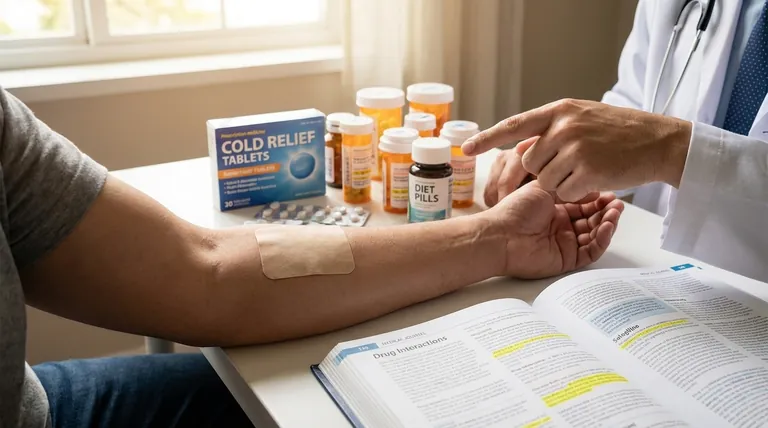
Crucially, selegiline transdermal interacts with a wide range of common medications. These include other antidepressants (especially SSRIs like fluoxetine), certain pain relievers like opioids, stimulants, diet pills, and even over-the-counter cough and cold medicines. It is essential to provide your doctor with a complete list of all medications, supplements, and herbal products you use before starting the selegiline patch.
The core danger of selegiline interactions stems from its mechanism of increasing certain brain chemicals. When combined with other drugs that have similar effects, it can lead to potentially life-threatening conditions like serotonin syndrome or a severe spike in blood pressure.
How Selegiline Interactions Occur
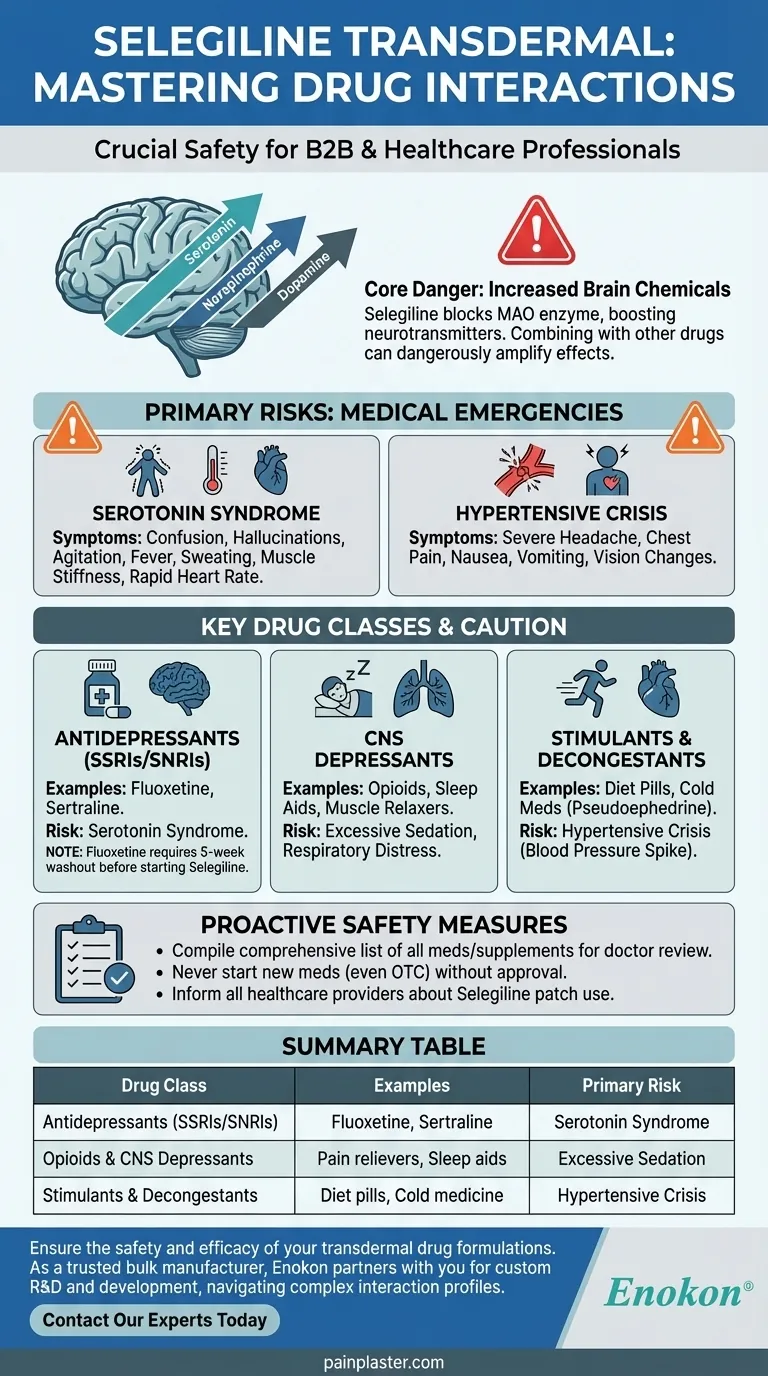
Selegiline works by blocking an enzyme called monoamine oxidase (MAO). This action increases the levels of neurotransmitters like serotonin, norepinephrine, and dopamine in the brain.
Many other medications also affect these same neurotransmitters. When taken with selegiline, the combined effect can become dangerously amplified, overwhelming the body's systems.
Key Drug Classes to Use with Caution
Understanding which categories of drugs pose a risk is the first step toward safe use. Always assume an interaction is possible and consult a professional.
Other Antidepressants
This is one of the most significant interaction risks. Combining selegiline with other antidepressants, particularly SSRIs (like fluoxetine) or SNRIs, can lead to a massive buildup of serotonin.
The reference materials specifically note that fluoxetine must be stopped for five weeks before you can safely begin using selegiline. This long "washout" period highlights the seriousness of the interaction.
Central Nervous System (CNS) Depressants
Drugs that slow your breathing or cause significant drowsiness can have their effects dangerously magnified by selegiline.
This category includes opioid pain medications, sleeping pills, muscle relaxers, and medications for anxiety or seizures. Combining these can lead to excessive sedation and respiratory distress.
Stimulants, Diet Pills, and Decongestants
This group of drugs often works by increasing norepinephrine, which can raise blood pressure. Selegiline also increases norepinephrine, creating a risk for a synergistic and dangerous spike in blood pressure.
Pay close attention to over-the-counter cough and cold medicines, as many contain decongestants (like pseudoephedrine or phenylephrine) that fall into this category.
Understanding the Primary Risks
These interactions are not minor concerns; they can lead to medical emergencies. Knowing the symptoms can help you seek immediate medical care if needed.
Serotonin Syndrome
This condition is caused by excessive serotonin levels. Symptoms can range from mild to life-threatening.
Watch for confusion, hallucinations, agitation, fever, sweating, muscle stiffness, and a rapid heart rate.
Hypertensive Crisis (Severe High Blood Pressure)
This is a sudden and severe increase in blood pressure that can lead to a stroke or heart attack.
Seek immediate help for a severe headache, chest pain, nausea, vomiting, or vision changes.
Making the Right Choice for Your Safety
Proactive and transparent communication with your healthcare team is the single most important factor in using selegiline safely.
- If your primary focus is starting selegiline safely: Compile a comprehensive list of every single medication, vitamin, and supplement you take for your doctor to review before you apply the first patch.
- If your primary focus is managing your health while using selegiline: Never start any new medication—including over-the-counter products—without first getting approval from your doctor or pharmacist.
- If your primary focus is coordinating care between multiple doctors: Ensure every provider is aware that you use the selegiline patch to prevent them from unknowingly prescribing a drug that interacts with it.
Your safety depends on ensuring your healthcare providers have a complete picture of your medication regimen.
Summary Table:
| Drug Class | Examples | Primary Risk |
|---|---|---|
| Antidepressants (SSRIs/SNRIs) | Fluoxetine, Sertraline | Serotonin Syndrome |
| Opioids & CNS Depressants | Pain relievers, Sleep aids | Excessive Sedation |
| Stimulants & Decongestants | Diet pills, Cold medicine | Hypertensive Crisis |
Ensure the safety and efficacy of your transdermal drug formulations.
As a trusted bulk manufacturer of reliable transdermal patches, Enokon partners with healthcare and pharmaceutical distributors and brands. Our technical expertise supports custom R&D and development, helping you navigate complex drug interaction profiles and deliver safe, effective products to the market.
Contact our experts today to discuss your transdermal patch development needs.
Visual Guide
Related Products
- Silicone Scar Sheets Patch Transdermal Drug Patch
- Menthol Gel Pain Relief Patch
- Far Infrared Heat Pain Relief Patches Transdermal Patches
- Icy Hot Menthol Medicine Pain Relief Patch
- Mugwort Wormwood Pain Relief Patch for Neck Pain
People Also Ask
- What role does a silicone-based transdermal delivery system play in Parkinson's? Enhancing Early-Stage Patient Care
- How is the long-term skin tolerance of silicone-based transdermal patches evaluated in clinical settings? R&D and Safety
- Why is a polarizing microscope used to evaluate the long-term stability of transdermal drug patches? Ensure Efficacy.
- What are common adverse effects of transdermal drug delivery? Risks & Prevention Tips
- What are the advantages of transdermal drug patches? Optimize Medication Delivery with Patches




