
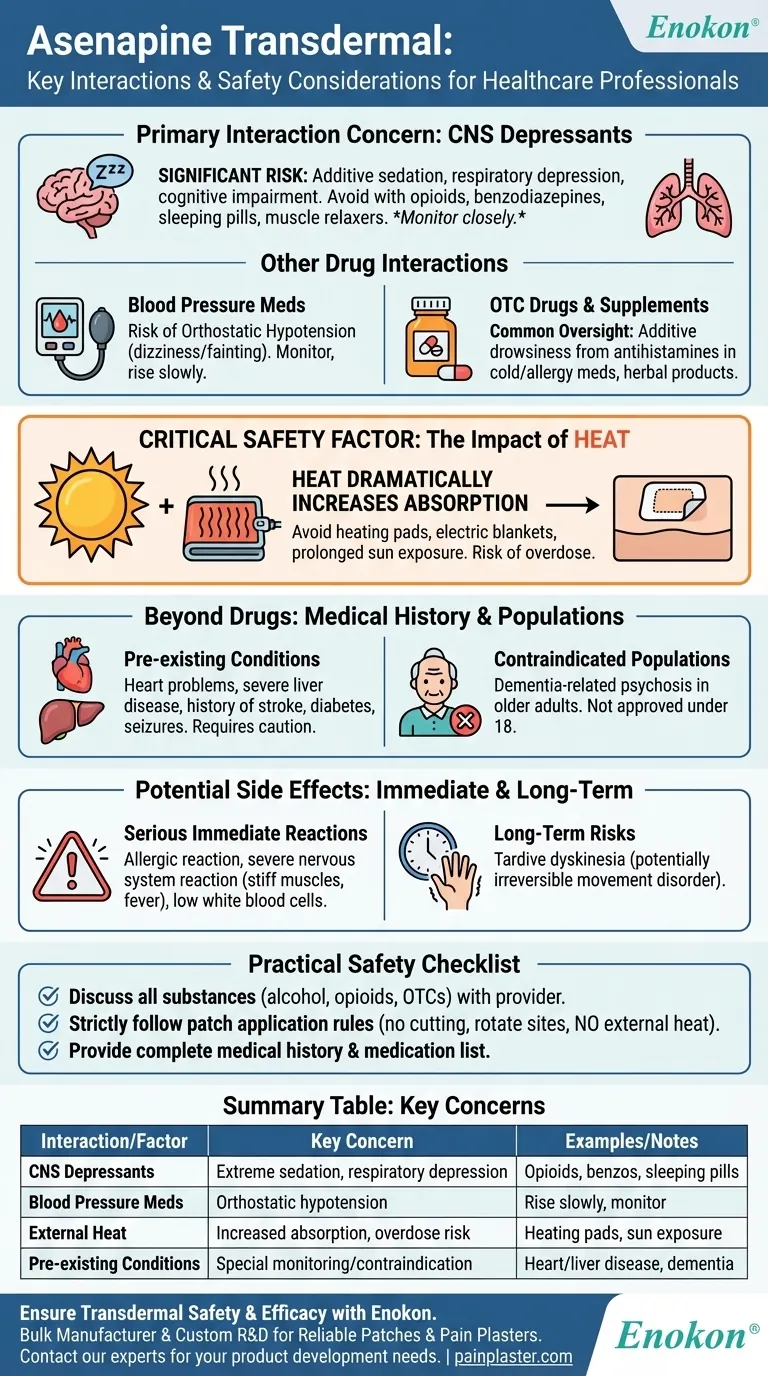
Most importantly, asenapine transdermal has significant interactions with other drugs that cause drowsiness or slow your breathing. Combining it with medications like opioids, sleeping pills, muscle relaxers, or treatments for anxiety and seizures can lead to dangerous levels of sedation.
The primary concern with asenapine transdermal is not just other prescriptions, but any substance that depresses the central nervous system. Additionally, external factors like heat can dangerously increase drug absorption, elevating the risk of adverse effects or overdose.

Core Drug Interaction Categories
Understanding how asenapine works is key to predicting its interactions. Its primary effects are on the central nervous system, which is why other substances affecting the brain are the main source of concern.
Central Nervous System (CNS) Depressants
Asenapine itself can cause significant drowsiness and impair coordination. This effect is additive.
When combined with other CNS depressants, the risk of extreme sedation, respiratory depression, and cognitive impairment increases substantially. Key examples include opioid pain medications, benzodiazepines for anxiety, sleeping pills, and muscle relaxers.
Medications Affecting Blood Pressure
Asenapine can cause a drop in blood pressure when standing up, a condition known as orthostatic hypotension. This can lead to dizziness or fainting.
Taking asenapine with blood pressure medications requires careful monitoring. It may enhance the effect of these drugs or, in some cases, potentially reduce their effectiveness. Always rise slowly from a sitting or lying position.
Over-the-Counter Drugs and Supplements
It is a common mistake to overlook non-prescription products. Many over-the-counter cold or allergy medicines contain antihistamines that cause drowsiness, compounding the sedative effects of asenapine.
You must inform your doctor about every substance you take, including vitamins, herbal products, and all OTC medications.
Beyond Drugs: Other Critical Safety Factors
Safe use of the asenapine patch goes beyond managing drug interactions. Environmental conditions and your personal health history play a crucial role in avoiding dangerous complications.
The Critical Role of Heat
This is a unique and vital consideration for a transdermal patch. Heat dramatically increases the rate at which asenapine is absorbed through the skin.
This accelerated absorption can lead to a sudden spike in the drug's concentration in your bloodstream, effectively causing an overdose. You must avoid direct heat on the patch from sources like heating pads, electric blankets, or prolonged sun exposure. You should also be cautious about becoming generally overheated or dehydrated.
Pre-existing Medical Conditions
Your full medical history is essential for safe prescribing. Asenapine may not be appropriate or may require special monitoring if you have a history of certain conditions.
These include heart problems, long QT syndrome, high or low blood pressure, severe liver disease, a history of stroke, diabetes, seizures, low white blood cell counts, or Parkinson's disease.
Contraindicated Populations
Asenapine is not approved for all patients. It should never be used in older adults with dementia-related psychosis due to an increased risk of serious adverse events.
Furthermore, it is not approved for use in anyone younger than 18 years old and should not be used by individuals with a known allergy to asenapine or those with severe liver disease.
Understanding the Potential Side Effects
Being aware of potential adverse reactions helps you and your healthcare provider manage risk effectively. Interactions can often worsen these side effects.
Serious Immediate Reactions
Seek medical attention immediately if you experience signs of an allergic reaction (hives, swelling, difficulty breathing) or a severe nervous system reaction, which can include very stiff muscles, high fever, confusion, and irregular heartbeats.
Other serious effects include a drop in white blood cells (indicated by fever, chills, or mouth sores) and uncontrolled muscle movements, particularly in the face.
Long-Term Risks
Long-term use of antipsychotic medications like asenapine can lead to a potentially irreversible movement disorder known as tardive dyskinesia. This risk is higher in certain populations, including women and older adults.
A Practical Safety Checklist for Asenapine Use
Proactive management is the best strategy for safety. Use this checklist as a guide for discussions with your healthcare provider.
- If your primary focus is avoiding sedation and impairment: Be transparent with your doctor about any use of alcohol, opioids, sleeping aids, anxiety medication, or even OTC allergy drugs.
- If your primary focus is preventing accidental overdose: Strictly follow application rules—never cut a patch, only wear one at a time, rotate sites, and rigorously avoid all external heat sources on the patch.
- If your primary focus is overall medical safety: Provide your doctor with a complete medical history and a comprehensive list of every single medication, vitamin, and supplement you take.
Ultimately, your safety depends on open and continuous communication with your healthcare team.
Summary Table:
| Interaction/Factor | Key Concern | Examples/Notes |
|---|---|---|
| CNS Depressants | Extreme sedation, respiratory depression | Opioids, benzodiazepines, sleeping pills, muscle relaxers |
| Blood Pressure Meds | Orthostatic hypotension (dizziness/fainting) | Requires careful monitoring; rise slowly |
| OTC Drugs/Supplements | Additive sedative effects | Cold/allergy meds, antihistamines, herbal products |
| External Heat | Dramatically increased absorption, risk of overdose | Heating pads, electric blankets, prolonged sun exposure |
| Pre-existing Conditions | May require special monitoring or contraindicate use | Heart/liver disease, dementia-related psychosis, diabetes |
Ensure the safety and efficacy of your transdermal drug formulations. Asenapine patches highlight the critical need for precise manufacturing and expert knowledge of drug-polymer matrices and absorption kinetics.
Enokon is a bulk manufacturer of reliable transdermal patches and pain plasters for healthcare and pharma distributors and brands. We provide custom R&D and development services to help you navigate complex API delivery challenges, ensuring patient safety and product performance.
Contact our technical experts today to discuss your transdermal product development needs.
Visual Guide
Related Products
- Menthol Gel Pain Relief Patch
- Far Infrared Heat Pain Relief Patches Transdermal Patches
- Silicone Scar Sheets Patch Transdermal Drug Patch
- Icy Hot Menthol Medicine Pain Relief Patch
- Mugwort Wormwood Pain Relief Patch for Neck Pain
People Also Ask
- How do pain relief patches compare to other pain relief methods? Discover Targeted, Long-Lasting Relief
- How effective are pain relief patches for muscle pain? Target Localized Pain with Transdermal Delivery
- Who should consult a healthcare professional before using pain relief patches? Ensure Your Safety with Medical Advice
- What are some common applications of pain relief patches? Effective Relief for Muscle & Joint Pain
- What are pain relief patches and how do they work? Discover Non-Invasive Pain Management




