
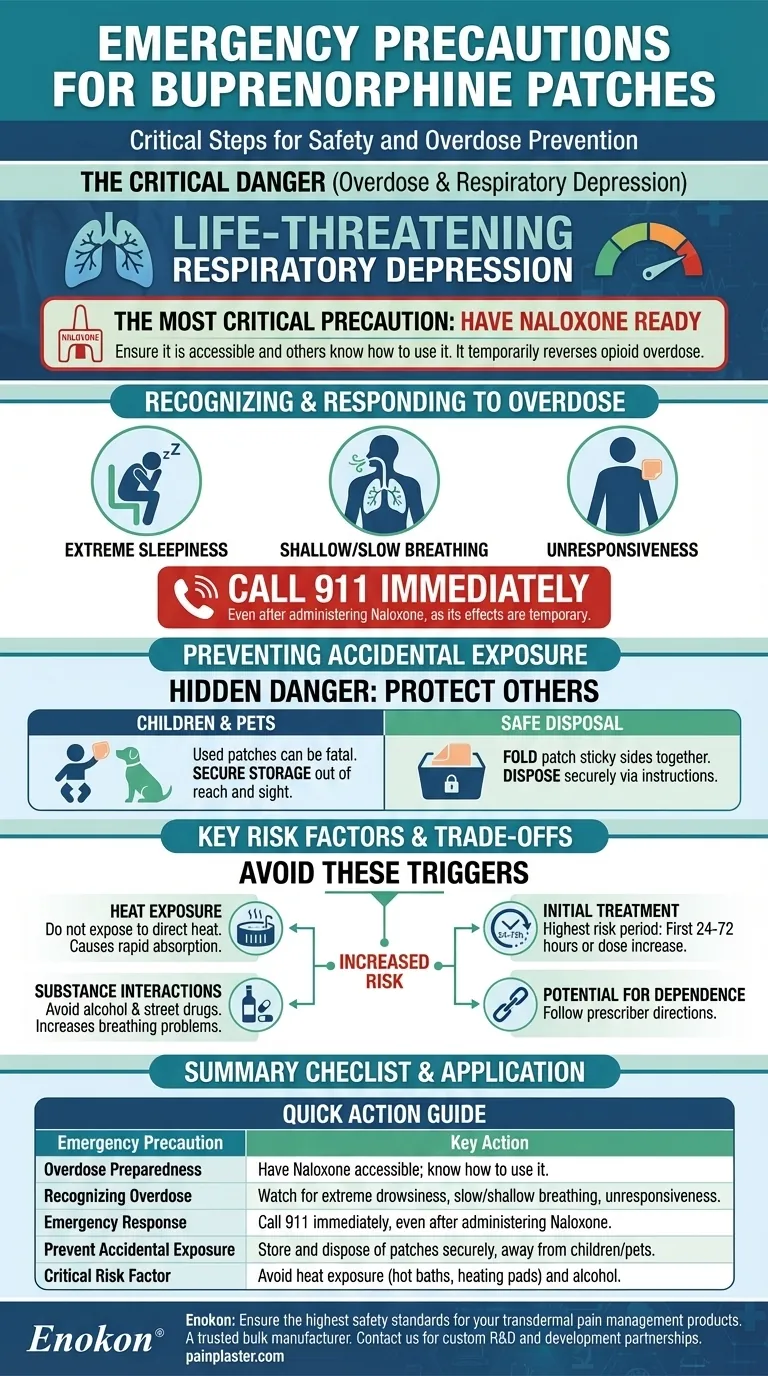
The most critical emergency precaution when using buprenorphine patches is to have naloxone readily available and to ensure others in the household know where it is and how to use it. You must be able to recognize the signs of an overdose—such as severe drowsiness, trouble breathing, or unresponsiveness—and call emergency services immediately, even if naloxone has been administered.
The primary danger with buprenorphine patches is life-threatening respiratory depression from an overdose. This can be triggered by accidental exposure, increased absorption from heat, or interactions with other substances, making preventative handling and emergency preparedness essential.
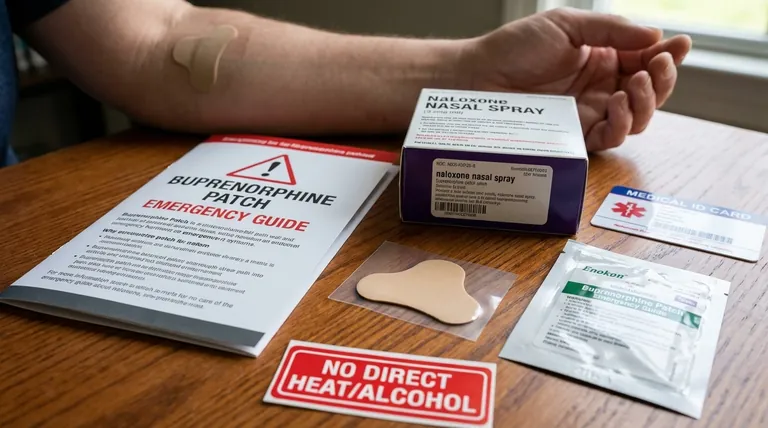
Recognizing and Responding to an Overdose Emergency
An overdose is a medical emergency that requires immediate action. Understanding the signs and having a clear plan can be lifesaving.
Know the Symptoms of an Overdose
The most severe risk of buprenorphine is slowed or stopped breathing. Be vigilant for key symptoms, including extreme sleepiness, difficulty waking up, shallow or difficult breathing, and unresponsiveness.
Have Naloxone Accessible
Naloxone is a medication that can temporarily reverse the effects of an opioid overdose. Your doctor can prescribe it. Ensure family members or others in your home know where it is and how to administer it.
The Critical Role of Emergency Services
Naloxone's effects are temporary. It is absolutely essential to call 911 or your local emergency number immediately after administering naloxone, as the person may stop breathing again once it wears off.
The Hidden Danger: Preventing Accidental Exposure
A significant number of emergencies occur when someone other than the patient—especially a child or pet—comes into contact with a patch.
Why Patches Are Dangerous to Others
Even a used buprenorphine patch contains enough medication to cause serious harm or death if accidentally touched or ingested by a child, pet, or another adult.
Secure Storage and Application
Store new and used patches in a secure location out of reach and sight of children. When applying a patch, do so privately and never refer to it as a "sticker" or "tattoo," as this might encourage a child to imitate you.
Safe Disposal is Non-Negotiable
After use, immediately fold the patch in half so the sticky sides press together. Dispose of it securely according to your pharmacist's instructions or local medication disposal guidelines, ensuring it is inaccessible to others.
Understanding the Trade-offs and Key Risk Factors
Certain conditions and behaviors dramatically increase the risk of an overdose and must be carefully managed.
The Risk of Increased Absorption from Heat
Do not expose the patch to direct heat. Hot baths, saunas, heating pads, or electric blankets can cause the medication to be absorbed into your body too quickly, leading to a dangerous overdose.
Interactions with Other Substances
Drinking alcohol or using street drugs while using a buprenorphine patch significantly increases your risk of life-threatening breathing problems, sedation, or coma. Inform your doctor of all other medications you take.
Potential for Dependence
Buprenorphine, like all opioids, can be habit-forming, especially with long-term use. Follow your prescriber's directions exactly to minimize this risk.
Initial Treatment Period Risks
The risk of serious breathing problems is highest during the first 24 to 72 hours of starting treatment or after a dose increase. Avoid activities requiring alertness, like driving, until you know how the medication affects you.
How to Apply This to Your Project
Make a conscious plan to mitigate the specific risks relevant to your situation.
- If you are the patient: Prioritize understanding overdose signs, keeping naloxone on hand, and strictly avoiding heat exposure and alcohol.
- If you live with or care for a patient: Your primary focus should be preventing accidental exposure through meticulous storage and immediate, secure disposal of used patches.
- For all users and caregivers: Maintain open communication with your healthcare provider about all medications, health conditions, and lifestyle factors to ensure safe use.
Proactive awareness and meticulous handling are the keys to using buprenorphine patches safely and effectively.
Summary Table:
| Emergency Precaution | Key Action |
|---|---|
| Overdose Preparedness | Have naloxone accessible; know how to use it. |
| Recognizing Overdose | Watch for extreme drowsiness, slow/shallow breathing, unresponsiveness. |
| Emergency Response | Call 911 immediately, even after administering naloxone. |
| Prevent Accidental Exposure | Store and dispose of patches securely, away from children/pets. |
| Critical Risk Factor | Avoid heat exposure (hot baths, heating pads) and alcohol. |
Ensure the highest safety standards for your transdermal pain management products. As a trusted bulk manufacturer, Enokon specializes in the reliable production of transdermal patches, including complex formulations like buprenorphine. Our technical expertise supports custom R&D and development, helping healthcare and pharma brands deliver effective, safe, and compliant products to their customers.
Let's discuss your project requirements. Contact our experts today to learn how we can partner to enhance patient safety.
Visual Guide
Related Products
- Menthol Gel Pain Relief Patch
- Asthma Cough and Pain Relief Patch for Adults and Kids
- Lidocaine Hydrogel Pain Relief Patch for Pain Relief
- Herbal Medicated Anti Diarrhea Patch for Digestive Relief
- Icy Hot Menthol Medicine Pain Relief Patch
People Also Ask
- How effective are pain relief patches for muscle pain? Target Localized Pain with Transdermal Delivery
- How do pain relief patches compare to other pain relief methods? Discover Targeted, Long-Lasting Relief
- Who should consult a healthcare professional before using pain relief patches? Ensure Your Safety with Medical Advice
- What are the potential side effects of pain relief patches? A Guide to Safe Use & Key Risks
- What are pain relief patches and how do they work? Discover Non-Invasive Pain Management



















