
While using the selegiline transdermal patch, the need to avoid certain foods and substances depends critically on your dosage. For higher strengths (9 mg and 12 mg per 24 hours), you must avoid alcohol and foods high in tyramine, such as aged cheeses, cured meats, and fermented products. This is necessary to prevent a sudden, dangerous increase in blood pressure. For the lowest dose (6 mg per 24 hours), these specific dietary restrictions are not required, though caution with other substances is still essential.
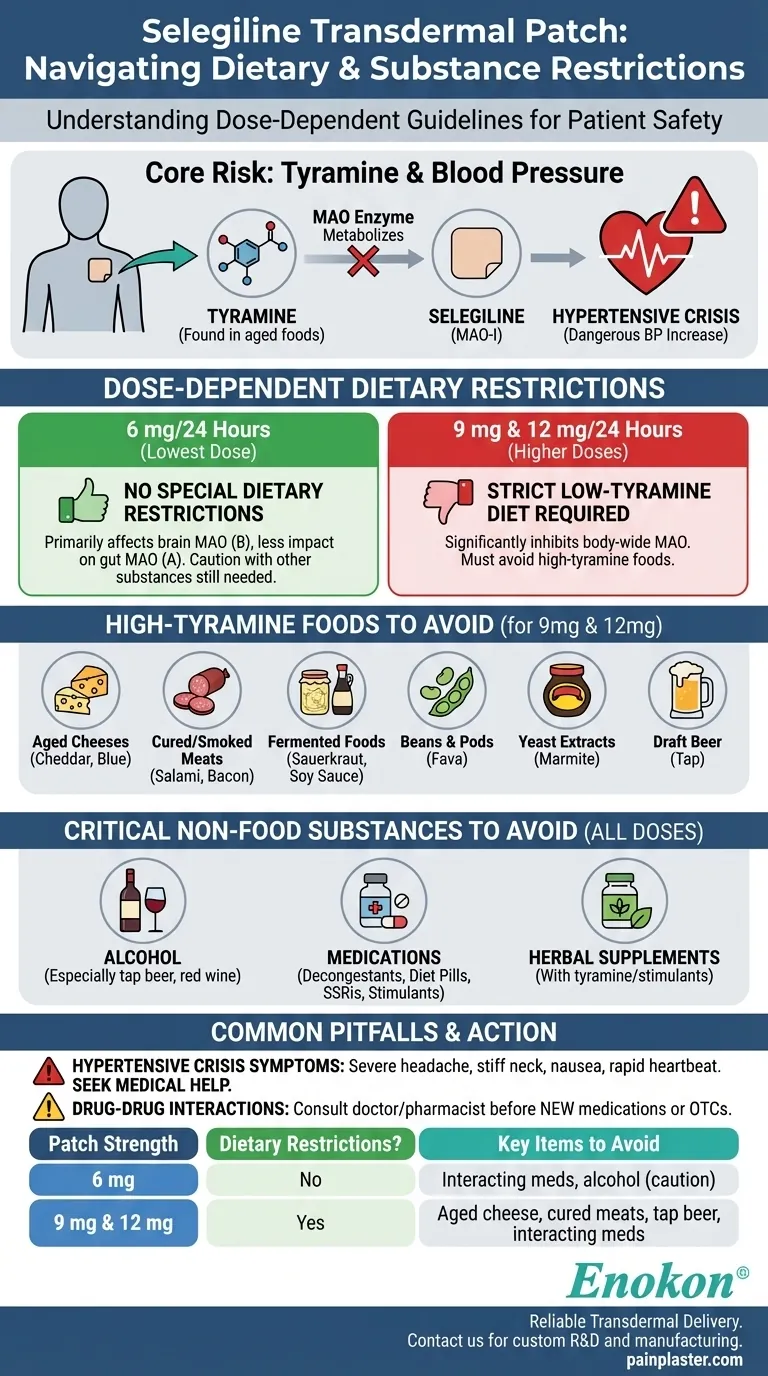
The core principle to understand is that selegiline inhibits an enzyme that breaks down tyramine, a compound found in certain foods. At higher doses, this can cause tyramine to build up in your body, leading to a potentially life-threatening hypertensive crisis. Therefore, your safety hinges on matching your dietary diligence to your prescribed patch strength.
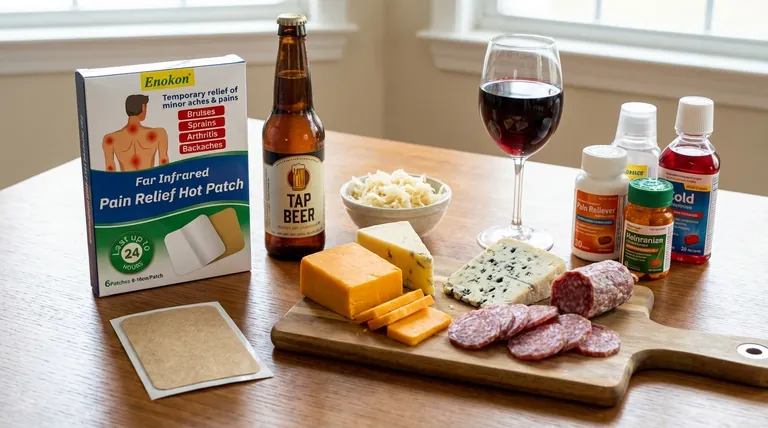
The Core Risk: Understanding Tyramine and Blood Pressure
To use selegiline safely, it's crucial to understand the mechanism behind the dietary warnings. The issue is not the medication itself but how it interacts with a specific compound found in many common foods.
What is Tyramine?
Tyramine is an amino acid naturally found in aged and fermented foods. As food ages, its proteins break down, which can increase tyramine levels.
The MAO-I Mechanism
Selegiline is a Monoamine Oxidase Inhibitor (MAO-I). Normally, the MAO enzyme in your body metabolizes and keeps tyramine levels in check. By inhibiting this enzyme, selegiline allows tyramine from your diet to accumulate.
The Hypertensive Crisis
When tyramine levels get too high, they trigger a massive release of other chemicals called catecholamines (like norepinephrine). This leads to a rapid and severe increase in blood pressure known as a hypertensive crisis, which is a medical emergency.
Dose-Dependent Dietary Restrictions
The FDA has determined that the risk of this interaction is directly related to the dose of selegiline being absorbed through your skin.
The 6 mg Patch: A Key Distinction
At the lowest dose of 6 mg/24 hours, the patch delivers selegiline in a way that primarily affects MAO in the brain (MAO-B) with less impact on the MAO in your gut (MAO-A) that processes tyramine. For this reason, no special dietary restrictions are required when using the 6 mg patch.
The 9 mg and 12 mg Patches: Caution is Required
At 9 mg and 12 mg doses, the drug's effect is no longer as selective. It significantly inhibits the MAO enzyme throughout your body, including your digestive system. Therefore, you must adhere to a low-tyramine diet to prevent a dangerous interaction.
A Practical List of Foods to Avoid
If you are on a 9 mg or 12 mg patch, you must avoid the following high-tyramine foods:
- Aged Cheeses: Cheddar, Swiss, blue cheese, Parmesan, mozzarella, feta, and others.
- Cured, Smoked, or Processed Meats: Salami, pepperoni, bacon, hot dogs, bologna, pickled or smoked fish.
- Fermented Foods: Sauerkraut, kimchi, tofu, miso, tempeh, and most soy products (including soy sauce).
- Beans and Pods: Fava beans or broad bean pods.
- Yeast Extracts: Marmite, Vegemite, or concentrated yeast extract.
- Draft (Tap) Beer: Both alcoholic and non-alcoholic. Bottled or canned beer is generally acceptable in moderation, but you should always consult your doctor.
Critical Non-Food Substances to Avoid
The risk extends beyond food. You must be extremely cautious with other substances that can interact with selegiline, regardless of your patch strength.
Alcohol
Alcohol should be avoided or used with extreme caution. Certain alcoholic beverages, especially tap beers and some red wines, can be high in tyramine.
Prescription and Over-the-Counter Medications
A vast number of medications can interact dangerously with selegiline. Always inform your doctor and pharmacist you are using this patch. Key examples to avoid include:
- Decongestants and cold medicines (containing pseudoephedrine or phenylephrine).
- Diet pills and appetite suppressants.
- Other antidepressants (SSRIs, tricyclics).
- Certain pain medications (like tramadol or meperidine).
- Stimulants like amphetamines.
Herbal Supplements
Supplements containing tyramine or those with stimulant properties must be avoided. Discuss every supplement you take with your physician.
Common Pitfalls to Avoid
Trust and safety are built on understanding the complete picture, including the potential risks and common misconceptions.
The Risk is Real
A hypertensive crisis is a medical emergency. Symptoms include a sudden, severe headache, stiff neck, nausea, vomiting, sweating, and rapid heartbeat. If you experience these symptoms, seek immediate medical attention.
Drug-Drug Interactions are a Primary Concern
While the focus is often on diet, the risk of a dangerous interaction with another medication is equally, if not more, significant. Never start a new prescription, over-the-counter drug, or supplement without clearing it with your doctor first.
Caution is Required for All Doses
Even if you are on the 6 mg patch and don't require dietary restrictions, you must remain vigilant about avoiding interacting medications and discussing alcohol use with your doctor. The absence of a special diet does not mean an absence of all risk.
How to Apply This to Your Treatment
Your approach to safety should be tailored to your specific prescription and lifestyle.
- If you are using the 6 mg/24-hour patch: You can maintain a normal diet, but you must tell your doctor about every other medication or supplement you take and discuss alcohol use.
- If you are using a 9 mg or 12 mg/24-hour patch: You must strictly follow a low-tyramine diet and avoid interacting substances to prevent a dangerous spike in blood pressure.
- If you are prescribed any new medication or consider an OTC product: You must consult with your doctor or pharmacist first, as the potential for a serious drug-drug interaction is high with all doses of selegiline.
Ultimately, managing your treatment effectively is a partnership between your awareness and your healthcare provider's expert guidance.
Summary Table:
| Patch Strength | Dietary Restrictions Required? | Key Items to Avoid |
|---|---|---|
| 6 mg/24 hours | No | Interacting medications, alcohol (use caution) |
| 9 mg/24 hours | Yes | Aged cheeses, cured meats, fermented foods, tap beer, interacting medications |
| 12 mg/24 hours | Yes | Aged cheeses, cured meats, fermented foods, tap beer, interacting medications |
Ensure Patient Safety with Reliable Transdermal Delivery
Navigating the complexities of MAO-I therapy requires precision and trust in your medication's delivery system. At Enokon, we are a bulk manufacturer of reliable transdermal patches and pain plasters, dedicated to supporting healthcare and pharmaceutical distributors and brands.
Partner with us to benefit from:
- Technical Expertise: Our team provides expert support for custom R&D and development, ensuring your transdermal products meet the highest standards of safety and efficacy.
- Consistent Quality: We manufacture patches with precise, controlled drug release profiles, critical for dose-dependent therapies like selegiline.
- Trusted Partnership: We help you deliver vital medications to patients with confidence, backed by rigorous manufacturing processes.
Ready to enhance your transdermal product line? Contact our experts today to discuss your custom patch development needs.
Visual Guide
Related Products
- Silicone Scar Sheets Patch Transdermal Drug Patch
- Far Infrared Heat Pain Relief Patches Transdermal Patches
- Menthol Gel Pain Relief Patch
- Icy Hot Menthol Medicine Pain Relief Patch
- Mugwort Wormwood Pain Relief Patch for Neck Pain
People Also Ask
- What role does a silicone-based transdermal delivery system play in Parkinson's? Enhancing Early-Stage Patient Care
- How is the long-term skin tolerance of silicone-based transdermal patches evaluated in clinical settings? R&D and Safety
- Why is a polarizing microscope used to evaluate the long-term stability of transdermal drug patches? Ensure Efficacy.
- What are common adverse effects of transdermal drug delivery? Risks & Prevention Tips
- What are the advantages of transdermal drug patches? Optimize Medication Delivery with Patches











