
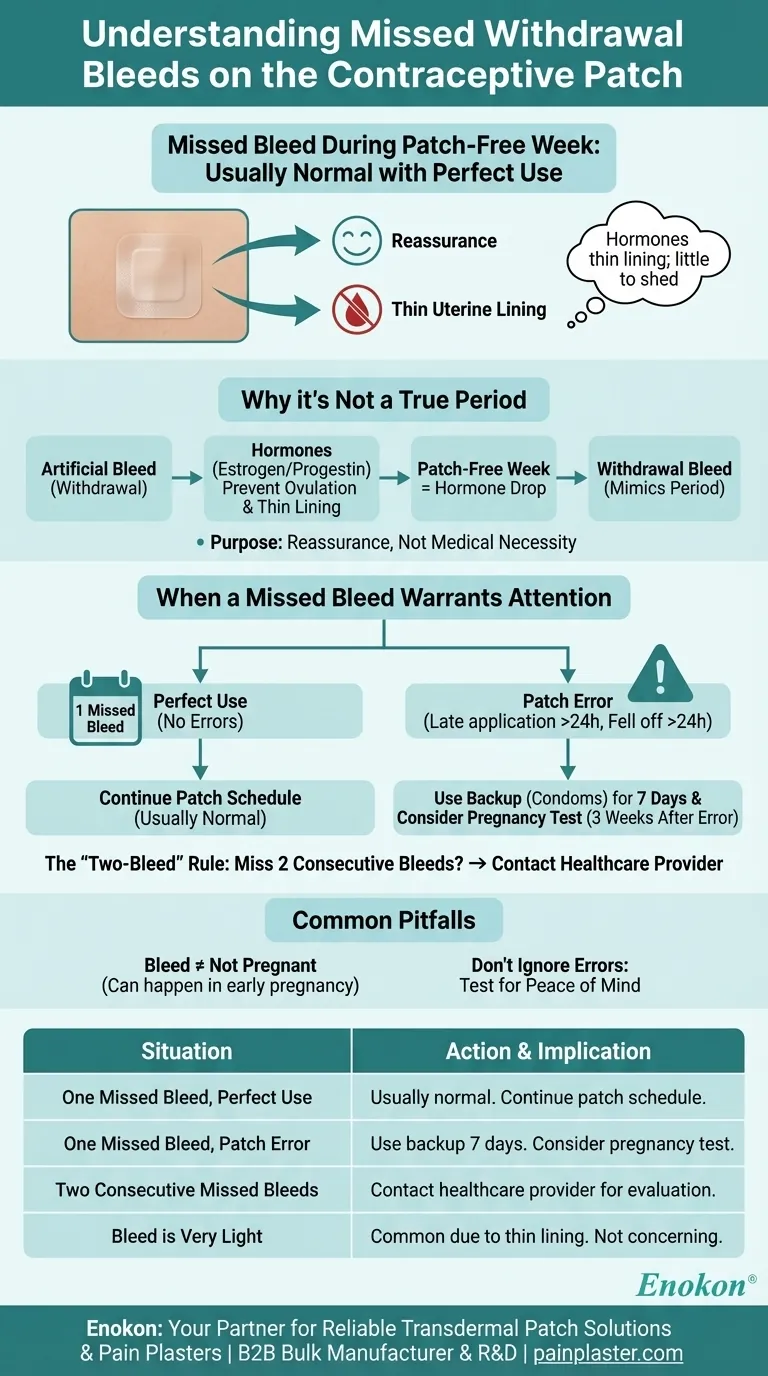
In most cases, not having a withdrawal bleed during your patch-free week is not a cause for concern. This is especially true if you have used the contraceptive patch correctly and consistently, without starting any new medications that could interfere with its effectiveness. The hormone levels in the patch can sometimes cause the uterine lining to become so thin that there is very little to shed.
While a single missed withdrawal bleed with perfect patch use is typically normal, its absence becomes a signal for evaluation if you have used the patch incorrectly or if you miss two bleeds in a row.

Why a "Withdrawal Bleed" Isn't a True Period
To understand why a bleed might not occur, it’s essential to distinguish it from a natural menstrual cycle. The bleed you experience on the patch is artificially created.
How the Contraceptive Patch Works
The patch releases a steady dose of estrogen and progestin. These hormones work primarily by preventing ovulation, meaning your ovaries do not release an egg.
They also thicken cervical mucus to block sperm and thin the lining of the uterus (the endometrium).
The Role of the "Patch-Free" Week
The patch-free week causes a drop in hormone levels in your body. This sudden withdrawal of hormones signals the thin uterine lining to shed, resulting in a "withdrawal bleed."
This bleed is not a medical necessity. It was designed to mimic a natural period to provide reassurance, but it is not an indicator of whether you are pregnant or not.
Reasons for a Lighter or Absent Bleed
Because the patch thins the uterine lining so effectively, it's possible that after several months of use, there is simply not enough tissue to shed.
This can result in a very light bleed or no bleed at all, which is considered a normal variation for many users.
When a Missed Bleed Warrants Attention
While often normal, a missed withdrawal bleed should prompt a review of how you've been using the patch and when to seek further advice.
The Standard for "Correct Use"
"Correct use" is the most critical factor for effectiveness. A mistake can increase your risk of pregnancy.
An error includes applying a new patch more than 24 hours late or having a patch fall off and not be replaced within 24 hours.
If this happens, you should use a backup method of contraception, like condoms, for the next seven days while continuing to use the patch correctly.
The "Two-Bleed" Rule
A reliable guideline is the "two-bleed" rule. Missing one withdrawal bleed is common.
However, if you miss two consecutive bleeds, you should contact your healthcare provider for an evaluation, even if you believe you have used the patch perfectly.
Interfering Medications
Certain medications, particularly some antibiotics and anti-seizure drugs, can reduce the patch's effectiveness. Always inform your doctor you are on the patch when being prescribed new medication.
Common Pitfalls to Avoid
Understanding the context of your withdrawal bleed helps you interpret what's happening and avoid common mistakes.
False Reassurance of a Bleed
Conversely, having a withdrawal bleed is not a definitive sign that you are not pregnant. A bleed can still occur in very early pregnancy.
Your primary indicator of protection is the correct and consistent use of the patch itself, not the presence or absence of a bleed.
Ignoring the Possibility of Pregnancy
No contraceptive method is 100% effective. If you have missed a bleed and have had any errors in patch use in the preceding month, taking a pregnancy test is a reasonable step for peace of mind.
For the most accurate result, test at least three weeks after the potential contraceptive error occurred.
Skipping Bleeds Intentionally
It is possible to skip a withdrawal bleed by forgoing the patch-free week and immediately applying a new patch.
While this is a common practice, it can sometimes lead to unscheduled spotting or breakthrough bleeding. It also further demonstrates that the bleed itself is not a required physiological event.
Making the Right Choice for Your Goal
Use this guide to determine your next step based on your specific situation.
- If your primary focus is reassurance after one missed bleed with perfect use: You can confidently continue your patch schedule as normal, as this is a common and expected occurrence.
- If your primary focus is addressing a potential mistake in use: Use backup contraception for seven days and consider taking a pregnancy test three weeks after the mistake.
- If your primary focus is managing two missed bleeds in a row: Schedule a consultation with your healthcare provider to rule out underlying issues or pregnancy.
Understanding how the patch interacts with your body empowers you to use it effectively and with confidence.
Summary Table:
| Situation | Action & Implication |
|---|---|
| One missed bleed, perfect patch use | Usually normal. Continue patch schedule. |
| One missed bleed, patch use error | Use backup contraception for 7 days. Consider a pregnancy test. |
| Two consecutive missed bleeds | Contact your healthcare provider for evaluation. |
| Bleed is very light | Common due to thinned uterine lining. Not a cause for concern. |
Ensure Consistent Contraceptive Protection with Expert-Grade Transdermal Patches
Navigating the nuances of hormonal contraception requires reliable, high-quality products. At Enokon, we are a bulk manufacturer of trusted transdermal patches and pain plasters, partnering with healthcare and pharmaceutical distributors and brands.
Our technical expertise ensures precise hormone delivery and consistent performance, giving you and your customers confidence. We offer custom R&D and development services to create patches tailored to your specific needs.
Let's develop the solution you need. Contact our specialists today to discuss your requirements.
Visual Guide
Related Products
- Heating Pain Relief Patches for Menstrual Cramps
- Prostate Pain Kidney Health Care Patch for Men
- Silicone Scar Sheets Patch Transdermal Drug Patch
- Lidocaine Hydrogel Pain Relief Patch for Pain Relief
- Menthol Gel Pain Relief Patch
People Also Ask
- What are the benefits of Period Pain Heat Patches? Drug-Free, On-the-Go Relief
- What are the key benefits of heating patches for elderly individuals? Relieve Pain & Improve Mobility
- What are the different types of heat patches? Find the Right Pain Relief for Your Needs
- What are the key differences between conventional heat patches and deep heat devices? Choosing the Right Pain Relief Solution
- What percentage of people with back pain use heat patches for relief? Discover the Popular Choice for Pain Management
















