
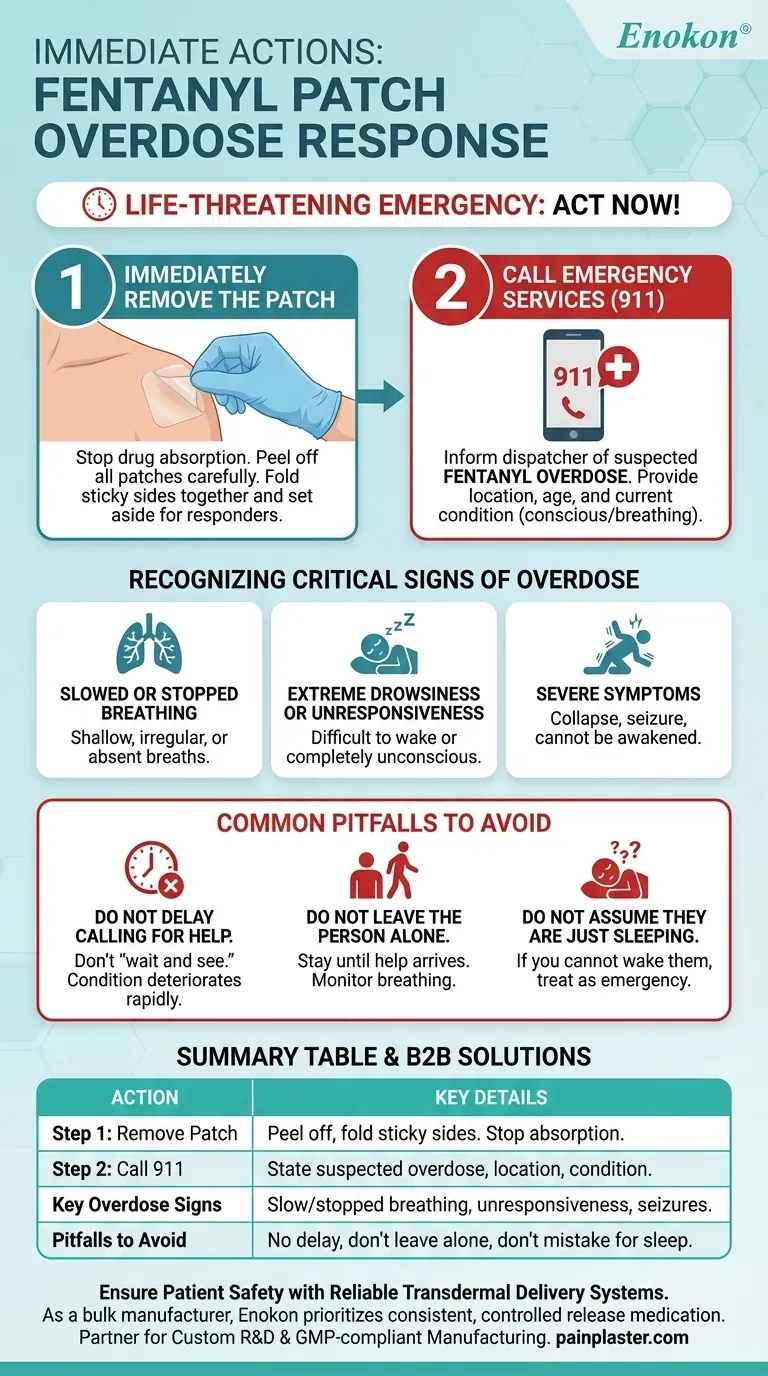
In the event of a suspected fentanyl patch overdose, two actions must be taken immediately. First, remove any and all fentanyl patches from the person's skin to stop the drug from being absorbed further. Second, call your local emergency services, such as 911, without delay.
A fentanyl patch overdose is a life-threatening medical emergency. The primary goal is to halt further exposure to the drug by removing the patch while simultaneously summoning professional medical responders who can administer life-saving treatment.
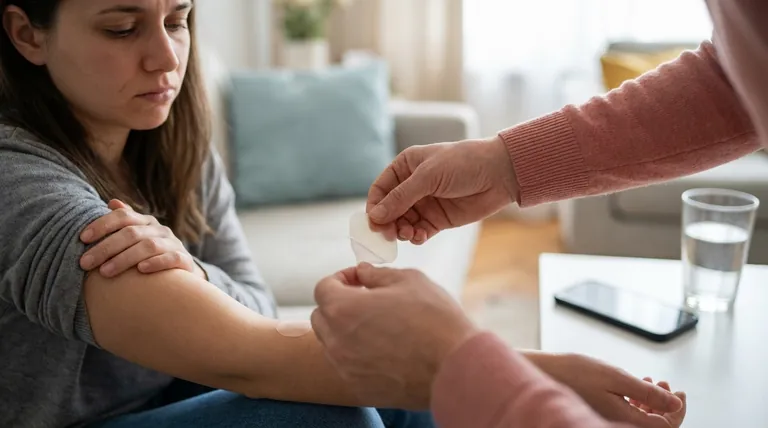
The Two Critical Steps: A Detailed Breakdown
When you suspect an overdose, every second counts. The protocol is straightforward and designed to address the immediate danger.
Step 1: Immediately Remove the Patch
The fentanyl patch continuously releases a potent opioid through the skin. Removing it is the only way to stop this delivery.
Carefully peel the patch off the skin. If possible, avoid touching the sticky side with your bare hands. Fold it in half with the sticky sides together and set it aside to give to the emergency responders.
Step 2: Call Emergency Services (911)
As soon as the patch is removed, or while someone else is removing it, call for emergency medical help. This is not a situation you can manage at home.
Inform the dispatcher that you suspect a fentanyl overdose. Provide the person's location, age, and current condition, including whether they are conscious or breathing.
Recognizing the Signs of an Overdose
Knowing the symptoms can help you act decisively. An overdose is distinct from typical side effects.
Slowed or Stopped Breathing
The most dangerous sign of a fentanyl overdose is respiratory depression. Breathing may become very shallow, slow, irregular, or stop completely.
Extreme Drowsiness or Unresponsiveness
The person may be incredibly sleepy and difficult to wake up. In a severe overdose, they may be completely unresponsive or unconscious.
Other Severe Symptoms
Be alert for other critical signs, such as the person collapsing, having a seizure, or being unable to be awakened under any circumstances.
Common Pitfalls to Avoid
In a crisis, it is easy to make mistakes. Understanding these common errors can help you provide the most effective response.
Do Not Delay Calling for Help
Never "wait and see" if the person gets better. Fentanyl is extremely powerful, and a person's condition can deteriorate rapidly. Call for help immediately.
Do Not Leave the Person Alone
Stay with the individual until emergency services arrive. If they stop breathing, you may need to provide rescue breaths if you are trained to do so, under the guidance of the emergency dispatcher.
Do Not Assume They Are Just Sleeping
The extreme drowsiness caused by an overdose can be easily mistaken for deep sleep. If you cannot wake the person, you must treat it as an emergency.
Your Emergency Action Plan
Your response depends on your situation. Use this guide to make the right choice.
- If you suspect an overdose is happening now: Stop reading, remove any visible patches from the person's skin, and call 911 immediately.
- If you are a caregiver preparing for an emergency: Memorize the signs of overdose (especially slowed breathing and unresponsiveness) and ensure your local emergency number is easily accessible.
Acting quickly and calmly can make a life-saving difference.
Summary Table:
| Action | Key Details |
|---|---|
| Step 1: Remove the Patch | Peel off all patches to stop drug absorption. Fold sticky sides together. |
| Step 2: Call 911 | Inform dispatcher of suspected fentanyl overdose. Provide location and person's condition. |
| Key Overdose Signs | Slowed/stopped breathing, extreme drowsiness, unresponsiveness, seizures. |
| Pitfalls to Avoid | Don't delay calling for help, don't leave the person alone, don't mistake overdose for sleep. |
Ensure Patient Safety with Reliable Transdermal Delivery Systems
As a bulk manufacturer of transdermal patches, Enokon understands that patient safety is paramount. Our technical expertise ensures the consistent, controlled release of medication, helping to mitigate risks for healthcare and pharma brands.
Partner with us for:
- Custom R&D: Develop patches with precise dosage control tailored to your API.
- Quality Manufacturing: Bulk production of reliable, GMP-compliant pain plasters and medicated patches.
Let's collaborate to create safer, more effective transdermal solutions. Contact our experts today to discuss your project requirements.
Visual Guide
Related Products
- Menthol Gel Pain Relief Patch
- Icy Hot Menthol Medicine Pain Relief Patch
- Capsaicin Chili Medicated Pain Relief Patches
- Lidocaine Hydrogel Pain Relief Patch for Pain Relief
- Mugwort Wormwood Pain Relief Patch for Neck Pain
People Also Ask
- How effective are pain relief patches for muscle pain? Target Localized Pain with Transdermal Delivery
- How do pain relief patches compare to other pain relief methods? Discover Targeted, Long-Lasting Relief
- Who should consult a healthcare professional before using pain relief patches? Ensure Your Safety with Medical Advice
- How do drug loading and permeation enhancers ensure patch efficacy? Achieve Superior Clinical-Grade Pain Relief.
- What are some common applications of pain relief patches? Effective Relief for Muscle & Joint Pain



















