
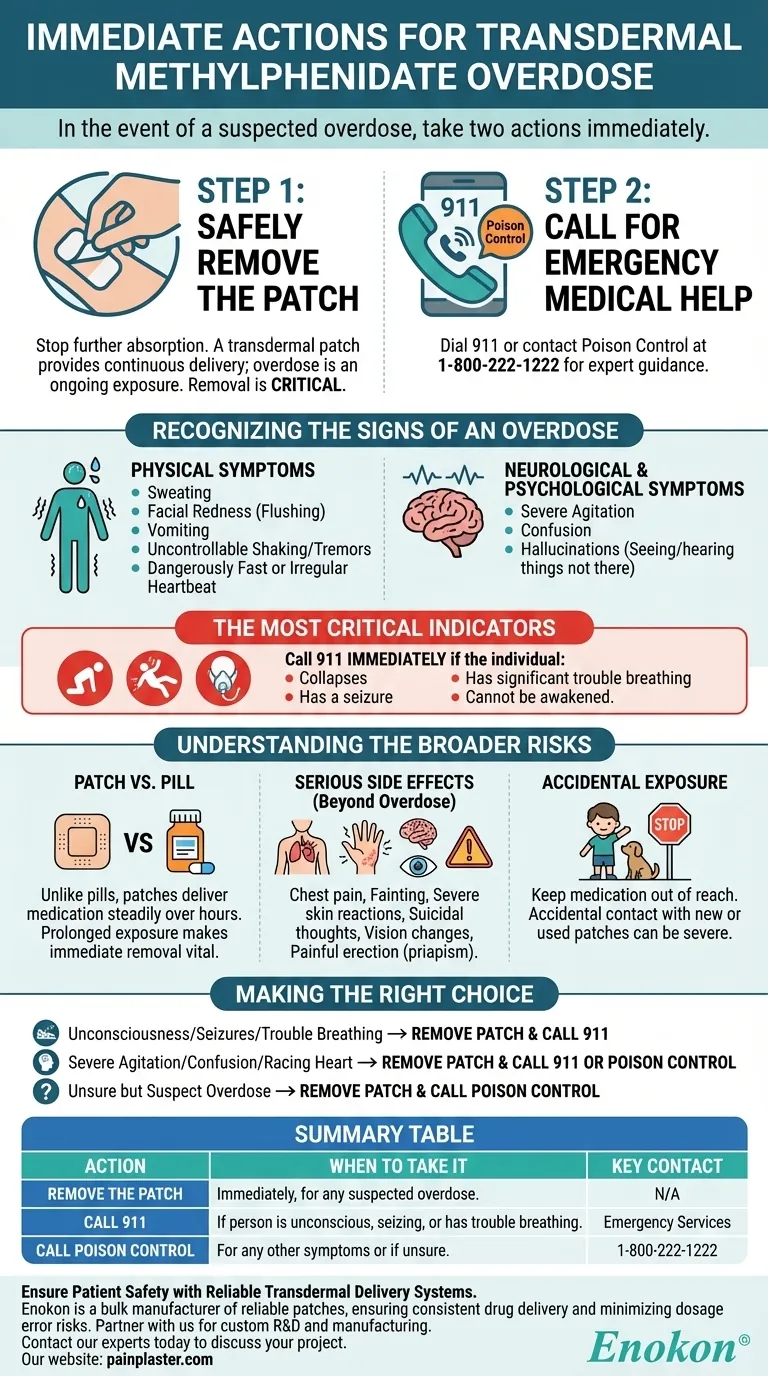
In the event of a suspected transdermal methylphenidate overdose, you must take two actions immediately. First, safely remove the patch from the skin to stop any further absorption of the medication. Second, call for emergency medical help by dialing 911 or contacting the Poison Control center at 1-800-222-1222 for expert guidance.
A transdermal patch continuously delivers medication, so an overdose is not a single event but an ongoing exposure. Your immediate priorities are to remove the source of the drug and contact medical professionals, as overdose symptoms can be severe and escalate quickly.
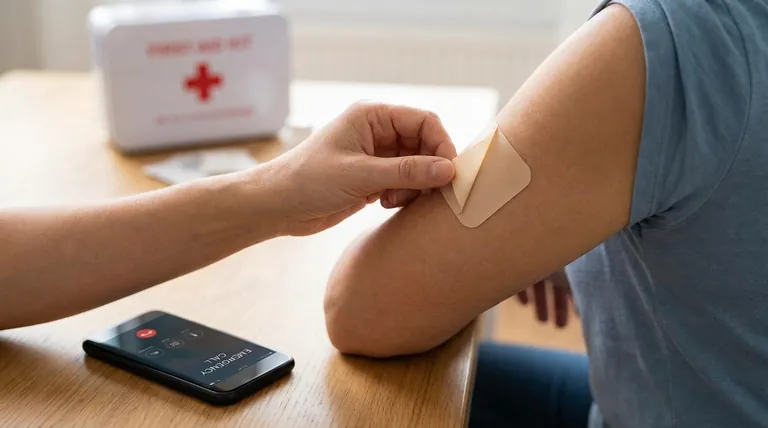
Recognizing the Signs of an Overdose
Recognizing the symptoms is the first step in responding effectively. An overdose can manifest in both physical and psychological ways.
Physical Symptoms
The body may show clear signs of distress. Be watchful for sweating, facial redness (flushing), vomiting, and uncontrollable shaking or tremors. A dangerously fast or irregular heartbeat is a critical warning sign.
Neurological and Psychological Symptoms
A methylphenidate overdose significantly impacts the central nervous system. This can lead to severe agitation, confusion, and even hallucinations where the person sees or hears things that are not there.
The Most Critical Indicators
Certain symptoms signal a life-threatening emergency that requires an immediate 911 call. These include if the individual collapses, has a seizure, has significant trouble breathing, or cannot be awakened.
The Two-Step Emergency Protocol
In a potential overdose situation, a clear and immediate response is crucial.
Step 1: Remove the Patch
Your first action must be to remove the patch from the skin. This stops the continuous delivery of methylphenidate into the bloodstream and is the most important step you can take to prevent the situation from worsening.
Step 2: Seek Immediate Medical Help
Once the patch is removed, you must get professional help. The type of help you call for depends on the severity of the symptoms.
When to Call 911
If the person is experiencing severe symptoms—such as unconsciousness, seizures, or difficulty breathing—dial 911 immediately. This is a medical emergency requiring the fastest possible response.
When to Call Poison Control
For any other overdose symptoms or if you are simply unsure about the situation, call the Poison Control helpline at 1-800-222-1222. Their experts provide immediate, free, and confidential guidance on how to proceed.
Understanding the Broader Risks
A transdermal patch has unique properties that affect overdose risk and require careful management to prevent serious side effects.
How a Patch Differs from a Pill
Unlike a pill that is absorbed all at once, a patch delivers medication steadily over many hours. This means that accidental exposure or incorrect application can lead to a prolonged overdose, making immediate patch removal absolutely critical.
Beyond Overdose: Other Serious Side Effects
Even without an overdose, transdermal methylphenidate can cause serious side effects that require immediate medical attention. These include chest pain, fainting, severe skin reactions at the patch site, suicidal thoughts, vision changes, or a painful erection lasting over four hours (priapism).
The Danger of Accidental Exposure
The medication must be kept out of reach of children and pets at all times. Accidental contact with a new or even a used patch can cause a severe overdose in someone for whom it was not prescribed.
Making the Right Choice for Your Situation
Your response should be guided by the symptoms you observe.
- If the person has collapsed, is having a seizure, or cannot breathe properly: Your priority is to call 911 immediately after removing the patch.
- If symptoms include severe agitation, confusion, or a racing heartbeat: Remove the patch and call 911 or Poison Control for urgent medical advice.
- If you are unsure if an overdose has occurred but suspect it: It is always safest to remove the patch and call Poison Control at 1-800-222-1222 for expert guidance.
When facing a potential overdose, acting quickly and seeking expert medical advice is the key to ensuring a safe outcome.
Summary Table:
| Action | When to Take It | Key Contact |
|---|---|---|
| Remove the Patch | Immediately, for any suspected overdose. | N/A |
| Call 911 | If person is unconscious, seizing, or has trouble breathing. | Emergency Services |
| Call Poison Control | For any other symptoms or if you are unsure. | 1-800-222-1222 |
Ensure Patient Safety with Reliable Transdermal Delivery Systems
As a bulk manufacturer of reliable transdermal patches for healthcare and pharmaceutical distributors, Enokon understands that patient safety is paramount. Our technical expertise ensures consistent, controlled drug delivery, minimizing risks associated with dosage errors.
Partner with us to develop your next transdermal product with confidence. Benefit from our custom R&D and manufacturing capabilities to create safe, effective patches for your brand.
Contact our experts today to discuss your project requirements and how we can support your quality and safety goals.
Visual Guide
Related Products
- Menthol Gel Pain Relief Patch
- Silicone Scar Sheets Patch Transdermal Drug Patch
- Far Infrared Heat Pain Relief Patches Transdermal Patches
- Icy Hot Menthol Medicine Pain Relief Patch
- Mugwort Wormwood Pain Relief Patch for Neck Pain
People Also Ask
- How do pain relief patches compare to other pain relief methods? Discover Targeted, Long-Lasting Relief
- How effective are pain relief patches for muscle pain? Target Localized Pain with Transdermal Delivery
- Who should consult a healthcare professional before using pain relief patches? Ensure Your Safety with Medical Advice
- Can pregnant women use pain relief patches? Your Essential Guide to Safe Pain Management
- What are some common applications of pain relief patches? Effective Relief for Muscle & Joint Pain



















