
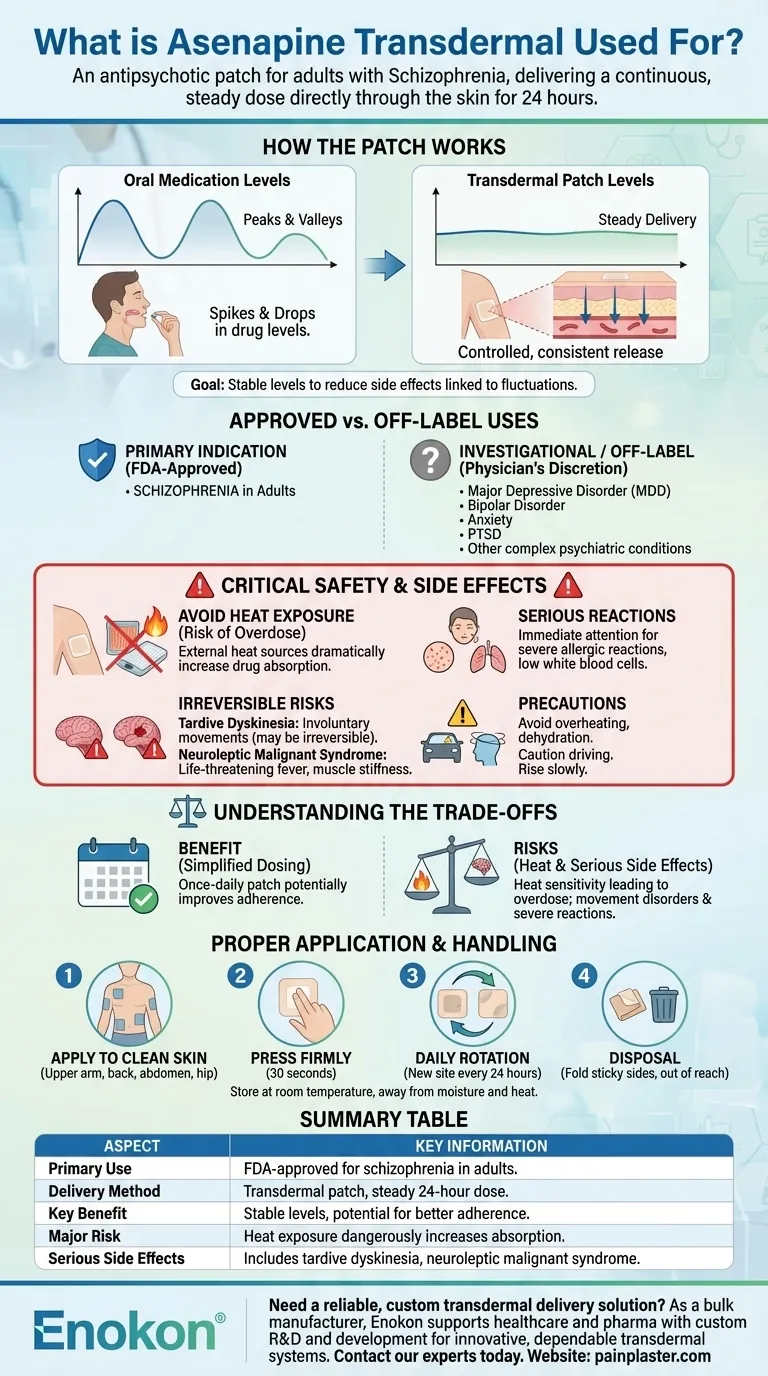
At its core, asenapine transdermal is an antipsychotic medication delivered through a skin patch, officially approved for the treatment of schizophrenia in adults. This system provides a continuous, steady dose of the drug directly through the skin over a 24-hour period.
The asenapine patch is designed to overcome the peaks and valleys of oral medication, aiming for more stable drug levels in the body. However, this delivery method introduces unique risks, particularly related to heat exposure, alongside the serious side effects common to all antipsychotics.
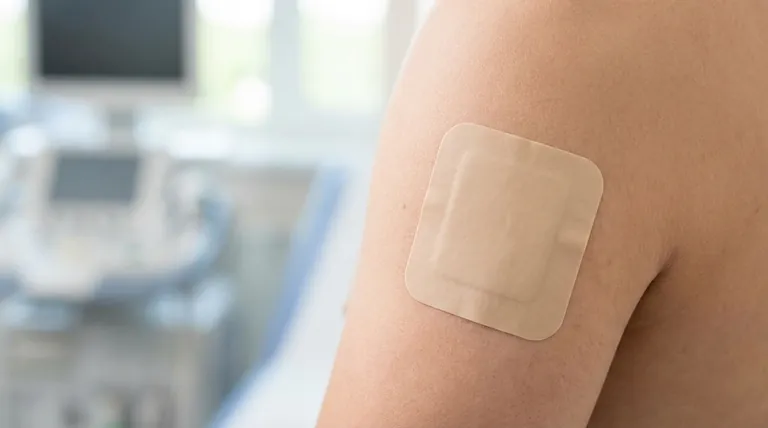
How the Asenapine Patch Works
The primary innovation of asenapine transdermal is not the drug itself, but its delivery method. Understanding this is key to understanding its purpose and risks.
A Steady Delivery System
The patch is a transdermal system, meaning it delivers medication across the layers of the skin and into the bloodstream.
This method is designed to release the drug at a controlled, consistent rate over a full 24-hour cycle.
The Goal: Stable Medication Levels
Oral medications can cause drug levels in the blood to spike shortly after a dose and then fall before the next one.
By providing a steady release, the transdermal system aims to smooth out these fluctuations. This may help in reducing certain side effects that are linked to these peaks in medication concentration.
Approved vs. Off-Label Uses
While asenapine transdermal has one primary approved use, it is sometimes used for other conditions.
Primary Indication: Schizophrenia
The U.S. Food and Drug Administration (FDA) has approved the asenapine transdermal system specifically for treating schizophrenia in adult patients.
Investigational and Off-Label Applications
Physicians may prescribe a drug "off-label" for conditions not officially approved by the FDA.
Off-label uses for asenapine may include major depressive disorder (MDD), bipolar disorder, anxiety, PTSD, and other complex psychiatric conditions. This is based on the prescribing doctor's clinical judgment.
Critical Safety Information and Side Effects
Like all antipsychotic medications, asenapine carries significant risks that require careful management and awareness.
Key Warnings and Precautions
Certain activities and conditions must be avoided while using the patch.
Avoid external heat sources like heating pads or electric blankets on the patch area. Heat can dramatically increase the rate of drug absorption, potentially leading to an overdose.
Also, avoid becoming overheated or dehydrated. Use caution when driving until you know how the medication affects you, and rise slowly from a sitting or lying position to prevent dizziness.
Serious Potential Side Effects
You must be aware of signs that require immediate medical attention.
These include severe allergic reactions (hives, swelling of the face or throat, difficulty breathing), uncontrolled muscle movements, and signs of low white blood cell counts like fever, chills, or mouth sores.
Irreversible and Life-Threatening Risks
Two of the most severe potential side effects are tardive dyskinesia and neuroleptic malignant syndrome.
Tardive dyskinesia involves involuntary, repetitive body movements and may be irreversible, even after stopping the medication.
Neuroleptic malignant syndrome is a rare but life-threatening reaction characterized by high fever, severe muscle stiffness, confusion, and irregular heartbeats.
Understanding the Trade-offs
Choosing a transdermal system involves weighing its unique benefits against its specific risks.
Benefit: Simplified Dosing
For some, a once-daily patch can be simpler to manage than remembering to take oral medication multiple times a day, potentially improving treatment adherence.
Risk: Increased Heat Sensitivity
The major trade-off of the patch is its sensitivity to heat. Any situation that raises your body temperature or applies direct heat to the patch can cause a dangerous spike in drug absorption.
Risk: Serious Antipsychotic Side Effects
The fundamental risks of the medication—such as movement disorders and severe nervous system reactions—remain present regardless of the delivery method. The patch does not eliminate these serious potential outcomes.
Proper Application and Handling
Correctly applying, removing, and storing the patch is essential for safety and effectiveness.
Step-by-Step Application
Always apply the patch to a clean, dry, and intact area of skin on the upper arm, upper back, abdomen, or hip.
After opening the pouch, peel off half of the protective liner and press the sticky side firmly onto the skin. Then, peel off the second half and press the entire patch down for at least 30 seconds. Wash your hands immediately after.
Daily Rotation and Disposal
A patch should be worn for 24 hours.
After 24 hours, remove the old patch slowly. Apply the new patch to a different location to avoid skin irritation. Fold the used patch in half with the sticky sides together and dispose of it safely, out of reach of children and pets.
Storage Guidelines
Store the sealed pouches at room temperature, away from excess moisture and heat, to ensure the medication remains stable.
Making the Right Choice for Your Treatment
Your decision to use asenapine transdermal should be based on a clear understanding of its role in your overall treatment plan.
- If your primary focus is consistent medication levels: The transdermal patch is designed to provide a steady dose, which may help manage schizophrenia with fewer side effects related to drug level fluctuations.
- If your greatest concern is potential side effects: You must have a frank discussion with your doctor about the significant risks, including irreversible movement disorders and life-threatening reactions common to this class of drugs.
- If you live an active lifestyle or are exposed to heat: The patch's sensitivity to heat, which can cause an overdose, is a critical safety factor that you must be prepared to manage diligently.
Understanding the specific purpose and unique risks of this delivery system is the first step toward using it effectively and safely.
Summary Table:
| Aspect | Key Information |
|---|---|
| Primary Use | FDA-approved for treating schizophrenia in adults. |
| Delivery Method | Transdermal patch providing a steady 24-hour dose. |
| Key Benefit | Aims for stable drug levels, potentially improving adherence. |
| Major Risk | Heat exposure can dangerously increase drug absorption. |
| Serious Side Effects | Includes tardive dyskinesia and neuroleptic malignant syndrome. |
Need a reliable, custom transdermal delivery solution?
As Enokon, a bulk manufacturer of reliable transdermal patches and pain plasters, we understand the critical balance between effective drug delivery and patient safety. Our technical expertise supports healthcare and pharma distributors and brands with custom R&D and development to create innovative, dependable transdermal systems.
Let us help you bring your next project to life. Contact our experts today to discuss your specific needs.
Visual Guide
Related Products
- Silicone Scar Sheets Patch Transdermal Drug Patch
- Far Infrared Heat Pain Relief Patches Transdermal Patches
- Menthol Gel Pain Relief Patch
- Icy Hot Menthol Medicine Pain Relief Patch
- Mugwort Wormwood Pain Relief Patch for Neck Pain
People Also Ask
- What role does a silicone-based transdermal delivery system play in Parkinson's? Enhancing Early-Stage Patient Care
- How is the long-term skin tolerance of silicone-based transdermal patches evaluated in clinical settings? R&D and Safety
- Why is a polarizing microscope used to evaluate the long-term stability of transdermal drug patches? Ensure Efficacy.
- What are common adverse effects of transdermal drug delivery? Risks & Prevention Tips
- What are the advantages of transdermal drug patches? Optimize Medication Delivery with Patches











