
Diclofenac skin patches are a targeted treatment used to relieve localized pain from minor injuries such as sprains, strains, and bruises. As a Non-Steroidal Anti-Inflammatory Drug (NSAID), the patch delivers medication directly through the skin to the affected area, working to decrease the underlying inflammation that causes pain.
The diclofenac patch offers targeted relief for minor, localized injuries by delivering an anti-inflammatory medication directly through the skin. However, understanding its proper application and potential systemic risks is crucial for safe and effective use.

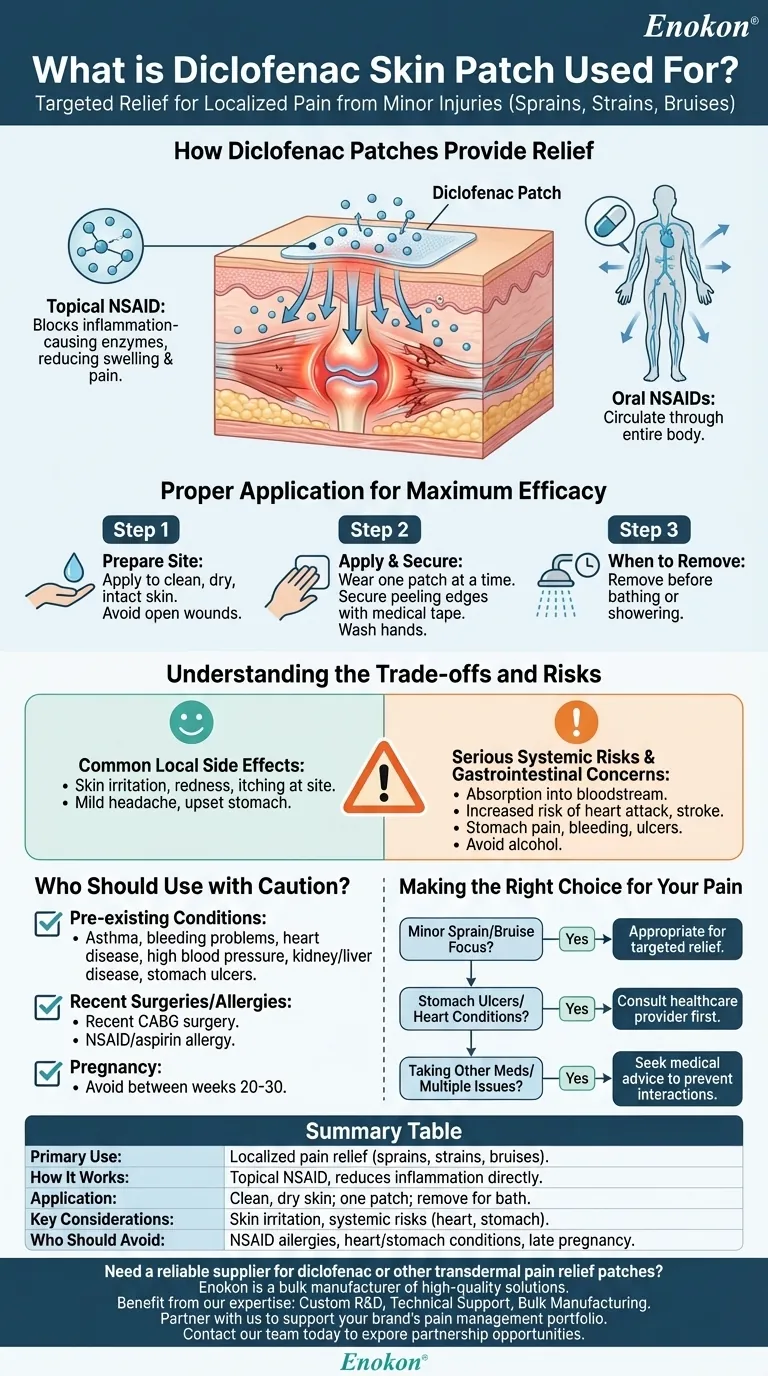
How Diclofenac Patches Provide Relief
The Role of NSAIDs
Diclofenac belongs to a class of medications known as Non-Steroidal Anti-Inflammatory Drugs (NSAIDs). These drugs work by blocking specific enzymes in the body that produce inflammatory chemicals, thereby reducing swelling, stiffness, and pain.
Targeted Local Delivery
Unlike oral NSAIDs that circulate throughout your entire body, the patch is applied directly over the painful area. This allows the medication to be absorbed through the skin, concentrating its effect at the source of the injury for continuous relief.
Proper Application for Maximum Efficacy
Prepare the Application Site
The patch must be applied to clean, dry, and intact skin. Never apply it to open wounds, damaged skin, or areas with an active infection.
Applying and Securing the Patch
Wash your hands before and after handling the patch. You should only wear one patch at a time as directed by your healthcare provider. If the edges begin to peel off, you can secure them with medical tape.
When to Remove It
The patch should be removed before bathing or showering to ensure it remains effective and adheres properly to the skin.
Understanding the Trade-offs and Risks
Common Local Side Effects
The most common side effects are typically mild and localized to the application area. These can include skin irritation, redness, or itching. Other potential side effects include headache, upset stomach, or loss of appetite.
Serious Systemic Risks
Although applied topically, diclofenac can be absorbed into the bloodstream and carries the same serious risks as other NSAIDs. Be aware of a potential increased risk of heart attack or stroke.
Gastrointestinal Concerns
NSAIDs can cause significant stomach issues. Monitor for symptoms such as stomach pain, bleeding, or ulcers, and discontinue use if these occur. Avoid consuming alcohol or using other NSAIDs while using the patch to reduce this risk.
Who Should Use Diclofenac Patches with Caution?
Pre-existing Medical Conditions
It is critical to inform your healthcare provider if you have a history of specific conditions before using this product. These include asthma, bleeding problems, heart disease, high blood pressure, kidney or liver disease, or stomach ulcers.
Recent Surgeries or Allergies
Do not use this patch if you have recently undergone coronary artery bypass graft (CABG) surgery. You must also avoid it if you have a known allergy to NSAIDs, aspirin, or any other substances.
Special Considerations for Pregnancy
Pregnant women should be particularly cautious. You should avoid using the diclofenac patch between weeks 20 and 30 of pregnancy unless specifically directed by a physician.
Making the Right Choice for Your Pain
- If your primary focus is treating a recent minor sprain or bruise: The diclofenac patch is an appropriate choice for providing targeted, localized relief.
- If you have a history of stomach ulcers or heart conditions: You must consult your healthcare provider before using this product due to the inherent risks of NSAIDs.
- If you are taking other medications or have multiple health issues: It is critical to seek professional medical advice before application to prevent dangerous interactions and side effects.
Ultimately, using the diclofenac patch correctly and being aware of its limitations empowers you to manage localized pain safely and effectively.
Summary Table:
| Key Aspect | Details |
|---|---|
| Primary Use | Relief of localized pain from minor injuries (sprains, strains, bruises) |
| How It Works | Topical NSAID; delivers medication directly through the skin to reduce inflammation |
| Application | Apply to clean, dry, intact skin; one patch at a time; remove before bathing |
| Key Considerations | Risk of skin irritation; systemic risks (heart, stomach) similar to oral NSAIDs |
| Who Should Avoid | Individuals with NSAID allergies, certain heart/stomach conditions, or in late pregnancy |
Need a reliable supplier for diclofenac or other transdermal pain relief patches?
Enokon is a bulk manufacturer of high-quality, reliable transdermal patches and pain plasters. We partner with healthcare and pharmaceutical distributors and brands to deliver effective OTC and prescription solutions.
Benefit from our expertise:
- Custom R&D: We can develop patches tailored to your specific active ingredients and release profiles.
- Technical Support: Leverage our deep knowledge of transdermal technology for your product development.
- Bulk Manufacturing: Scale your production with a trusted partner focused on quality and consistency.
Let's discuss how we can support your brand's pain management portfolio. Contact our team today to explore partnership opportunities.
Visual Guide
Related Products
- Menthol Gel Pain Relief Patch
- Icy Hot Menthol Medicine Pain Relief Patch
- Lidocaine Hydrogel Pain Relief Patch for Pain Relief
- Capsaicin Chili Medicated Pain Relief Patches
- Cooling Fever Patches Color Change Cold Fever Patch
People Also Ask
- How do pain relief patches compare to other pain relief methods? Discover Targeted, Long-Lasting Relief
- How effective are pain relief patches for muscle pain? Target Localized Pain with Transdermal Delivery
- Who should consult a healthcare professional before using pain relief patches? Ensure Your Safety with Medical Advice
- What are the potential side effects of pain relief patches? A Guide to Safe Use & Key Risks
- What are pain relief patches and how do they work? Discover Non-Invasive Pain Management













