
Rivastigmine skin patches are a transdermal medication primarily used to manage dementia symptoms associated with Alzheimer's disease and Parkinson's disease. They provide a steady drug delivery system, minimizing gastrointestinal side effects common with oral formulations. The patches are designed for once-daily application on healthy skin, with rotation sites recommended to prevent irritation. Patients must avoid heat exposure to prevent altered drug absorption.
Key Points Explained:
-
Primary Therapeutic Uses
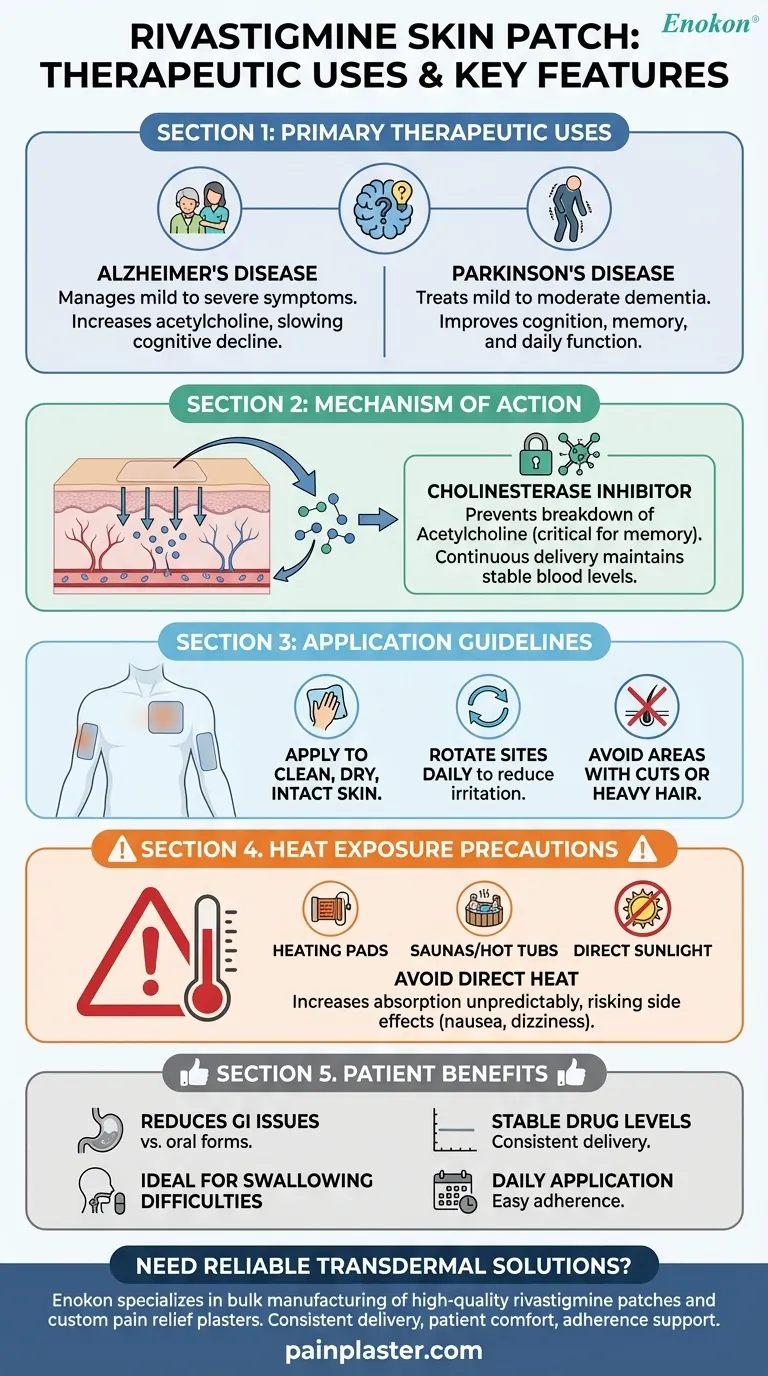
- Treats mild to moderate dementia caused by Parkinson's disease by improving cognition, memory, and daily function.
- Manages mild to severe Alzheimer's disease symptoms by increasing acetylcholine levels in the brain, slowing cognitive decline.
-
Mechanism of Action
- Rivastigmine is a cholinesterase inhibitor that prevents the breakdown of acetylcholine, a neurotransmitter critical for memory and learning.
- The patch delivers medication continuously through the skin, maintaining stable blood levels compared to oral doses.
-
Application Guidelines
- Apply to clean, dry, intact skin (upper arm, back, or chest) and rotate sites daily to reduce skin irritation.
- Avoid areas with cuts, rashes, or heavy hair to ensure proper adhesion and absorption.
-
Heat Exposure Precautions
- Direct heat sources (heating pads, saunas, hot tubs) can increase drug absorption unpredictably, risking side effects like nausea or dizziness.
- Prolonged sunlight exposure may degrade the patch adhesive or medication efficacy.
-
Patient Considerations
- Ideal for patients with swallowing difficulties or those prone to gastrointestinal upset from oral rivastigmine.
- Caregivers should monitor for skin reactions and ensure proper patch disposal after removal.
By understanding these factors, healthcare purchasers can evaluate the patch's suitability for patient populations requiring consistent dementia management with reduced systemic side effects.
Summary Table:
| Key Aspect | Details |
|---|---|
| Primary Uses | Treats mild to moderate dementia in Alzheimer's and Parkinson's disease. |
| Mechanism of Action | Cholinesterase inhibitor; boosts acetylcholine for memory and cognition. |
| Application Guidelines | Apply to clean, dry skin (upper arm/back/chest); rotate sites daily. |
| Heat Exposure Risks | Avoid saunas/heating pads to prevent erratic absorption and side effects. |
| Patient Benefits | Reduces GI issues vs. oral forms; ideal for swallowing difficulties. |
Need reliable transdermal solutions for dementia care?
Enokon specializes in bulk manufacturing of high-quality rivastigmine patches and custom pain relief plasters for healthcare distributors and pharma brands. Our expertise in transdermal technology ensures consistent drug delivery, patient comfort, and adherence support.
Contact us today to discuss your OEM/ODM needs or explore our product range!
Visual Guide
Related Products
- Lidocaine Hydrogel Pain Relief Patch for Pain Relief
- Silicone Scar Sheets Patch Transdermal Drug Patch
- Menthol Gel Pain Relief Patch
- Icy Hot Menthol Medicine Pain Relief Patch
- Far Infrared Heat Pain Relief Patches Transdermal Patches
People Also Ask
- How does the aqueous base in a lidocaine patch contribute to drug delivery? Unlocking Sustained Pain Relief Technology
- What are the advantages of topical anesthetics over invasive Lidocaine infiltration? Discover Safer, Scalable Relief
- Which pain patch is most effective for arthritis? Find the Best Relief for Your Joint Pain
- Why are lidocaine patches preferred over oral medications? Targeted Relief & Scale Your Brand with OEM R&D Solutions
- Will a GP routinely continue prescribing lidocaine patches after the initial period? Understanding Short-Term Pain Relief






