
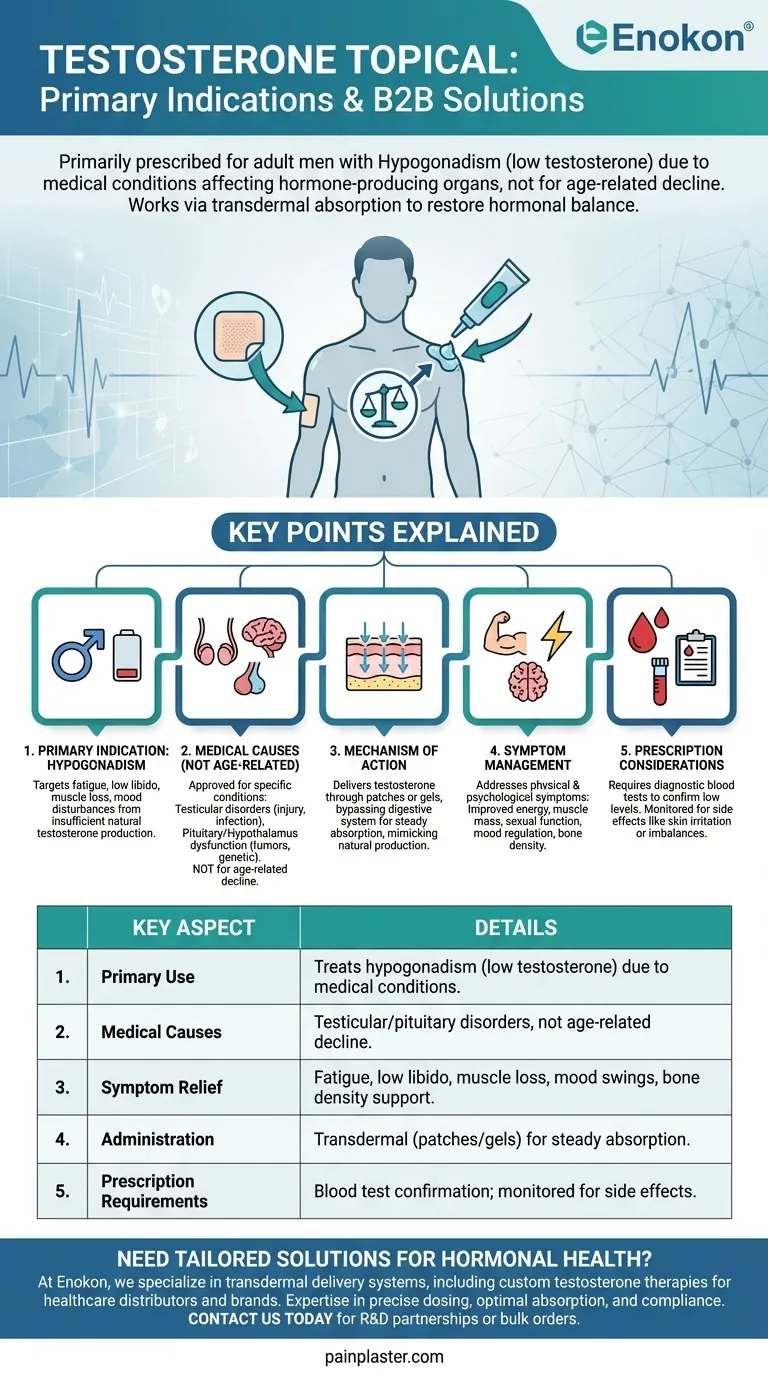
Testosterone topical is primarily prescribed to address symptoms of low testosterone (hypogonadism) in adult men, particularly when caused by medical conditions affecting hormone-producing organs like the testes, pituitary gland, or hypothalamus. It is not intended for age-related testosterone decline. The treatment works by supplementing testosterone levels through transdermal absorption, helping restore hormonal balance and alleviate associated symptoms.

Key Points Explained:
-
Primary Indication: Hypogonadism
- Testosterone topical is prescribed for men diagnosed with hypogonadism, a condition where the body fails to produce sufficient testosterone naturally.
- It targets symptoms like fatigue, low libido, muscle loss, and mood disturbances caused by this deficiency.
-
Medical Causes (Not Age-Related)
- Approved for cases linked to specific medical conditions, such as:
- Testicular disorders (e.g., injury, infection, or congenital issues).
- Pituitary gland or hypothalamus dysfunction (e.g., tumors or genetic conditions like Kallmann syndrome).
- Explicitly not approved for age-related testosterone decline ("andropause").
- Approved for cases linked to specific medical conditions, such as:
-
Mechanism of Action
- Delivers testosterone through the skin via patches or gels, bypassing the digestive system for steady absorption.
- Mimics natural hormone production, helping maintain stable blood levels.
-
Symptom Management
- Addresses physical and psychological symptoms, including:
- Improved energy and muscle mass.
- Enhanced sexual function and mood regulation.
- Bone density support (long-term deficiency can lead to osteoporosis).
- Addresses physical and psychological symptoms, including:
-
Prescription Considerations
- Requires diagnostic testing (blood tests) to confirm low testosterone levels.
- Monitored for side effects like skin irritation (patches) or secondary hormonal imbalances.
Have you considered how this treatment aligns with broader hormonal health strategies? Testosterone topical exemplifies how targeted therapies can address nuanced endocrine disruptions—quietly restoring vitality for those with clinically validated needs.
Summary Table:
| Key Aspect | Details |
|---|---|
| Primary Use | Treats hypogonadism (low testosterone) in men due to medical conditions. |
| Medical Causes | Testicular/pituitary disorders, not age-related decline. |
| Symptom Relief | Fatigue, low libido, muscle loss, mood swings, bone density support. |
| Administration | Transdermal (patches/gels) for steady absorption. |
| Prescription Requirements | Blood test confirmation; monitored for side effects (e.g., skin irritation). |
Need tailored solutions for hormonal health?
At Enokon, we specialize in transdermal delivery systems, including custom testosterone therapies for healthcare distributors and brands. Our expertise ensures precise dosing, optimal absorption, and compliance with regulatory standards.
Contact us today to discuss R&D partnerships or bulk orders of reliable transdermal patches and plasters.
Visual Guide
Related Products
- Prostate Pain Kidney Health Care Patch for Men
- Mugwort Wormwood Pain Relief Patch for Neck Pain
- Icy Hot Menthol Medicine Pain Relief Patch
- Menthol Gel Pain Relief Patch
- Heating Pain Relief Patches for Menstrual Cramps
People Also Ask
- What are the key components of Chinese herbal pain patches? Discover the Science Behind Natural Pain Relief
- What additional practices can enhance the effectiveness of Chinese pain patches? Boost Relief with Holistic Strategies
- What complementary practices enhance the effectiveness of Chinese pain patches? Boost Relief with Holistic Care
- What should be avoided when using Chinese pain patches? Key Safety Tips for Effective Relief
- How can Chinese pain patches help with back pain? Natural Relief & Healing Benefits



















