
The birth control patch is a small, adhesive patch that provides contraception by delivering hormones directly through your skin. It contains the same hormones found in many birth control pills, estrogen and progestin, which work together to reliably prevent pregnancy. By stopping the ovaries from releasing an egg (ovulation) and thickening the mucus in the cervix, it creates a dual barrier against conception.
The patch offers a highly effective and convenient weekly alternative to daily birth control pills. However, its success hinges on perfect weekly use, and its effectiveness can be compromised by certain factors, such as body weight and specific medications.

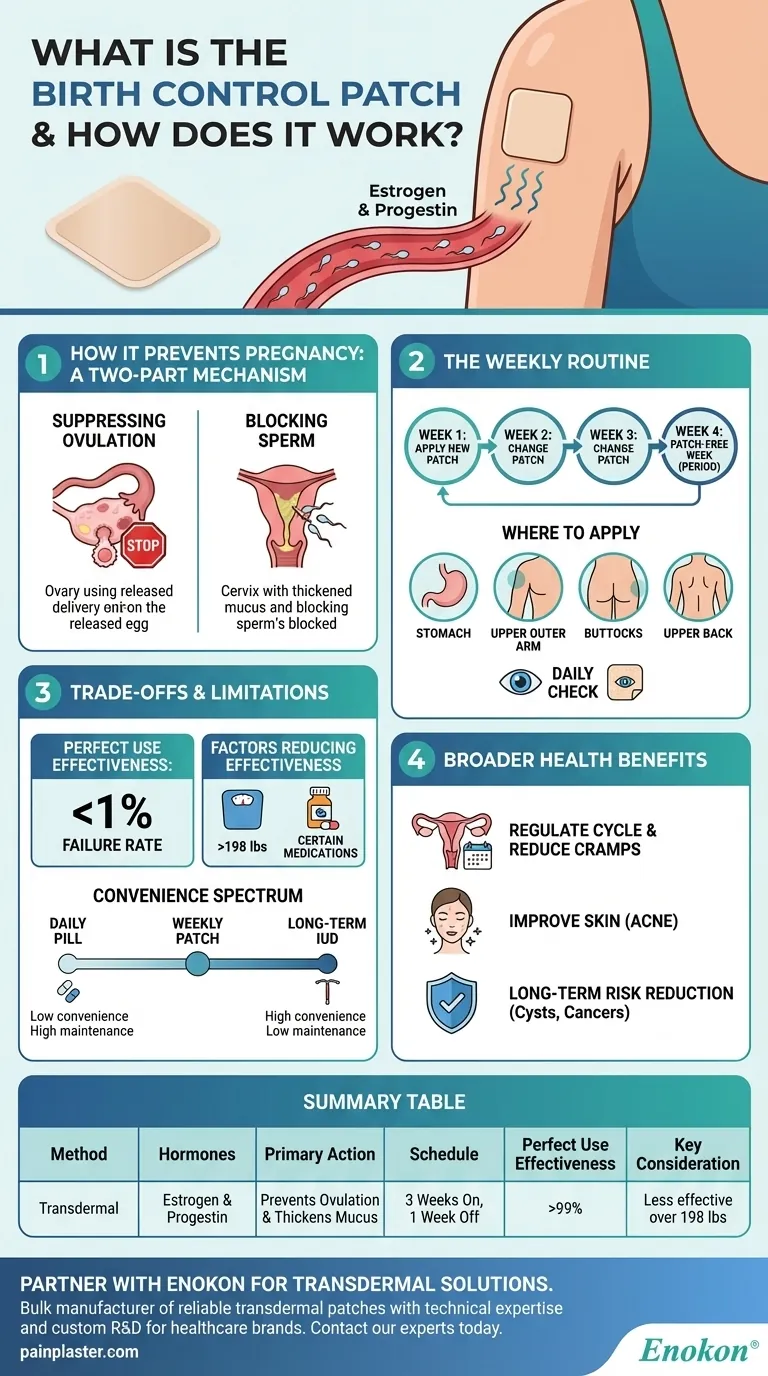
How the Patch Prevents Pregnancy: A Two-Part Mechanism
The patch uses a transdermal system, meaning it releases a steady, controlled dose of hormones through your skin and into your bloodstream. This combination of hormones creates two primary effects that prevent pregnancy.
Suppressing Ovulation
The consistent presence of estrogen and progestin in your system sends a signal to your brain to stop the hormonal cascade that leads to ovulation. If no egg is released from the ovaries, fertilization cannot occur.
Blocking Sperm
The progestin in the patch also thickens the mucus lining your cervix. This makes it significantly more difficult for sperm to travel through the cervix and reach an egg, should one be released.
The Weekly Routine: Application and Schedule
Proper and consistent use is the most critical factor in the patch's effectiveness. The routine is designed to be simple and easy to remember.
Where to Apply the Patch
The patch should be applied to clean, dry skin on the stomach, upper outer arm, buttocks, or upper back. Avoid placing it on irritated skin, areas that will be rubbed by tight clothing, or on your breasts.
The Three-Weeks-On, One-Week-Off Cycle
You wear one patch for a full seven days. On the same day each week (your "patch change day"), you remove the old patch and apply a new one. This is done for three consecutive weeks, followed by one "patch-free" week, during which you will likely have your period.
Daily Adherence Check
It is vital to check the patch daily to ensure it is still firmly attached. If it becomes loose or falls off, you may not be protected from pregnancy.
Understanding the Trade-offs and Limitations
While convenient, the patch is not the ideal solution for everyone. Understanding its effectiveness and potential downsides is key to making an informed choice.
Effectiveness and Failure Rate
When used perfectly and consistently, the patch has a failure rate of less than 1%. This means fewer than 1 out of 100 people using it correctly will become pregnant in a year.
Factors That Reduce Effectiveness
The patch may be less effective for individuals who weigh 198 pounds or more. Additionally, certain medications, including some antibiotics, anti-fungal treatments, and seizure medications, can interfere with the hormones and reduce its effectiveness.
Convenience vs. Maintenance
The patch eliminates the need for a daily pill, which many find convenient. However, it requires a weekly action and is visible on the skin. In contrast, longer-acting methods like the IUD or implant offer years of protection with no user maintenance after insertion.
The Broader Health Benefits
Beyond preventing pregnancy, the hormones in the patch can offer several additional health advantages.
Regulating Your Cycle
The patch can lead to lighter, more regular periods and significantly reduce menstrual cramps and symptoms of PMS (premenstrual syndrome).
Improving Skin and Other Conditions
For many users, the hormonal regulation provided by the patch can lead to a reduction in acne.
Long-Term Risk Reduction
Consistent use has been shown to help lessen or prevent more serious health issues, including cysts in the breasts and ovaries, ectopic pregnancy, and certain types of endometrial and ovarian cancers.
Is the Patch the Right Choice for You?
Choosing a contraceptive method is a personal decision based on your health, lifestyle, and goals.
- If your primary focus is convenience without a daily pill: The patch is an excellent option that only requires your attention once a week.
- If your primary focus is maximum, "set-it-and-forget-it" effectiveness: A longer-acting method like the hormonal IUD or implant may be more suitable.
- If your primary focus is managing menstrual symptoms: The patch is highly effective at regulating periods, reducing cramps, and easing PMS.
Consulting with a healthcare provider is the best way to determine if the birth control patch aligns with your individual health needs and lifestyle.
Summary Table:
| Aspect | Key Detail |
|---|---|
| Method | Transdermal (skin patch) |
| Hormones | Estrogen & Progestin |
| Primary Action | Prevents ovulation & thickens cervical mucus |
| Schedule | Wear for 3 weeks, 1 week off |
| Perfect Use Effectiveness | >99% (<1% failure rate) |
| Key Consideration | May be less effective for individuals over 198 lbs |
Partner with Enokon for Your Transdermal Solutions
As a bulk manufacturer of reliable transdermal patches, Enokon provides the technical expertise and custom R&D that healthcare and pharmaceutical distributors and brands need. If you are developing a product like a contraceptive patch, our experience ensures quality, consistency, and effective hormone delivery.
Contact our experts today to discuss how we can support your product development and manufacturing goals.
Visual Guide
Related Products
- Prostate Pain Kidney Health Care Patch for Men
- Heating Pain Relief Patches for Menstrual Cramps
- Silicone Scar Sheets Patch Transdermal Drug Patch
- Menthol Gel Pain Relief Patch
- Icy Hot Menthol Medicine Pain Relief Patch
People Also Ask
- What are the key components of Chinese herbal pain patches? Discover the Science Behind Natural Pain Relief
- What are Chinese pain patches used for? Natural Relief for Joint & Muscle Pain
- What complementary practices enhance the effectiveness of Chinese pain patches? Boost Relief with Holistic Care
- What additional practices can enhance the effectiveness of Chinese pain patches? Boost Relief with Holistic Strategies
- What should be avoided when using Chinese pain patches? Key Safety Tips for Effective Relief








