
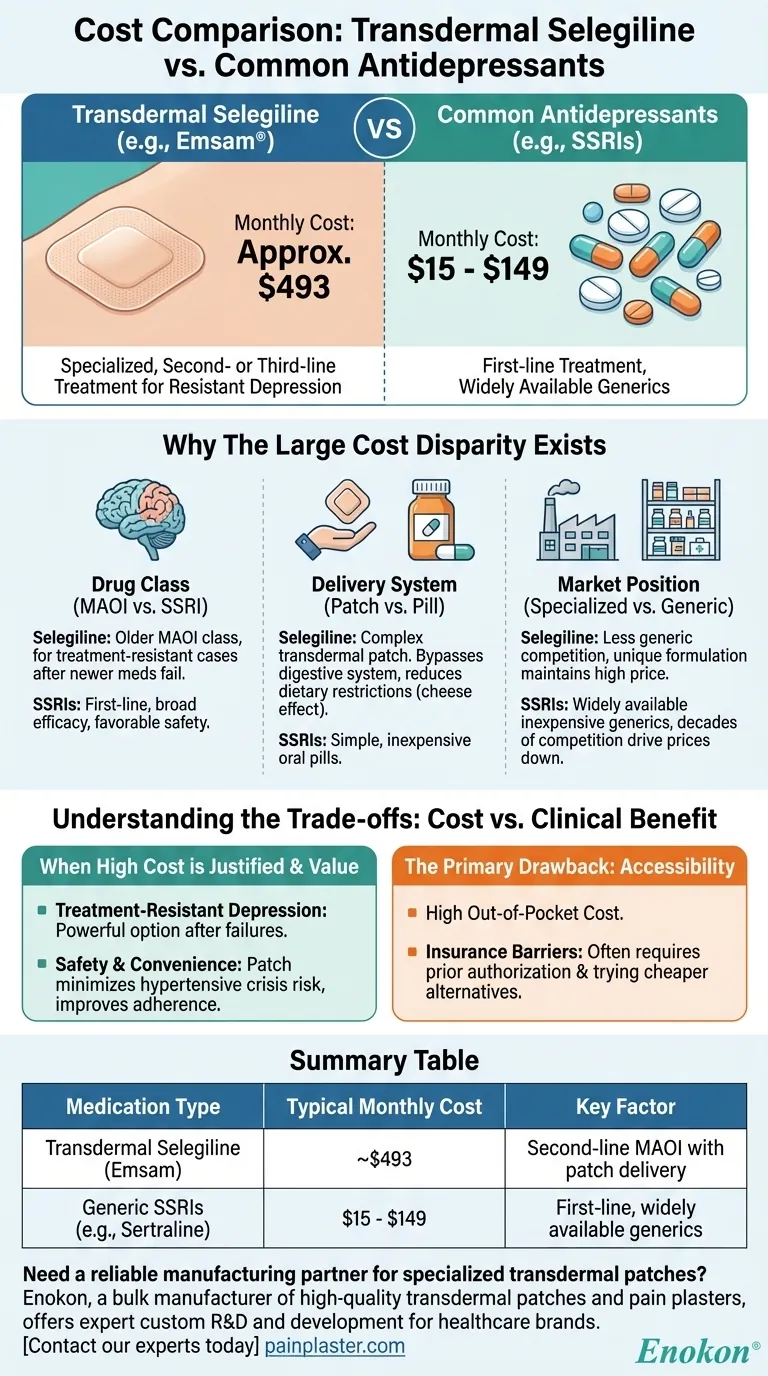
On a monthly basis, transdermal selegiline is substantially more expensive than common antidepressants. A one-month supply of the selegiline patch costs approximately $493, regardless of dosage strength. In stark contrast, first-line antidepressants like SSRIs typically range from just $15 to $149 for a month's supply.
The significant price difference isn't arbitrary; it reflects transdermal selegiline's distinct role as a specialized, second- or third-line treatment for depression, utilizing a more complex delivery system compared to widely available, generic oral medications.

Why The Large Cost Disparity Exists
Understanding the price requires looking beyond the dollar amount and into the pharmacology and market positioning of these medications. The cost difference is driven by three main factors: the drug's class, its unique delivery system, and its place in the market.
The Role of Drug Class: MAOI vs. SSRI
Selegiline belongs to an older class of antidepressants called Monoamine Oxidase Inhibitors (MAOIs). While often very effective, MAOIs are typically reserved for cases of treatment-resistant depression after newer medications have failed.
In contrast, the less expensive drugs are usually Selective Serotonin Reuptake Inhibitors (SSRIs) or similar agents. These are considered first-line treatments due to their favorable safety profile and broad efficacy for a wide range of patients.
The Delivery System: Transdermal Patch Technology
A major reason for selegiline's high cost is its delivery method: a transdermal patch. Manufacturing a patch is a more complex and expensive process than producing a simple oral pill.
This patch system is not a gimmick. For an MAOI, it provides a critical clinical benefit by bypassing the digestive system. This significantly reduces the need for the strict dietary restrictions (avoiding tyramine-rich foods) that are required with oral MAOIs to prevent a dangerous spike in blood pressure.
Market Position and Generic Availability
The most common antidepressants, like fluoxetine or sertraline (SSRIs), are widely available as inexpensive generics. Decades of competition have driven their prices down dramatically.
Transdermal selegiline (brand name Emsam) has faced less generic competition. As a more specialized medication with a unique formulation, its price remains high.
Understanding the Trade-offs: Cost vs. Clinical Benefit
The decision to use a medication like transdermal selegiline involves weighing its high cost against its unique and powerful benefits for specific patient profiles.
When is the High Cost Justified?
The primary justification is for treatment-resistant depression. When a patient has not responded to multiple trials of first-line antidepressants, a more potent medication with a different mechanism of action, like an MAOI, becomes a necessary clinical option.
The "Hidden" Value: Safety and Convenience
The patch's key advantage is safety. It minimizes the risk of the infamous "cheese effect"—a hypertensive crisis from consuming tyramine-rich foods. This improved safety profile and freedom from a highly restrictive diet is a significant factor in its clinical value.
The Primary Drawback: Accessibility
The obvious barrier is the high out-of-pocket cost. Insurance coverage can be a significant hurdle, often requiring prior authorization to demonstrate that several other, cheaper alternatives have already been tried without success.
Making the Right Choice for Your Situation
The cost-benefit analysis depends entirely on the clinical context and treatment history.
- If your primary focus is initial treatment for depression: Standard, cost-effective options like SSRIs are the universally accepted starting point.
- If you are dealing with treatment-resistant depression: Transdermal selegiline represents a powerful, albeit costly, option that may be clinically necessary after other medications have failed.
- If you require an MAOI but are concerned about dietary restrictions: The transdermal patch offers a significant safety advantage over oral MAOIs that can justify its consideration.
Ultimately, understanding the clinical reasons behind the cost empowers you to have a more informed conversation with your healthcare provider about the right path forward.
Summary Table:
| Medication Type | Typical Monthly Cost | Key Factor |
|---|---|---|
| Transdermal Selegiline (Emsam) | ~$493 | Second-line MAOI with patch delivery |
| Generic SSRIs (e.g., Sertraline) | $15 - $149 | First-line, widely available generics |
Need a reliable manufacturing partner for specialized transdermal patches?
As Enokon, a bulk manufacturer of high-quality transdermal patches and pain plasters, we understand the complex technology behind effective drug delivery systems. Our technical expertise supports healthcare and pharma brands in custom R&D and development, ensuring reliable and consistent production.
Contact our experts today to discuss your transdermal patch development needs.
Visual Guide
Related Products
- Silicone Scar Sheets Patch Transdermal Drug Patch
- Menthol Gel Pain Relief Patch
- Far Infrared Heat Pain Relief Patches Transdermal Patches
- Icy Hot Menthol Medicine Pain Relief Patch
- Mugwort Wormwood Pain Relief Patch for Neck Pain
People Also Ask
- What role does a silicone-based transdermal delivery system play in Parkinson's? Enhancing Early-Stage Patient Care
- How is the long-term skin tolerance of silicone-based transdermal patches evaluated in clinical settings? R&D and Safety
- Why is a polarizing microscope used to evaluate the long-term stability of transdermal drug patches? Ensure Efficacy.
- What are common adverse effects of transdermal drug delivery? Risks & Prevention Tips
- What are the advantages of transdermal drug patches? Optimize Medication Delivery with Patches




