
In short, the current evidence is clear. Observational data increasingly indicate that transdermal menopausal hormone therapy (MHT) offers a superior safety profile compared to oral therapy. This preference is primarily due to significantly lower risks of developing blood clots and gallbladder disease.
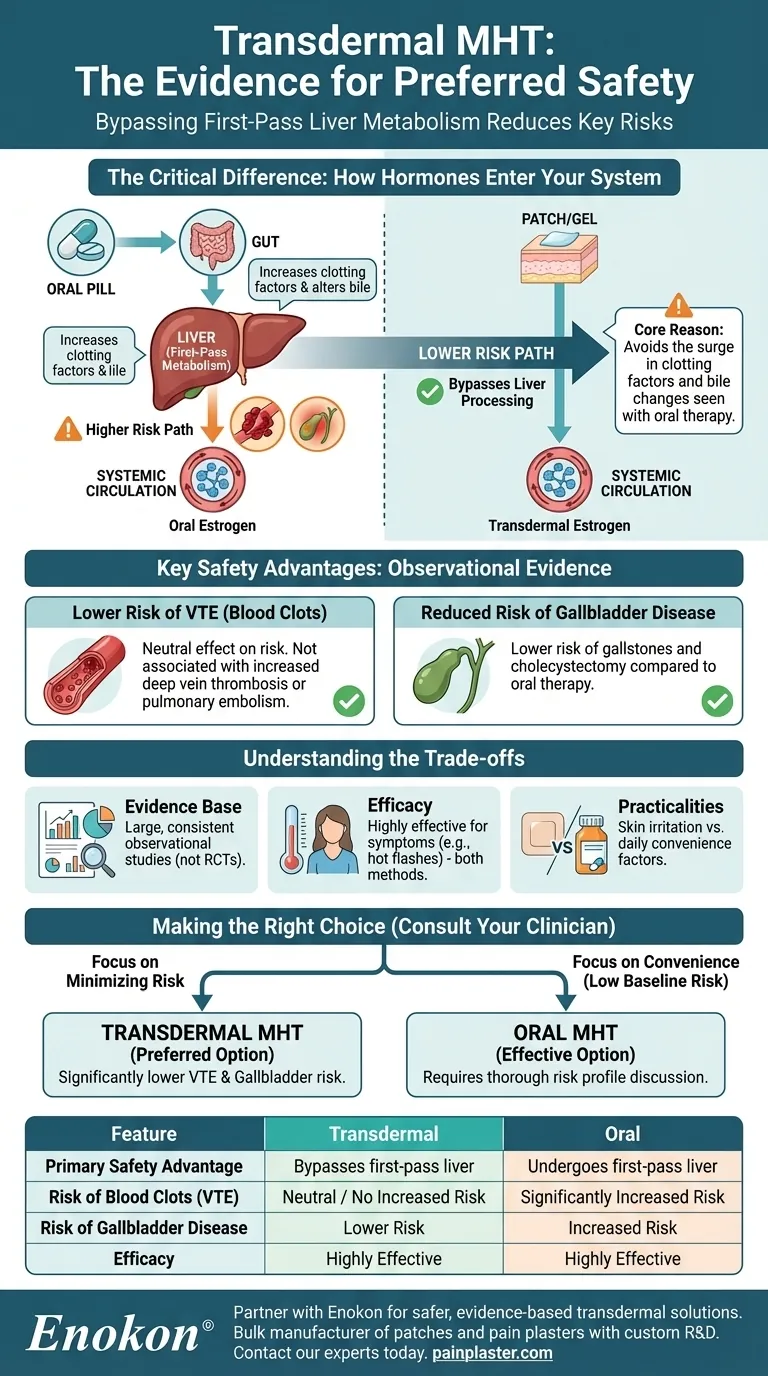
The core reason for this difference lies in how the estrogen is processed. By being absorbed through the skin, transdermal therapy bypasses the liver's "first-pass metabolism," which is the key mechanism responsible for the increased risks associated with oral estrogen.

The Critical Difference: How Hormones Enter Your System
The choice between a pill and a patch isn't just about convenience; it fundamentally changes how your body handles the hormones, which directly impacts your risk profile.
Oral Estrogen and First-Pass Metabolism
When you take an estrogen pill, it's absorbed from your gut and travels directly to the liver. This initial, concentrated processing is known as the first-pass effect.
This effect can cause the liver to increase the production of certain proteins, including those involved in blood clotting and those that affect the composition of bile.
Transdermal Estrogen Bypasses the Liver
Transdermal methods, such as patches or gels, deliver estrogen directly into the systemic circulation.
The hormone is absorbed through the skin and enters the bloodstream without first being metabolized by the liver. This avoids the surge in clotting factors and changes in bile that are seen with oral therapy.
The Evidence: Key Safety Advantages of Transdermal Therapy
Bypassing the liver is not just a theoretical benefit. Observational studies have consistently linked this delivery method to a reduction in two serious health risks.
Lower Risk of Venous Thromboembolism (VTE)
The most well-established advantage of transdermal estrogen is its neutral effect on blood clot risk.
Because it avoids stimulating the liver's production of clotting factors, transdermal therapy is not associated with the increased risk of VTE (deep vein thrombosis or pulmonary embolism) that is linked to oral estrogen. This makes it a much safer choice for many individuals, especially those with other VTE risk factors.
Reduced Risk of Gallbladder Disease
Oral estrogens can alter the makeup of bile, making it more likely for gallstones to form. This can lead to inflammation and the potential need for gallbladder removal, known as a cholecystectomy.
By avoiding the first-pass effect in the liver, transdermal therapy does not appear to carry this same level of risk for gallbladder disease.
Understanding the Trade-offs
While the safety evidence strongly favors transdermal delivery, it's important to view the decision within a complete context.
The Nature of the Evidence
It is critical to note that the bulk of this supporting data comes from observational studies. While these studies are large and consistent, they are not the same as randomized controlled trials, which are the gold standard for medical evidence.
Efficacy is Not the Issue
Both oral and transdermal MHT are highly effective at treating menopausal symptoms like hot flashes, night sweats, and vaginal atrophy. The preference for transdermal therapy is based on its superior safety profile, not superior symptom relief.
Practical Considerations
The best therapy is one that is used consistently. Some individuals may experience skin irritation from patches, while others might prefer the simplicity of a daily pill over applying a gel. These practical factors are an essential part of the decision.
Making the Right Choice for Your Goal
Your personal health profile and priorities should guide your decision in consultation with your clinician.
- If your primary focus is minimizing risk: Transdermal hormone therapy is the evidence-based preferred option due to its significantly lower risk of blood clots and gallbladder disease.
- If your primary focus is convenience and you have a very low baseline risk for cardiovascular or gallbladder issues: Oral therapy remains an effective option, but this decision requires a thorough discussion of its distinct risk profile with your doctor.
Ultimately, understanding how delivery methods alter risk empowers you to make an informed and personalized choice for managing your health.
Summary Table:
| Feature | Transdermal MHT (Patches/Gels) | Oral MHT (Pills) |
|---|---|---|
| Primary Safety Advantage | Bypasses first-pass liver metabolism | Undergoes first-pass liver metabolism |
| Risk of Blood Clots (VTE) | Neutral / Not associated with increased risk | Significantly increased risk |
| Risk of Gallbladder Disease | Lower risk | Increased risk |
| Efficacy for Menopausal Symptoms | Highly Effective | Highly Effective |
| Key Evidence Base | Large, consistent observational studies | Large, consistent observational studies |
Ready to develop safer, evidence-based transdermal hormone therapy solutions?
Partner with Enokon, a bulk manufacturer of reliable transdermal patches and pain plasters. We provide healthcare and pharmaceutical distributors and brands with the technical expertise for custom R&D and development, ensuring your products leverage the latest safety and efficacy data.
Contact our experts today to discuss your project needs and benefit from our specialized manufacturing capabilities.
Visual Guide
Related Products
- Menthol Gel Pain Relief Patch
- Cooling Fever Patches Color Change Cold Fever Patch
- Icy Hot Menthol Medicine Pain Relief Patch
- Herbal Eye Protection Patch Eye Patch
- Far Infrared Heat Pain Relief Patches Transdermal Patches
People Also Ask
- How do pain relief patches compare to other pain relief methods? Discover Targeted, Long-Lasting Relief
- How effective are pain relief patches for muscle pain? Target Localized Pain with Transdermal Delivery
- Who should consult a healthcare professional before using pain relief patches? Ensure Your Safety with Medical Advice
- What are some common applications of pain relief patches? Effective Relief for Muscle & Joint Pain
- What are pain relief patches and how do they work? Discover Non-Invasive Pain Management





