
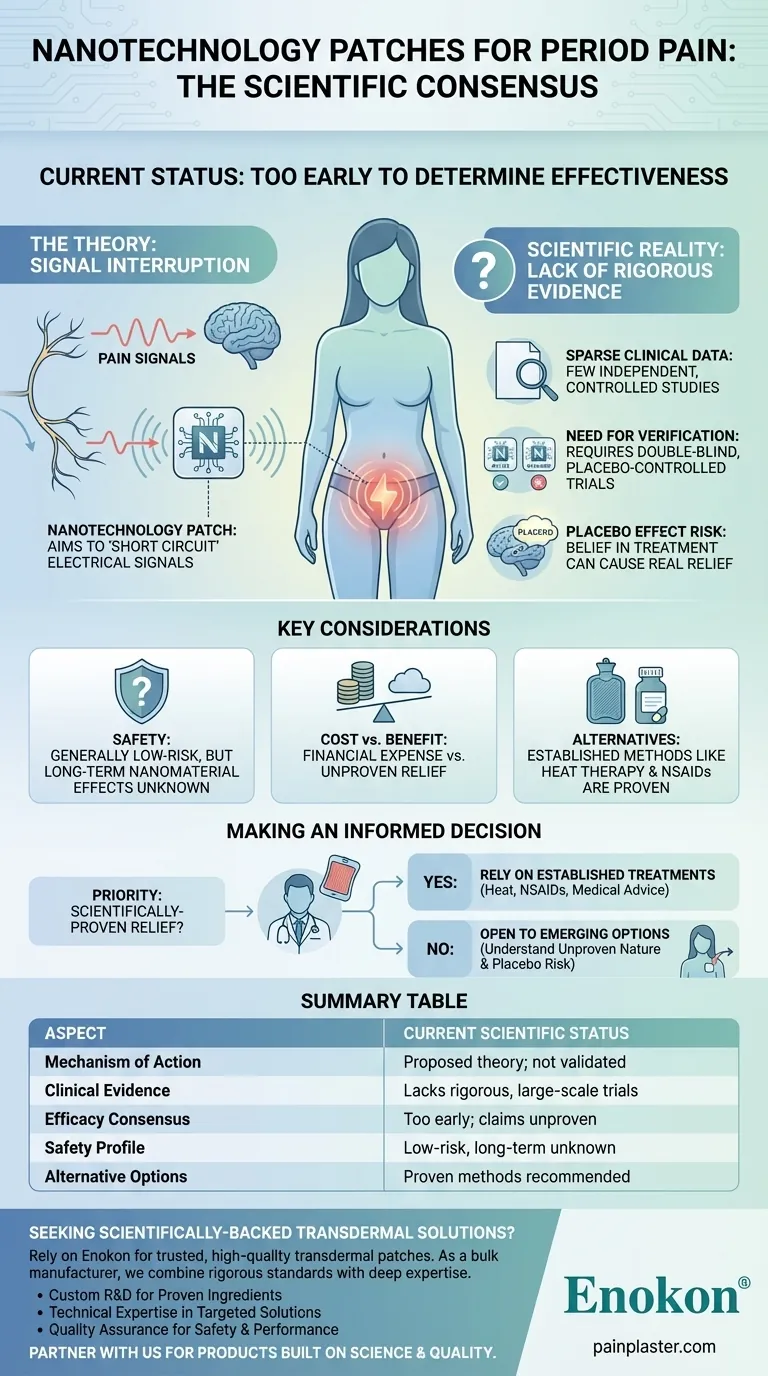
To be clear, the current scientific consensus is that it is too early to determine the effectiveness of nanotechnology patches for period pain. While the proposed mechanism is intriguing, there is a lack of rigorous, large-scale clinical studies needed to validate the claims of pain relief.
While nanotechnology patches for pain relief are based on a novel concept of interrupting the body's electrical pain signals, the scientific community has not yet verified their efficacy through sufficient clinical research.

How These Patches Claim to Work
To understand the debate, it's essential to first grasp the underlying theory behind these products. The core idea is not chemical, but electrical.
The Body's Pain Signals
When your body experiences pain, such as menstrual cramps, your nerves generate and transmit tiny electrical signals. These signals travel through your nervous system to your brain, which then interprets them as the sensation of pain.
The "Signal Interruption" Theory
The manufacturers claim the nanotechnology within the patch is engineered to absorb and disperse these localized electrical signals. By essentially creating an electrical "short circuit" at the source of the pain, the patch aims to prevent the pain signal from ever reaching the brain, thereby providing relief.
The State of the Scientific Evidence
A product's claims and its scientifically-proven reality can be two very different things. The primary issue with nanotechnology patches is the gap between theory and evidence.
A Lack of Rigorous Studies
The current scientific consensus is built on peer-reviewed, controlled studies. As of now, such evidence for nanotechnology pain patches is sparse to non-existent. Most claims are supported by company-sponsored data or anecdotal reports, not independent clinical trials.
The Need for Verification
To establish true effectiveness, these patches would need to be tested in double-blind, placebo-controlled trials. This would mean comparing them against a non-active "placebo" patch to prove that the relief experienced is due to the technology itself and not another factor.
Understanding the Key Considerations
When evaluating any emerging health technology, it's critical to consider the full picture, including potential pitfalls and alternative explanations.
The Power of the Placebo Effect
The placebo effect is a well-documented phenomenon where a person can experience real physiological relief simply because they believe a treatment is working. For pain management, this effect can be particularly strong, and it's a critical factor to rule out with proper scientific testing.
Safety and Regulation
Most topical patches of this nature are considered low-risk as they don't introduce drugs into the bloodstream. However, without robust research, the long-term effects of the specific nanomaterials used are not fully understood.
Cost vs. Unproven Benefit
A significant trade-off is the financial cost. Consumers must weigh the expense of these products against the reality that their benefit has not yet been scientifically validated compared to more established, often less expensive, pain relief methods like heat therapy or NSAIDs.
Making an Informed Decision
Your choice depends entirely on your personal priorities and tolerance for uncertainty.
- If your primary focus is scientifically-proven relief: You should rely on established treatments like heat application, over-the-counter anti-inflammatories (NSAIDs), or medical advice from your doctor until more conclusive research on these patches emerges.
- If you are open to exploring emerging, low-risk options: You can try these patches with the understanding that their effectiveness is unproven and any relief you feel may be attributable to the placebo effect.
Ultimately, navigating new health technologies requires a clear understanding of what is claimed versus what has been proven.
Summary Table:
| Aspect | Current Scientific Status |
|---|---|
| Mechanism of Action | Proposed theory of interrupting electrical pain signals; not yet validated. |
| Clinical Evidence | Lacks rigorous, large-scale, independent clinical trials. |
| Efficacy Consensus | Too early to determine effectiveness; claims are not scientifically proven. |
| Safety Profile | Generally considered low-risk, but long-term effects of nanomaterials are unknown. |
| Alternative Options | Proven methods like heat therapy and NSAIDs are recommended for reliable relief. |
Seeking Scientifically-Backed Transdermal Solutions?
While the effectiveness of some patches remains unproven, you can rely on Enokon for trusted, high-quality transdermal patches and pain plasters. As a bulk manufacturer for healthcare and pharmaceutical distributors and brands, we combine rigorous manufacturing standards with deep technical expertise.
We help you deliver reliable relief:
- Custom R&D: Develop patches with proven, effective active ingredients.
- Technical Expertise: Benefit from our experience in creating targeted, reliable transdermal solutions.
- Quality Assurance: Ensure your products meet the highest standards of safety and performance.
Partner with us to create products built on a foundation of science and quality.
Contact our experts today to discuss your custom patch development needs.
Visual Guide
Related Products
- Far Infrared Knee Pain Patch Heat Patches for Pain Relief
- Far Infrared Deep Heat Relief Patches Medicated Pain Relief Patches
- Far Infrared Heat Pain Relief Patches Transdermal Patches
- Far Infrared Pain Patch Relief Pain Reliever for Back
- Menthol Gel Pain Relief Patch
People Also Ask
- Why Control Pseudo-diffusion in Pain Relief Patch Manufacturing? Enhance Efficacy & Performance
- How does high-purity far-infrared ceramic powder contribute to the efficacy of far-infrared physical therapy patches?
- What are pain relief patches and how are they used? A Guide to Safe, Targeted Relief
- What is the purpose of pain relief patches? Get Targeted Relief with Fewer Side Effects
- How should pain relief patches be applied and used? A Guide to Safe & Effective Targeted Relief















