
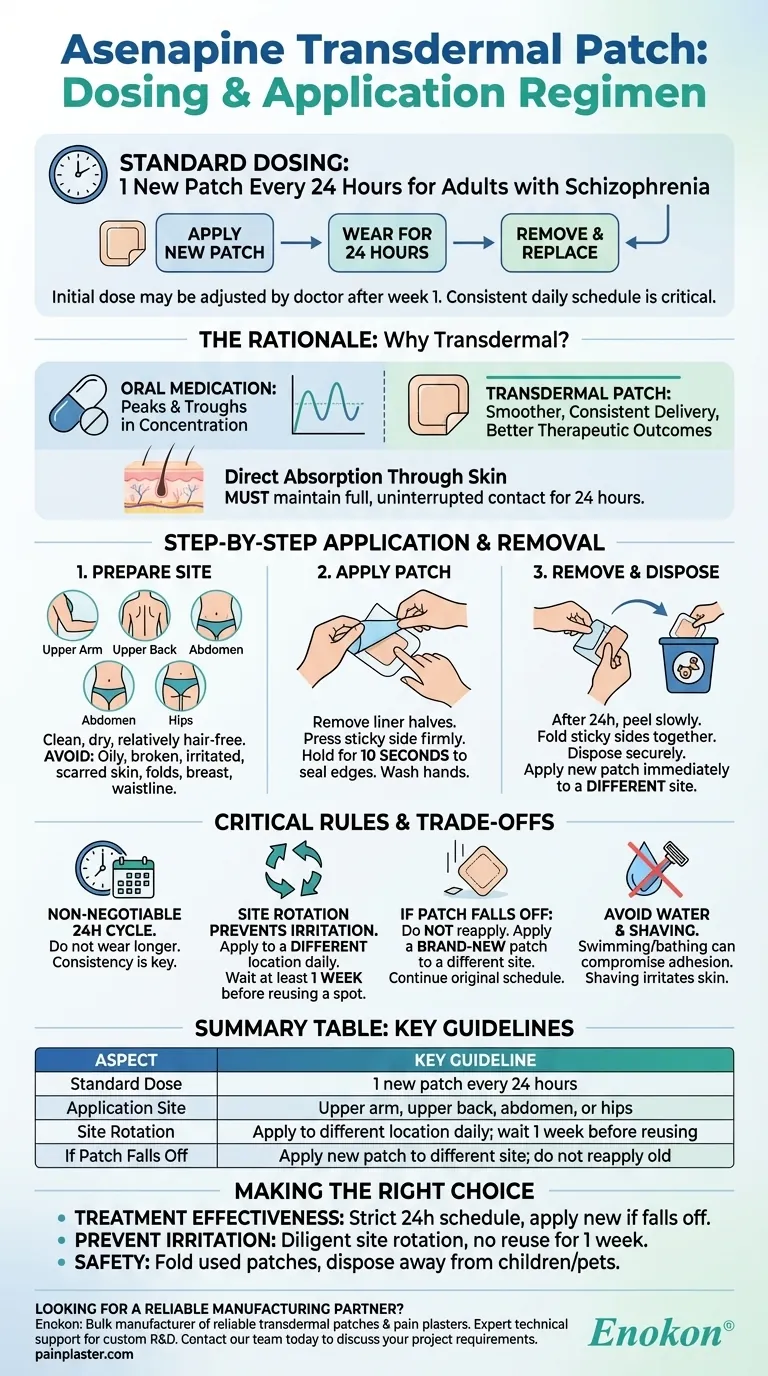
For adults with schizophrenia, the standard dosing for the asenapine transdermal patch is one new patch applied every 24 hours. This initial dose may be adjusted by a doctor after the first week of treatment. The patch must be applied to a clean, dry, and uninjured area of skin, with the application site changed daily.
The core principle of asenapine transdermal therapy is maintaining a consistent level of medication in the body. This is achieved by applying one new patch every 24 hours and meticulously rotating the application site to ensure proper skin health and drug absorption.
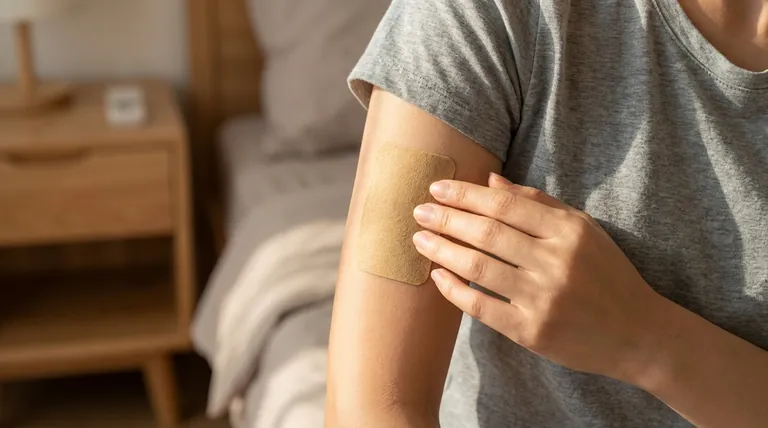
The Rationale Behind Transdermal Delivery
Why a Patch System?
Unlike oral medications that can cause peaks and troughs in drug concentration, a transdermal patch provides a smoother, more consistent delivery. This continuous release can lead to better therapeutic outcomes and helps manage potential side effects, as the patch can simply be removed to stop the medication if necessary.
The Importance of Skin Contact
The medication is absorbed directly through the skin into the bloodstream. For the patch to be effective, it must maintain full, uninterrupted contact with the skin for the entire 24-hour period.
Step-by-Step Application and Removal
Step 1: Choose and Prepare the Site
Select a clean, dry, and relatively hair-free area of skin. The recommended application sites are the upper arm, upper back, abdomen, or hips.
Avoid areas that are oily, broken, irritated, scarred, or have skin folds. Do not apply the patch to the breast, the waistline, or anywhere it could be easily rubbed off by clothing.
Step 2: Apply the New Patch
Carefully cut open the sealed pouch and remove the patch, holding it with the protective liner facing you.
Peel off one half of the liner and press the sticky side of the patch firmly onto the prepared skin site. Then, peel off the second half of the liner and press the rest of the patch down.
Press the entire patch firmly with the palm of your hand for about 10 seconds, making sure the edges are sealed completely. Wash your hands after application.
Step 3: Remove and Dispose of the Old Patch
After 24 hours, slowly peel off the old patch. Fold it in half so the sticky sides press together.
Dispose of the used patch securely, ensuring it is out of reach of children and pets. Apply your new patch to a different location immediately.
Understanding the Trade-offs and Critical Rules
The 24-Hour Cycle is Non-Negotiable
The patch is designed to deliver medication over a 24-hour period. It should not be worn for longer than this. Sticking to a consistent daily schedule is critical for treatment success.
Site Rotation Prevents Irritation
You must apply each new patch to a different location than the one used the day before. This practice is essential to prevent skin irritation.
Wait at least one week before applying a new patch to a previously used spot.
If a Patch Falls Off
If a patch becomes loose or falls off, do not attempt to reapply it. Remove the old patch and apply a brand-new patch to a different site. Continue with your original daily replacement schedule.
Avoiding Water and Shaving
The references advise avoiding activities like swimming or bathing while wearing the patch, as this can compromise its adhesion. Do not shave the application area, as this can irritate the skin.
Making the Right Choice for Your Goal
Following the correct procedure is the most important factor in the success of this treatment.
- If your primary focus is treatment effectiveness: Adhere strictly to the 24-hour replacement schedule and apply a new patch if the current one falls off.
- If your primary focus is preventing skin irritation: Rotate application sites diligently across the upper arms, upper back, abdomen, and hips, never re-using the same spot for at least one week.
- If your primary focus is safety: Always fold used patches sticky-side-in and dispose of them where they cannot be accessed by others, especially children.
Proper and consistent application is the key to unlocking the full therapeutic benefit of the asenapine transdermal system.
Summary Table:
| Aspect | Key Guideline |
|---|---|
| Standard Dose | One new patch applied every 24 hours. |
| Application Site | Upper arm, upper back, abdomen, or hips. |
| Site Rotation | Apply to a different location daily; wait 1 week before reusing a spot. |
| If Patch Falls Off | Apply a new patch to a different site; do not reapply the old one. |
Looking for a reliable manufacturing partner for your transdermal patch products?
As Enokon, a bulk manufacturer of reliable transdermal patches and pain plasters, we provide healthcare and pharma distributors and brands with expert technical support for custom R&D and development. Benefit from our expertise to create effective and user-friendly transdermal solutions.
Contact our team today to discuss your project requirements.
Visual Guide
Related Products
- Silicone Scar Sheets Patch Transdermal Drug Patch
- Far Infrared Heat Pain Relief Patches Transdermal Patches
- Menthol Gel Pain Relief Patch
- Icy Hot Menthol Medicine Pain Relief Patch
- Mugwort Wormwood Pain Relief Patch for Neck Pain
People Also Ask
- What role does a silicone-based transdermal delivery system play in Parkinson's? Enhancing Early-Stage Patient Care
- How is the long-term skin tolerance of silicone-based transdermal patches evaluated in clinical settings? R&D and Safety
- Why is a polarizing microscope used to evaluate the long-term stability of transdermal drug patches? Ensure Efficacy.
- What are common adverse effects of transdermal drug delivery? Risks & Prevention Tips
- What are the advantages of transdermal drug patches? Optimize Medication Delivery with Patches











