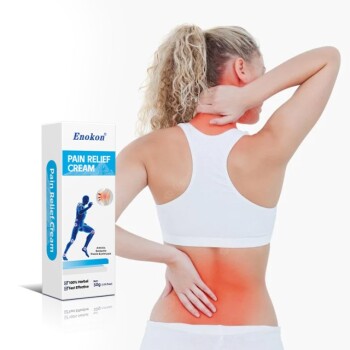
To be direct, pain relief patches typically provide targeted relief for a duration of 8 to 12 hours. The exact length of effectiveness, however, is not a universal standard; it is dictated entirely by the specific active ingredients the patch is designed to deliver and the mechanism it uses to treat your pain.
The duration of a pain relief patch is a secondary characteristic. The primary factor you should consider is its mechanism of action, as this determines whether the patch is even appropriate for your specific type of pain.
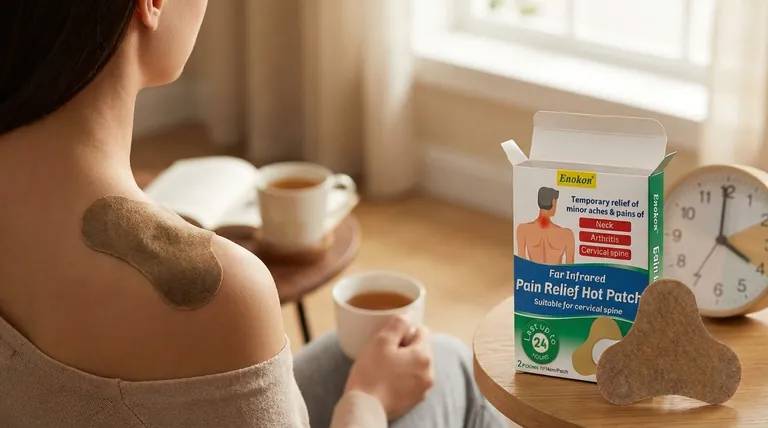
How Patches Deliver Sustained Relief
To understand why duration varies, you must first understand how a patch works. Unlike a pill that affects your entire system, a patch is a highly localized and controlled delivery tool.
The Principle of Transdermal Delivery
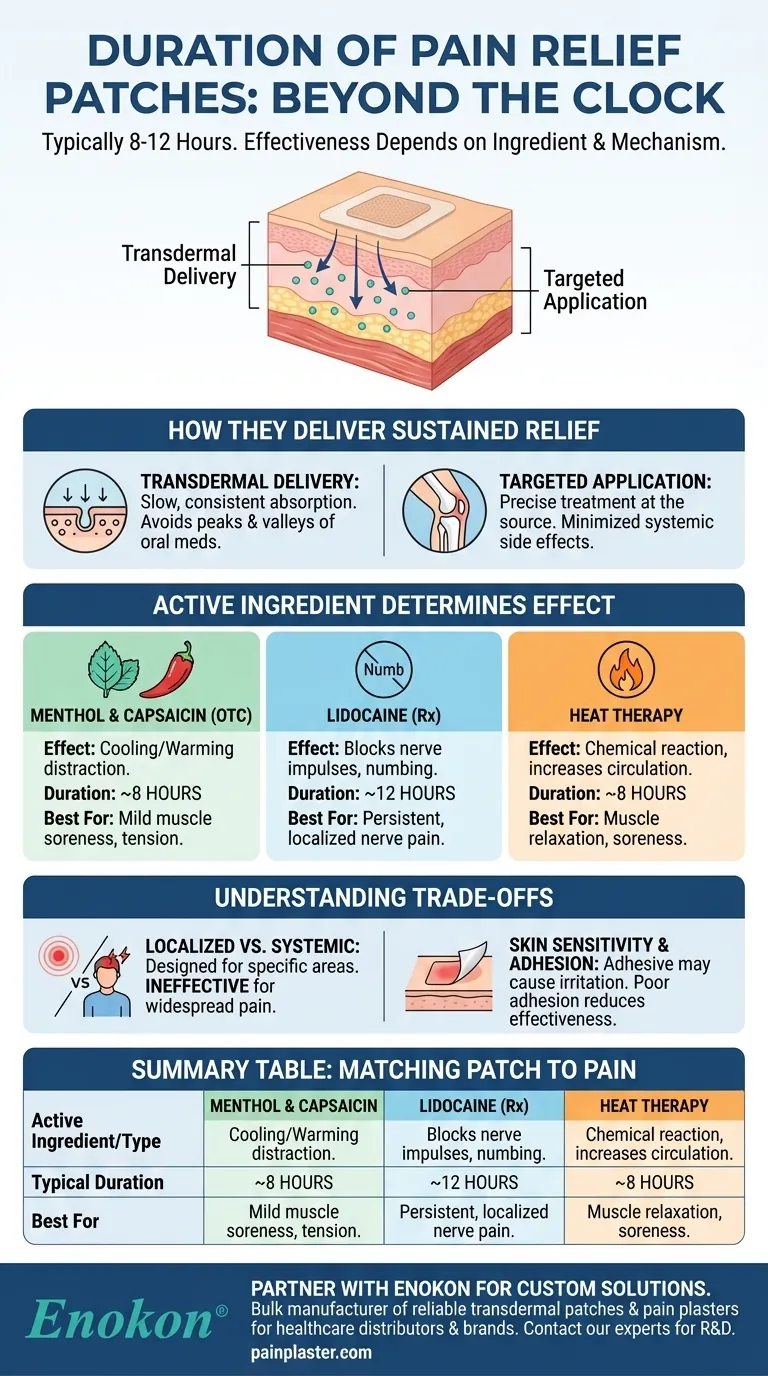
A pain relief patch works through transdermal delivery—it allows active ingredients to be absorbed slowly and steadily through the skin.
This creates a consistent level of relief directly at the source of pain, avoiding the peaks and valleys often associated with oral medication.
The Power of Targeted Application
The core benefit of a patch is its precision. By applying the active ingredients directly to the affected area, such as a sore knee or back muscle, the treatment is concentrated exactly where it is needed.
This localized approach enhances effectiveness and minimizes the risk of systemic side effects that can occur when medication circulates throughout the entire body.
The Active Ingredient Determines the Effect
The type of medication infused into the patch is the single most important factor. It defines not only the duration of relief but also the kind of pain it is designed to treat.
Counter-irritants: Menthol & Capsaicin
Many over-the-counter patches use ingredients like menthol or capsaicin. These create a cooling or warming sensation that distracts your brain from the underlying pain signals.
Their effect is often felt quickly but may have a shorter duration, typically in the 8-hour range.
Local Anesthetics: Lidocaine
Prescription patches, such as Lidoderm, often contain lidocaine, a local anesthetic. This ingredient works by actively blocking nerve impulses in the immediate area, effectively numbing the pain.
These patches are designed for more significant localized pain and typically provide relief for a full 12 hours.
Heat Therapy Patches
Some patches contain no medication at all. Instead, they use ingredients that create a chemical reaction to produce continuous, low-level heat.
This targeted heat helps relax muscles and increase circulation to soothe soreness. The duration is consistent with the chemical reaction, often lasting around 8 hours.
Understanding the Trade-offs
While effective for their intended purpose, pain relief patches are not a universal solution. Understanding their limitations is key to using them properly.
Localized vs. Systemic Pain
Patches are designed exclusively for localized pain—a sore shoulder, an aching joint, or a strained muscle.
They are completely ineffective for systemic or widespread pain conditions, such as headaches, migraines, or fibromyalgia, which require a different treatment approach.
Skin Sensitivity and Adhesion
The adhesive required to keep a patch in place for 8 to 12 hours can cause skin irritation for some individuals.
Furthermore, if the patch does not adhere properly to the skin, the transdermal delivery process is compromised, significantly reducing its effectiveness and duration.
Making the Right Choice for Your Goal
To select the correct patch, match the active ingredient to your specific type of pain, not just the advertised duration.
- If your primary focus is mild muscle soreness or tension: A self-heating patch or one with menthol will provide targeted comfort and relief, typically for up to 8 hours.
- If your primary focus is persistent, localized nerve-related pain: A prescription lidocaine patch is engineered for longer, 12-hour relief by directly numbing pain signals at the source.
- If your primary focus is localized inflammatory pain, like in a joint: A patch containing an ingredient like capsaicin can provide targeted relief by reducing inflammatory signals.
By understanding how a patch works, you can choose the right tool to effectively manage your specific pain.
Summary Table:
| Active Ingredient / Type | Typical Duration | Best For |
|---|---|---|
| Menthol / Capsaicin (OTC) | Up to 8 hours | Mild muscle soreness, tension |
| Lidocaine (Prescription) | Up to 12 hours | Persistent, localized nerve pain |
| Heat Therapy | Up to 8 hours | Muscle relaxation, soreness |
Need a reliable, custom-formulated pain relief patch for your brand or distributors?
At Enokon, we are a bulk manufacturer of reliable transdermal patches and pain plasters. We partner with healthcare and pharmaceutical distributors and brands to develop effective solutions.
Benefit from our technical expertise for custom R&D and development to create a patch that meets your specific market needs and provides consistent, targeted relief.
Contact our experts today to discuss your project and how we can support your product line.
Visual Guide
Related Products
- Icy Hot Menthol Medicine Pain Relief Patch
- Mugwort Wormwood Pain Relief Patch for Neck Pain
- Menthol Gel Pain Relief Patch
- Far Infrared Pain Patch Relief Pain Reliever for Back
- Far Infrared Deep Heat Relief Patches Medicated Pain Relief Patches
People Also Ask
- What should you consider when choosing between a pain relief patch and a cream? Key Factors for Effective Pain Management
- Can the pain relief patch be used with oral pain relief products? Avoid Dangerous Drug Interactions
- What alternatives exist for pain relief patches? Compare systemic meds & physical therapy
- What factors should be considered when choosing between pills and patches for pain relief? A Guide to Personalized Pain Management
- What are the benefits of using pain relief patches compared to oral medications? Targeted Relief with Fewer Side Effects