
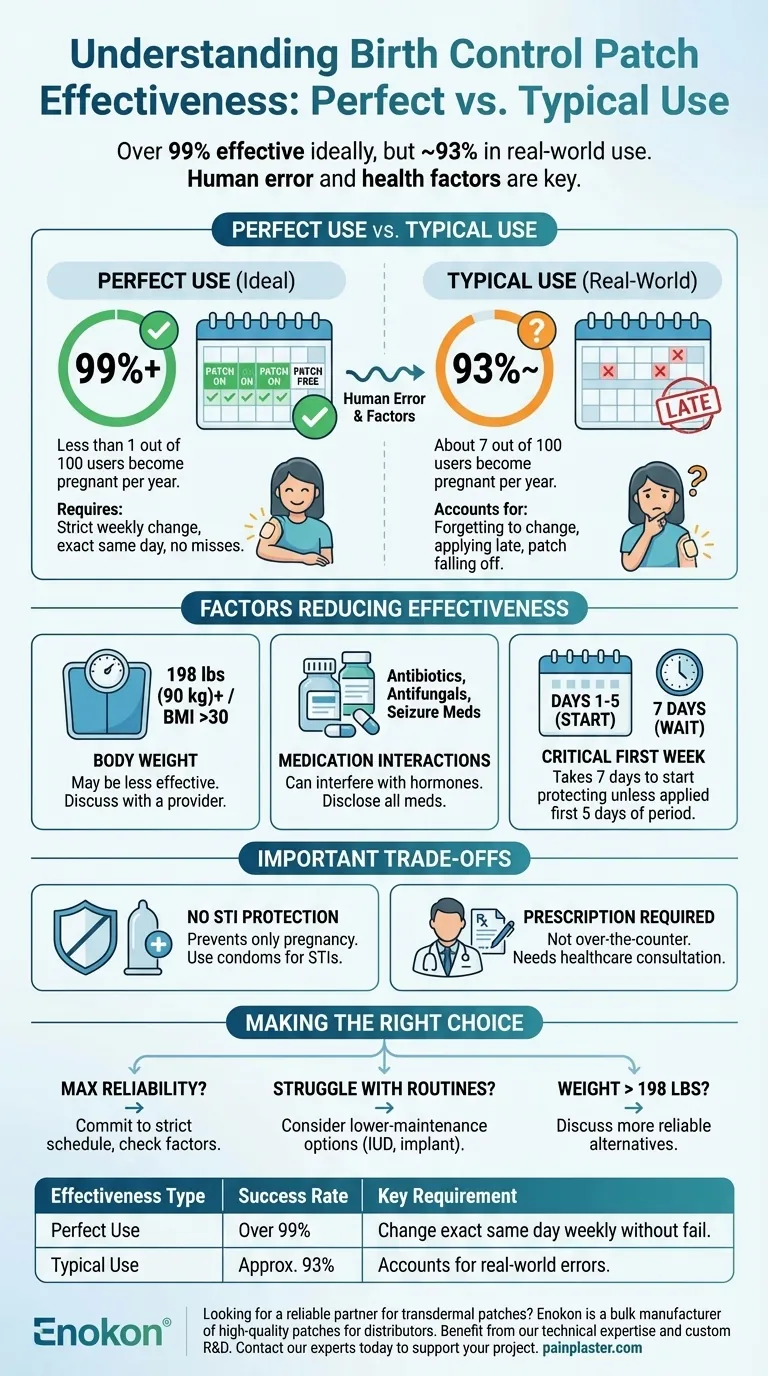
At its best, the birth control patch is over 99% effective at preventing pregnancy. This "perfect use" rate requires changing the patch on the exact same day each week without fail. However, with "typical use," which accounts for real-world mistakes like forgetting to change it on time, its effectiveness drops to around 93%.
The key difference between the patch being 99% effective and 93% effective comes down to human error. Its reliability is directly tied to your ability to use it correctly and consistently, and certain personal health factors can also reduce its performance.
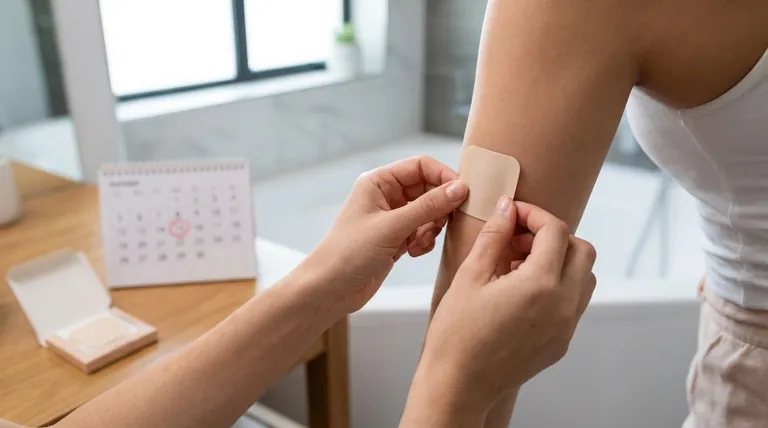
Understanding "Perfect Use" vs. "Typical Use"
The two effectiveness numbers you see for contraception can be confusing. They simply represent the difference between ideal laboratory conditions and normal, everyday life.
The 99% "Perfect Use" Rate
Perfect use assumes the patch is used exactly as directed, without any mistakes. This means less than 1 out of 100 users will become pregnant in a year.
To achieve this, you must apply a new patch on the same day each week for three weeks, followed by one patch-free week, and never miss a change day.
The 93% "Typical Use" Rate
Typical use is a more realistic measure of effectiveness for the average person. This number accounts for common mistakes.
These errors include forgetting to change the patch on schedule, applying a new one late, or having a patch fall off without noticing immediately. With typical use, about 7 out of 100 users will experience an unintended pregnancy in a year.
The Critical First Week
It is crucial to know that the patch is not immediately effective. It takes seven days to start protecting against pregnancy unless you apply the first patch within the first five days of your period starting.
Factors That Can Reduce Patch Effectiveness
Beyond simple adherence, a few key factors can significantly impact how well the patch works. It is not the ideal method for everyone.
Body Weight
The patch may be less effective for individuals who weigh 198 pounds (90 kg) or more. Some sources also link reduced effectiveness to a BMI over 30.
This is a critical consideration that must be discussed with a healthcare provider to ensure you are choosing a method optimized for your body.
Medication Interactions
Certain medications can interfere with the hormones in the patch, lowering its effectiveness.
These include specific types of antibiotics, medications for fungal infections, and some seizure medications. Always disclose all medications and supplements you are taking to your doctor.
Understanding the Trade-offs
Choosing a birth control method involves weighing convenience against potential risks and limitations.
No Protection Against STIs
The birth control patch only prevents pregnancy. It offers zero protection against sexually transmitted infections (STIs) like HIV, chlamydia, or herpes.
Consistent and correct use of condoms is necessary to reduce the risk of STIs.
It Requires a Prescription
You cannot buy the patch over the counter. It requires a consultation with and a prescription from a qualified healthcare professional.
This ensures it is a safe and appropriate choice for you based on your medical history and current health status.
Making the Right Choice for Your Goal
To decide if the patch is a good fit, consider how its requirements align with your lifestyle and health profile.
- If your primary focus is maximum reliability: You must commit to a strict weekly schedule and confirm with your doctor that your weight and any medications you take do not pose a risk.
- If you struggle with weekly routines: Be aware that the 93% "typical use" rate reflects the real-world risk of error, and a lower-maintenance option like an IUD or implant might be a better fit.
- If you weigh 198 lbs or more: The patch is likely not the most effective method for you, and it is critical to discuss more reliable alternatives with your provider.
Ultimately, understanding these factors empowers you to work with a healthcare professional to select the birth control method that offers you the best protection and peace of mind.
Summary Table:
| Effectiveness Type | Success Rate | Key Requirement |
|---|---|---|
| Perfect Use | Over 99% | Change patch on the exact same day each week without fail. |
| Typical Use | Approx. 93% | Accounts for real-world errors like forgetting to change it on time. |
Looking for a reliable partner for your transdermal patch needs?
At Enokon, we are a bulk manufacturer of reliable transdermal patches and pain plasters for healthcare and pharmaceutical distributors and brands. Our technical expertise ensures high-quality, consistent products. Benefit from our custom R&D and development services to create a product that meets your specific requirements for effectiveness and user adherence.
Contact our experts today to discuss how we can support your project.
Visual Guide
Related Products
- Heating Pain Relief Patches for Menstrual Cramps
- Prostate Pain Kidney Health Care Patch for Men
- Silicone Scar Sheets Patch Transdermal Drug Patch
- Cooling Fever Patches Color Change Cold Fever Patch
- Mugwort Wormwood Pain Relief Patch for Neck Pain
People Also Ask
- What are the benefits of Period Pain Heat Patches? Drug-Free, On-the-Go Relief
- What are the key benefits of heating patches for elderly individuals? Relieve Pain & Improve Mobility
- What are the key differences between conventional heat patches and deep heat devices? Choosing the Right Pain Relief Solution
- What are the common uses of heat patches? Soothe Muscle Pain, Joint Stiffness & More
- Can heat patches be used for fresh injuries? Avoid This Common Mistake for Faster Recovery




