
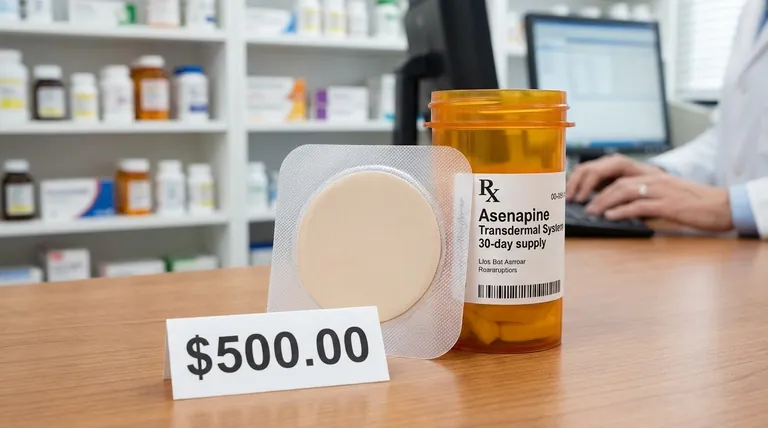
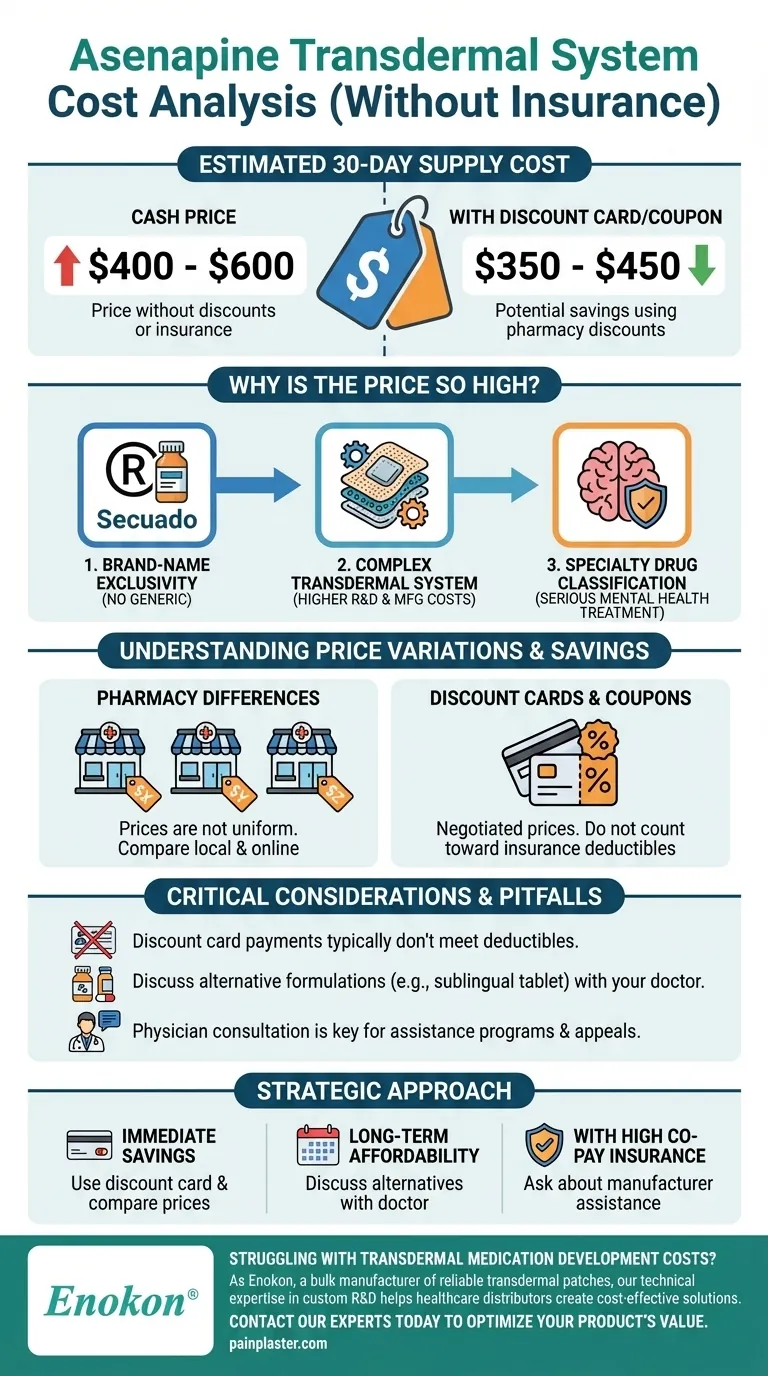
Without insurance, the estimated cash price for a 30-day supply of the Asenapine transdermal system typically falls between $400 and $600. This cost can often be reduced to a range of $350 to $450 by using pharmacy discount cards or manufacturer coupons.
The high out-of-pocket cost for the Asenapine transdermal system is driven by its status as a brand-name specialty drug with a complex delivery mechanism. Understanding the factors that influence its price is the first step toward finding the most affordable way to access this medication.
Why This Medication Carries a High Price Tag
The cost of any prescription is rarely arbitrary. For the Asenapine transdermal system, several key factors contribute to its significant out-of-pocket expense.
Brand-Name Exclusivity
The Asenapine transdermal system is sold under the brand name Secuado. Currently, there is no generic equivalent available for the patch formulation.
Brand-name drugs are protected by patents that give the original manufacturer exclusive rights to sell the medication. This lack of competition from generic manufacturers is the single largest factor keeping the price high.
The Transdermal System Factor
This medication is not a simple pill; it is a transdermal patch. This delivery system is more complex and expensive to research, develop, and manufacture.
The technology required to ensure a stable and consistent dose of medication is delivered through the skin adds a significant cost that is passed on to the consumer.
Classification as a Specialty Drug
Asenapine is an atypical antipsychotic used to treat serious mental health conditions like schizophrenia. Medications for such complex, chronic conditions are often classified as specialty drugs.
This classification often places them in a higher price tier with both manufacturers and pharmacies, reflecting the intensive research and patient support services sometimes associated with them.
Understanding Price Variations and Savings
The price you are quoted is not always the price you have to pay. The final cost can vary significantly based on where you buy it and what savings tools you use.
Pharmacy-to-Pharmacy Differences
It is critical to understand that the cash price for a medication is not uniform. Different pharmacy chains and independent drugstores set their own prices.
Comparing prices between several local pharmacies or reputable online mail-order services can reveal meaningful savings.
The Role of Discount Cards
Prescription discount cards and coupons are widely available and can provide substantial savings. These programs negotiate lower prices directly with pharmacies.
They function independently of insurance and are a primary tool for reducing costs for those paying entirely out-of-pocket. The typical savings bring the price down to the $350-$450 range.
Common Pitfalls and Considerations
While lowering the price is the immediate goal, it's important to approach this with a clear, long-term strategy and in consultation with your healthcare provider.
The Limits of Discount Programs
While very helpful for immediate savings, payments made using a discount card do not typically count toward an insurance deductible or out-of-pocket maximum.
If you have a high-deductible insurance plan, you must weigh the immediate savings of a coupon against the long-term benefit of meeting your deductible.
Discussing Alternative Formulations
Asenapine is also available as a sublingual tablet (brand name Saphris). It's crucial to discuss all available treatment options with your doctor.
While the transdermal patch offers convenience, another formulation of the same active ingredient may be a more financially sustainable option for you. Never switch medications based on cost without medical guidance.
The Importance of Physician Consultation
Your prescribing physician is your most important partner in managing both your health and your treatment costs.
They may be aware of manufacturer patient assistance programs, have access to samples, or be able to help you navigate the appeals process with your insurer if you have one.
Making the Right Choice for Your Situation
Navigating medication costs requires a proactive approach. Your best strategy depends on your primary financial and health goals.
- If your primary focus is immediate savings: Use a reputable prescription discount card and call multiple pharmacies to compare their cash price for the Asenapine transdermal system.
- If your primary focus is long-term affordability: Have a candid conversation with your doctor about all formulations of Asenapine and other potential treatment alternatives that may be more cost-effective.
- If you have insurance but a high co-pay: Ask your doctor or pharmacist about manufacturer-sponsored patient assistance or co-pay programs that can help cover your out-of-pocket expenses.
Ultimately, combining informed research with open communication with your healthcare provider is the most effective way to manage the cost of your treatment.
Summary Table:
| Cost Factor | Typical Price Range | Notes |
|---|---|---|
| Cash Price (30-day supply) | $400 - $600 | Price without any discounts or insurance. |
| Price with Discount Card/Coupon | $350 - $450 | Substantial savings are often available. |
| Primary Driver of High Cost | Brand-name (Secuado), transdermal patch technology, specialty drug classification. | No generic equivalent is available. |
Struggling with the high cost of transdermal medication development?
As Enokon, a bulk manufacturer of reliable transdermal patches and pain plasters, we understand the complexities that drive costs. Our technical expertise in custom R&D and development helps healthcare and pharma distributors and brands create high-quality, cost-effective transdermal solutions.
Let us help you optimize your product's value. Contact our experts today to discuss your transdermal patch needs.
Visual Guide
Related Products
- Far Infrared Heat Pain Relief Patches Transdermal Patches
- Menthol Gel Pain Relief Patch
- Icy Hot Menthol Medicine Pain Relief Patch
- Silicone Scar Sheets Patch Transdermal Drug Patch
People Also Ask
- Why is the selection of matrix materials critical when developing customized transdermal patches? Optimize Efficacy
- What are the physical impacts of external heat exposure on the performance and safety of transdermal patches? - Guide
- What are the clinical advantages of local transdermal delivery systems? Unlock Safer, More Effective Pain Relief Solutions
- What role does a skin tolerance scoring system play in the safety evaluation of transdermal patches? Key Safety Metrics
- How does high-purity far-infrared ceramic powder contribute to the efficacy of far-infrared physical therapy patches?



