
The standard initial transdermal dosage for dementia associated with Parkinson's disease is 4.6 mg applied once every 24 hours. This starting dose is the first step in a gradual escalation process. Based on patient tolerability and clinical need, the dosage may be increased after a minimum of four weeks.
The core principle for this therapy is a "start low, go slow" approach. The initial 4.6 mg/24 hr dose is designed to establish patient tolerability before carefully increasing the dosage to an effective level over several weeks.
The Dosing and Titration Protocol
The treatment follows a structured, stepwise approach to balance effectiveness with minimizing potential side effects. The timeline for each dose adjustment is a critical component of the protocol.
Step 1: The Initial Dose
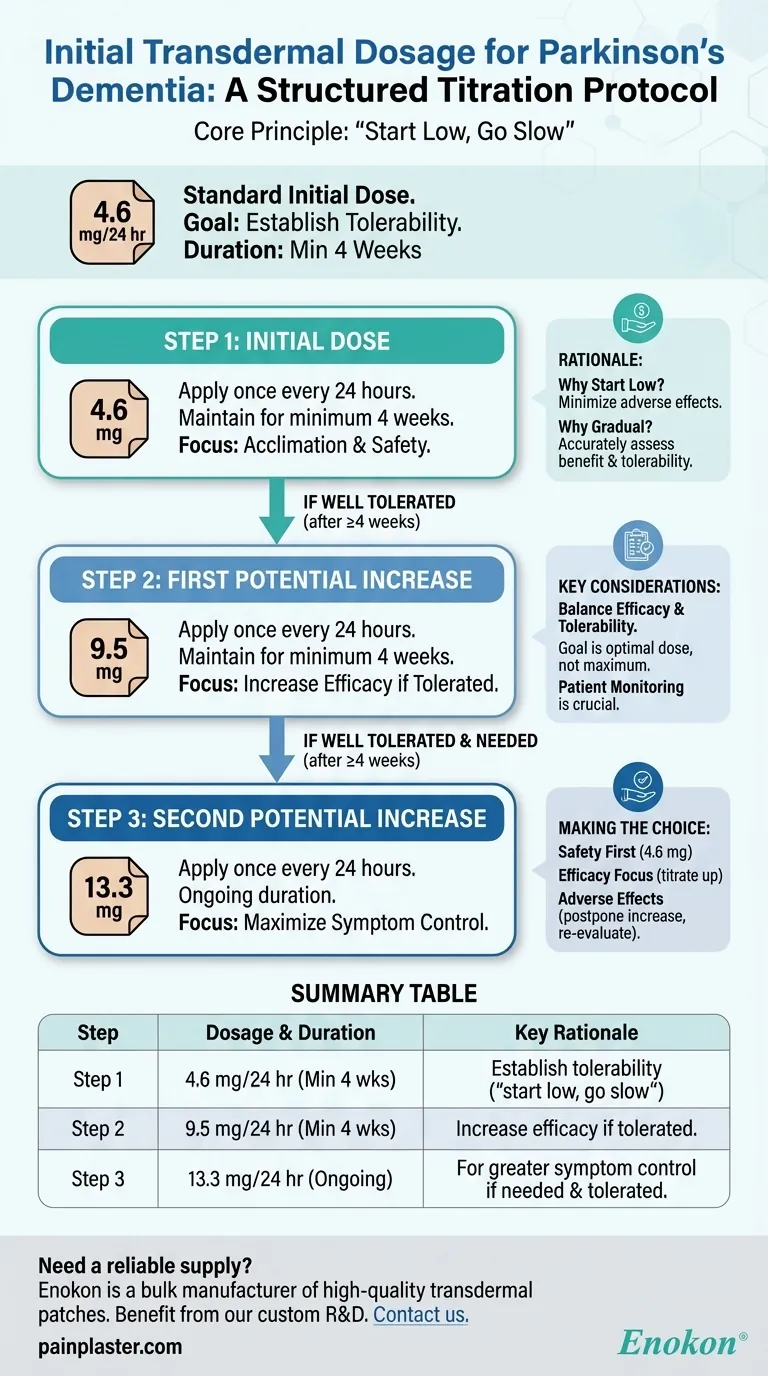
The therapy begins with a 4.6 mg patch applied once every 24 hours. This dose is maintained for a minimum of four weeks. The primary purpose of this initial phase is to allow the patient's body to acclimate to the medication.
Step 2: First Potential Increase
If the initial 4.6 mg dose is well tolerated by the patient after at least four weeks, the dosage may be increased. The next step is the 9.5 mg patch applied once every 24 hours.
Step 3: Second Potential Increase
After a minimum of another four weeks on the 9.5 mg dose, a further increase may be considered. If a higher dose is clinically needed and the current dose is well tolerated, the patch can be increased to 13.3 mg every 24 hours.
Understanding the Rationale
The gradual increase in dosage is a deliberate safety measure designed to optimize the treatment for each individual.
Why Start at a Low Dose?
Initiating treatment at the lowest available therapeutic dose is a standard practice to minimize the risk of adverse effects. It allows the clinical team to observe how the patient responds before committing to a stronger dose.
The Importance of Gradual Titration
The mandatory four-week intervals between dose increases are essential. This period provides enough time to accurately assess both the therapeutic benefit and the tolerability of the current dose before making a change. Rushing this process can increase the likelihood of side effects.
Key Considerations and Trade-offs
The goal of this therapy is not simply to reach the maximum dose, but to find the optimal dose for the individual patient.
Balancing Efficacy and Tolerability
The decision to increase the dose from 4.6 mg to 9.5 mg, and subsequently to 13.3 mg, is based on a careful assessment. The potential for increased efficacy must be weighed against the risk of side effects. A higher dose is only appropriate if it is both needed and tolerated.
The Role of Patient Monitoring
The phrase "if well tolerated" is a critical instruction. Close monitoring of the patient throughout the titration process is paramount. Any decision to increase the dosage must be based on a professional evaluation of the patient's response to the current dose.
Making the Right Choice for Your Goal
The correct dosing strategy depends entirely on the patient's individual response to the medication.
- If your primary focus is initiating therapy safely: Begin with the 4.6 mg/24 hr patch and maintain it for at least four weeks to confirm the patient tolerates the medication.
- If your primary focus is achieving greater efficacy: After the initial four-week period, consider increasing the dose to 9.5 mg/24 hr, followed by a potential increase to 13.3 mg/24 hr after subsequent evaluation periods.
- If the patient experiences adverse side effects: The priority must be patient safety; dose increases should be postponed, and the current regimen should be re-evaluated by the prescribing clinician.
Following this structured titration protocol is the key to maximizing therapeutic benefits while ensuring patient safety.
Summary Table:
| Titration Step | Dosage | Duration | Key Rationale |
|---|---|---|---|
| Step 1: Initial Dose | 4.6 mg/24 hr | Minimum 4 weeks | Establishes patient tolerability with a "start low, go slow" approach. |
| Step 2: First Increase | 9.5 mg/24 hr | Minimum 4 weeks | Increases efficacy if the initial dose is well tolerated. |
| Step 3: Second Increase | 13.3 mg/24 hr | Ongoing | For patients needing greater symptom control who tolerate the 9.5 mg dose. |
Need a reliable supply of transdermal patches for your Parkinson's dementia treatment protocols?
At Enokon, we are a bulk manufacturer of high-quality, reliable transdermal patches and pain plasters. We partner with healthcare and pharmaceutical distributors and brands to ensure a consistent supply of essential medications.
Benefit from our technical expertise for custom R&D and development, ensuring your specific formulation needs are met with precision and quality.
Contact our experts today to discuss your transdermal patch requirements and how we can support your patient care goals.
Visual Guide
Related Products
- Icy Hot Menthol Medicine Pain Relief Patch
- Silicone Scar Sheets Patch Transdermal Drug Patch
- Menthol Gel Pain Relief Patch
- Far Infrared Heat Pain Relief Patches Transdermal Patches
- Cooling Fever Patches Color Change Cold Fever Patch
People Also Ask
- When should the pain relief patch not be used? Key Safety Rules to Avoid Risks
- Can the pain relief patch be used with other external analgesic products? A Critical Safety Guide
- What is the duration of pain relief provided by the patches? Find the Right Patch for Your Pain
- What is the shelf-life of the pain relief patch? Ensure Potency and Safety for Your Patients
- What are the key components of a pain relief patch? Unlock the Science of Targeted Pain Relief











