
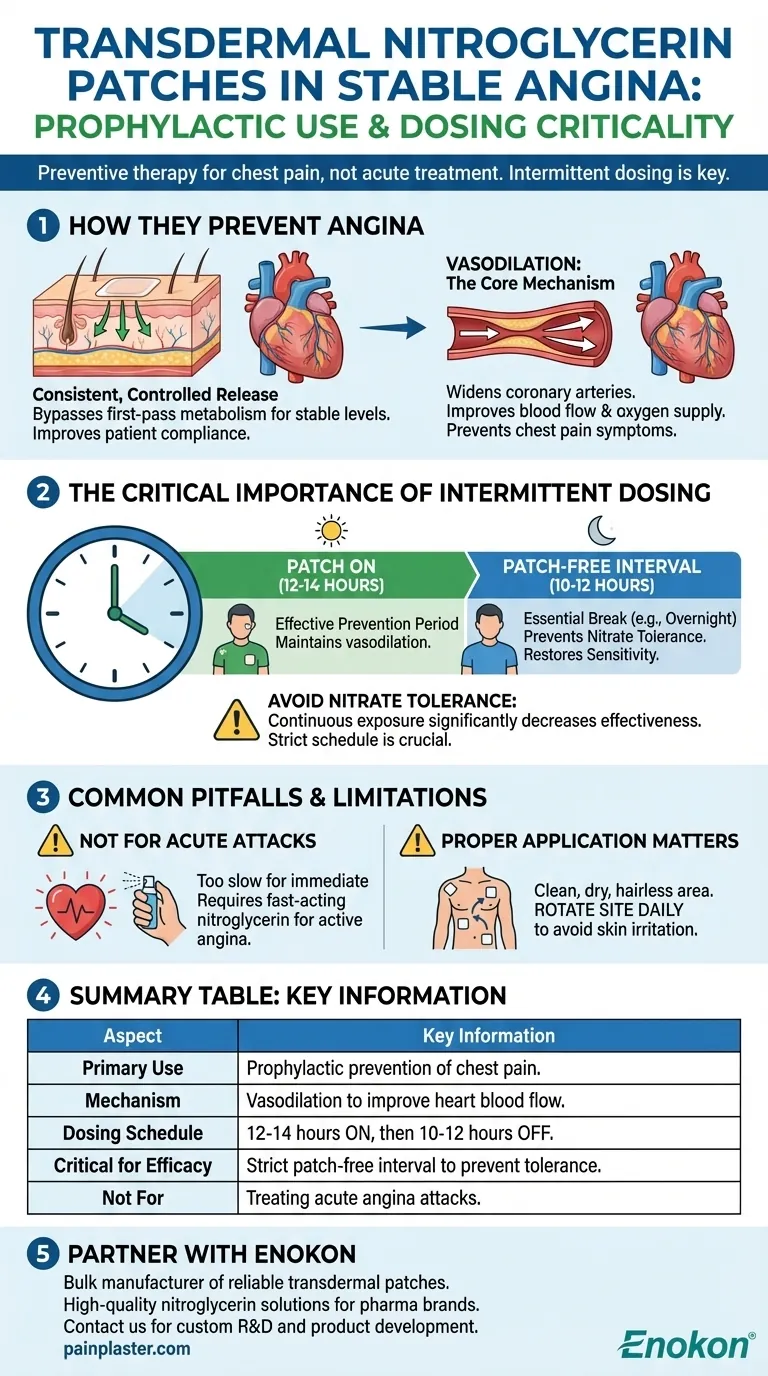
In stable angina, transdermal nitroglycerin patches serve as a prophylactic therapy to prevent chest pain, not to treat an acute attack. Their effectiveness is entirely dependent on an intermittent dosing schedule that includes a daily "patch-free" interval of 10-12 hours to prevent the development of drug tolerance.
The core value of the nitroglycerin patch lies in its convenience for preventing angina attacks through a steady, controlled release of medication. However, this benefit is only realized when a daily patch-free period is maintained to preserve the drug's effectiveness.

How Nitroglycerin Patches Prevent Angina
The use of a transdermal patch is a strategic choice for delivering a consistent dose of medication over a prolonged period to prevent the onset of symptoms.
The Core Mechanism: Vasodilation
Nitroglycerin's primary function is vasodilation, which means it relaxes and widens the blood vessels.
By widening the coronary arteries, the patch improves blood flow and oxygen supply to the heart muscle. This prophylactic action helps prevent the chest pain characteristic of an angina attack.
The Advantage of Transdermal Delivery
Transdermal delivery sends medication directly through the skin into the bloodstream. This method provides a smooth, continuous dose throughout the day.
This approach bypasses the digestive system and what is known as "first-pass metabolism" in the liver, which can inactivate a portion of the drug. The result is higher medication efficiency and more stable drug levels in the blood.
Furthermore, the simplicity of applying a patch once a day enhances patient compliance, which is critical for the long-term management of chronic conditions like stable angina.
The Critical Importance of Intermittent Dosing
Continuous exposure to nitroglycerin leads to a significant decrease in its effectiveness. The dosing schedule is designed specifically to counteract this physiological response.
Understanding Nitrate Tolerance
When the body is exposed to nitrates continuously, the blood vessels become less responsive to their vasodilating effects. This phenomenon is known as nitrate tolerance.
If tolerance develops, the patch loses its ability to prevent angina, rendering the therapy ineffective.
The "Patch-Free" Interval
To prevent tolerance, a patch-free interval is essential. The standard, effective regimen involves wearing the patch for 12 to 14 hours.
After this period, the patch must be removed for 10 to 12 hours (typically overnight). This break allows the body's sensitivity to nitroglycerin to be restored, ensuring the medication will work effectively the next day.
Common Pitfalls and Limitations
While effective for prevention, it is crucial to understand where the nitroglycerin patch does not fit and the practical challenges associated with its use.
Not for Acute Angina Attacks
Nitroglycerin patches work too slowly to be effective for an active angina attack. They are designed for prevention only.
Patients prescribed patches must also have a fast-acting form of nitroglycerin, such as a sublingual tablet or spray, to treat chest pain that is already occurring.
Proper Application is Essential
The patch must be applied to a clean, dry, and hairless area of skin, typically on the upper body or upper arms.
To prevent skin irritation, the application site must be rotated daily. Avoid placing patches on scarred, irritated, or calloused skin, or on skin folds.
Making the Right Choice for Your Goal
Understanding the specific role of the nitroglycerin patch is key to using it safely and effectively in the management of stable angina.
- If your primary focus is convenient, long-term prevention of angina: The patch is an excellent option due to its ease of use and continuous delivery, provided the intermittent 12-hour on, 12-hour off dosing schedule is strictly followed.
- If your primary focus is treating an active angina attack: The patch is inappropriate; a fast-acting form of nitroglycerin is required to provide rapid relief from chest pain.
Ultimately, the transdermal nitroglycerin patch is a powerful preventative tool when its mechanism and limitations are fully respected.
Summary Table:
| Aspect | Key Information |
|---|---|
| Primary Use | Prophylactic prevention of chest pain in stable angina. |
| Mechanism | Vasodilation (widening blood vessels) to improve heart blood flow. |
| Dosing Schedule | 12-14 hours ON, followed by a 10-12 hour patch-free interval (e.g., overnight). |
| Critical for Efficacy | Strict adherence to the patch-free interval to prevent nitrate tolerance. |
| Not For | Treating acute angina attacks (requires fast-acting nitroglycerin). |
Partner with Enokon for Your Transdermal Patch Needs
As a bulk manufacturer of reliable transdermal patches and pain plasters, Enokon provides healthcare and pharma distributors and brands with high-quality, consistent nitroglycerin patches and other transdermal solutions. Benefit from our technical expertise for custom R&D and product development to meet your specific market requirements.
Contact our experts today to discuss how we can support your product line with dependable transdermal drug delivery systems.
Visual Guide
Related Products
- Silicone Scar Sheets Patch Transdermal Drug Patch
- Far Infrared Heat Pain Relief Patches Transdermal Patches
- Icy Hot Menthol Medicine Pain Relief Patch
- Menthol Gel Pain Relief Patch
- Mugwort Wormwood Pain Relief Patch for Neck Pain
People Also Ask
- What role does a silicone-based transdermal delivery system play in Parkinson's? Enhancing Early-Stage Patient Care
- How is the long-term skin tolerance of silicone-based transdermal patches evaluated in clinical settings? R&D and Safety
- Why is a polarizing microscope used to evaluate the long-term stability of transdermal drug patches? Ensure Efficacy.
- What are common adverse effects of transdermal drug delivery? Risks & Prevention Tips
- What are the advantages of transdermal drug patches? Optimize Medication Delivery with Patches



















