High-sensitivity UV-Visible spectrophotometry is the analytical cornerstone of transdermal patch development and quality assurance. It provides the precise quantitative data required to measure how much of an active pharmaceutical ingredient (API) is loaded into a patch and, more importantly, exactly how fast that drug is released into the body. For enterprise-level manufacturing, this equipment is the primary tool for ensuring every unit meets the strict dosage and efficacy standards required for global market distribution.
Core Takeaway: A UV-Visible spectrophotometer converts light absorbance into precise drug concentration data, allowing manufacturers to map release kinetics and verify content uniformity. This ensures that transdermal products are both safe and effective, providing the scientific "proof of performance" necessary for brand owners and clinical regulators.
Quantifying API Concentration and Loading
Ensuring Content Uniformity Across Mass Production
In large-scale manufacturing, maintaining content uniformity is critical for safety and brand reputation. The spectrophotometer measures drug loading within the patch matrix to ensure that every individual unit contains the exact dose specified on the label.
Validating Encapsulation Efficiency
For custom formulations involving complex drug-in-adhesive systems, researchers use UV-Visible detection to determine encapsulation efficiency. This identifies how much of the API is successfully integrated into the delivery system versus how much is lost during the manufacturing process.
Establishing Baseline Solubility
Before a patch enters production, the equipment is used to determine the solubility of the drug in various solvents. This data is fundamental for contract R&D teams when designing the initial formulation and selecting the most effective carrier medium.
Mapping the Pharmacokinetic Profile
Plotting In-Vitro Release (IVR) Curves
The most vital role of the spectrophotometer is plotting in-vitro release curves by measuring drug concentrations in receptor fluids over time. By applying the Beer-Lambert law, technical teams can transform absorbance signals into cumulative drug release percentages.
Calculating Permeation Kinetic Parameters
Researchers use high-sensitivity detection to establish kinetic models, such as the Higuchi model, which describes drug release from a matrix. This allows for the precise calculation of diffusion rates and confirms if a patch provides a steady, sustained release over 12, 24, or 72 hours.
Evaluating Chemical Penetration Enhancers
In advanced R&D, the spectrophotometer monitors how different chemical penetration enhancers affect the drug’s ability to cross the skin barrier. This allows for the optimization of formulations to achieve higher bioavailability and faster onset of action for the end user.
Safeguarding Enterprise-Level Quality Control
Compliance with GMP and Global Standards
High-precision analytical tools are a requirement for GMP-certified facilities to maintain rigorous quality control. The data generated by UV-Visible spectrophotometry serves as the "source of truth" for regulatory filings and international export documentation.
Trace Detection in Diffusion Experiments
High-sensitivity models are capable of detecting trace amounts of drugs permeated during diffusion experiments. This sensitivity is crucial for low-dose potent drugs where traditional analytical methods might fail to provide accurate readings.
Stability Testing and Shelf-Life Verification
Throughout the product lifecycle, these instruments are used in stability research to monitor the API's integrity over time. This ensures that the drug does not degrade and that the release profile remains consistent throughout the product's entire shelf life.
Understanding the Trade-offs
Interference from Excipients and Matrix Effects
While highly accurate, UV-Visible spectrophotometry can be sensitive to interference from other components in the patch, such as adhesives or enhancers. If these excipients absorb light at the same wavelength as the drug, it can lead to skewed data, requiring complex sample preparation or background subtraction.
Limits of Specificity Compared to HPLC
Compared to High-Performance Liquid Chromatography (HPLC), UV-Visible spectrophotometry is faster and more cost-effective but may lack the chromatographic resolution needed for complex mixtures. In formulations with multiple active ingredients, its use may be limited unless specific characteristic wavelengths are clearly isolated.
Making the Right Choice for Your Goal
How to Apply This to Your Project
Selecting a manufacturing partner with advanced UV-Visible analytical capabilities is essential for ensuring product success in a competitive market.
- If your primary focus is rapid market entry: Look for a partner with pre-validated UV methods for common APIs to accelerate the R&D phase and reduce testing lead times.
- If your primary focus is premium clinical efficacy: Ensure your manufacturer uses high-resolution spectrophotometry to plot detailed 24-hour release kinetics, providing the data needed to justify a premium price point.
- If your primary focus is high-volume global distribution: Prioritize partners who integrate spectrophotometric data into their batch-release protocols to guarantee consistent quality across millions of units.
By leveraging high-sensitivity UV-Visible spectrophotometry, brands can transform a simple adhesive patch into a sophisticated, scientifically-validated drug delivery system.
Summary Table:
| Application | Key Function | Benefit for Brands |
|---|---|---|
| API Quantification | Measures drug loading and content uniformity | Ensures label accuracy and dosage safety |
| Release Kinetics | Plots in-vitro release (IVR) curves | Validates 24–72 hour sustained efficacy |
| Quality Control | GMP-certified batch-release testing | Guarantees consistent quality for global export |
| Stability Testing | Monitors API integrity over time | Verifies shelf-life and product reliability |
Scale Your Brand with Enokon’s Scientific Expertise
As a premier manufacturer and trusted OEM/ODM partner, Enokon leverages high-sensitivity analytical technology to deliver market-ready transdermal solutions. We provide the R&D prowess and massive production capacity that brand owners, distributors, and B2B resellers require to dominate the market.
Why Choose Enokon?
- Turnkey Custom R&D: Expert formulations for Lidocaine, Menthol, Capsicum, Herbal, and specialized medical cooling or detox patches (excluding microneedle technology).
- Enterprise-Level Scale: Reliable high-volume delivery backed by GMP-certified facilities and global certifications.
- Scientific Validation: Rigorous quality control ensures every patch meets strict dosage and pharmacokinetic standards.
Ready to enhance your product line with a trusted manufacturing partner?
Contact Enokon Today for Wholesale & Custom R&D Solutions
References
- S. Srivastava, Jitender K Malik. Fabrication, Optimization, and Evaluation of Transdermal Patch: As an Alternative and Effective Transdermal Delivery System for Grainsetron HCl. DOI: 10.36348/sjmps.2025.v11i12.007
This article is also based on technical information from Enokon Knowledge Base .
Related Products
- Mugwort Wormwood Pain Relief Patch for Neck Pain
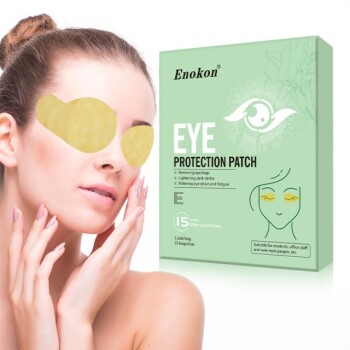
- Hydra Gel Health Care Eye Patch
- Silicone Scar Sheets Patch Transdermal Drug Patch
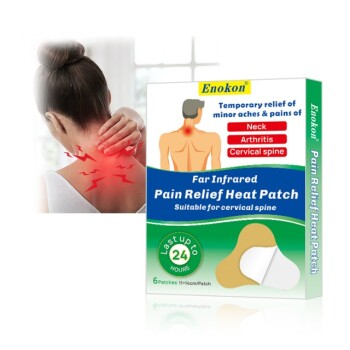
- Far Infrared Heat Pain Relief Patches Transdermal Patches
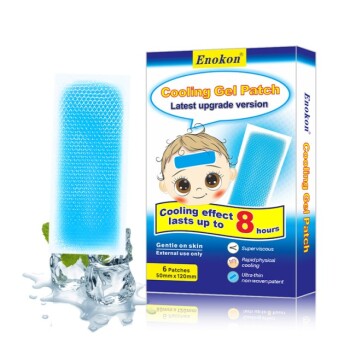
- Cooling Fever Patches Color Change Cold Fever Patch
People Also Ask
- How do pain relief patches provide targeted relief? Discover the Science Behind Effective Pain Management
- Are pain relief pills and patches available without a prescription? Choose the Right OTC Pain Relief
- How do pain relief patches compare to oral painkillers? Targeted Relief vs. Systemic Effects
- What are pain relief patches? Discover Targeted, Drug-Free Pain Management Solutions
- What are pain relief patches and how are they used? A Guide to Safe, Targeted Relief