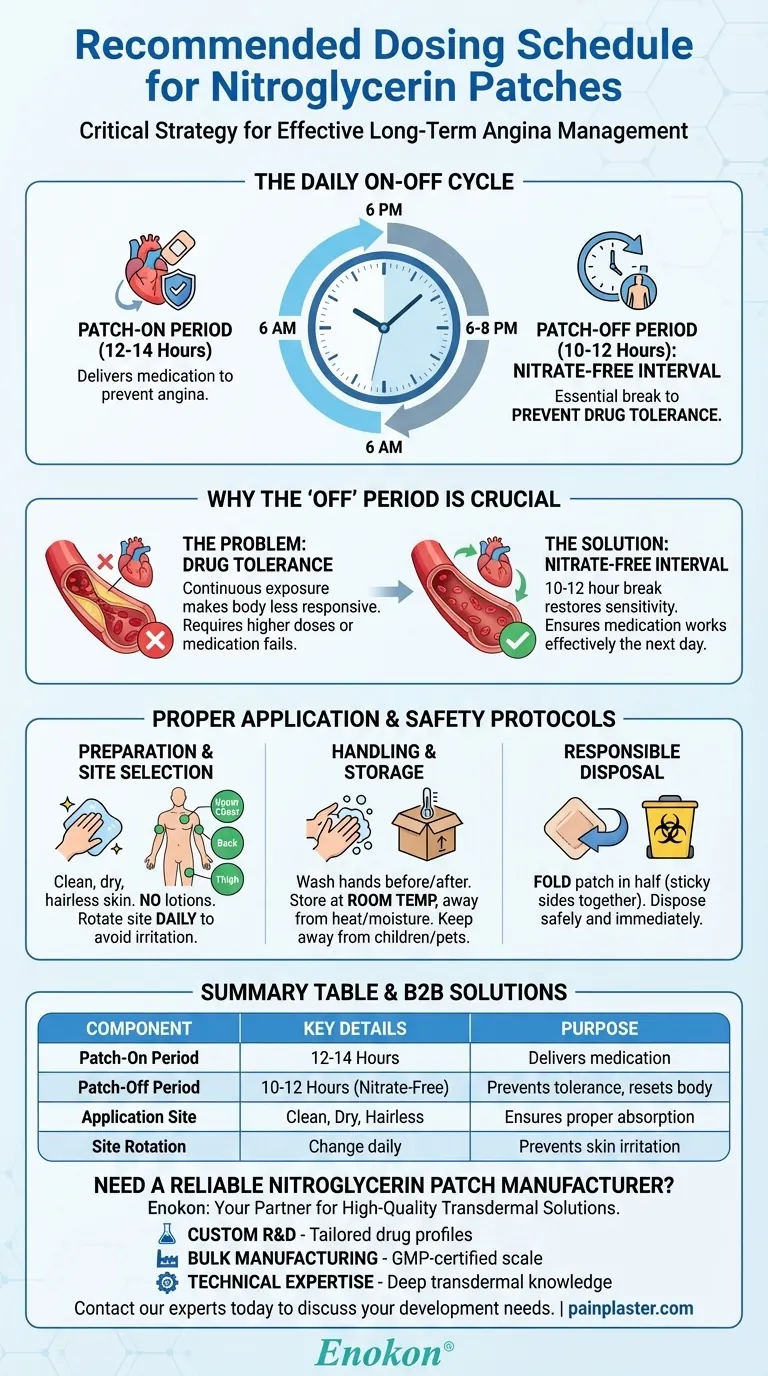
The recommended dosing schedule for a nitroglycerin patch involves a specific daily cycle: the patch is typically worn for 12 to 14 hours and then removed for a 10 to 12 hour "patch-off" period. This on-off schedule is not for convenience; it is a critical strategy to ensure the medication remains effective for your body over the long term.
The core principle of nitroglycerin patch dosing is the "nitrate-free interval." This daily 10-12 hour break from the medication is essential to prevent your body from developing tolerance, which would reduce the drug's ability to relieve angina.
The Principle of the Nitrate-Free Interval
Understanding why the patch-off period is so crucial is the key to using this medication effectively. Your body is highly adaptive, and constant exposure to nitroglycerin can diminish its therapeutic effect.
Why Tolerance is a Concern
If your body is exposed to nitroglycerin continuously, your blood vessels can become less responsive to its effects. This phenomenon, known as drug tolerance, means you would require higher doses to achieve the same relief, or the medication could stop working altogether.
How the "Off" Period Works
The daily 10 to 12-hour break without the patch gives your body time to "reset." This nitrate-free interval restores your blood vessels' sensitivity to the medication, ensuring it will work effectively the next day when you apply a new patch.
Proper Application for Maximum Efficacy
Where and how you apply the patch directly impacts how well the medication is absorbed. Following a consistent procedure is essential for stable, predictable results.
Preparing the Skin
Always apply the patch to a clean, dry, and hairless area of skin. Avoid using lotions, oils, or powders on the area, as they can interfere with the patch's adhesive and the medication's absorption.
Selecting the Application Site
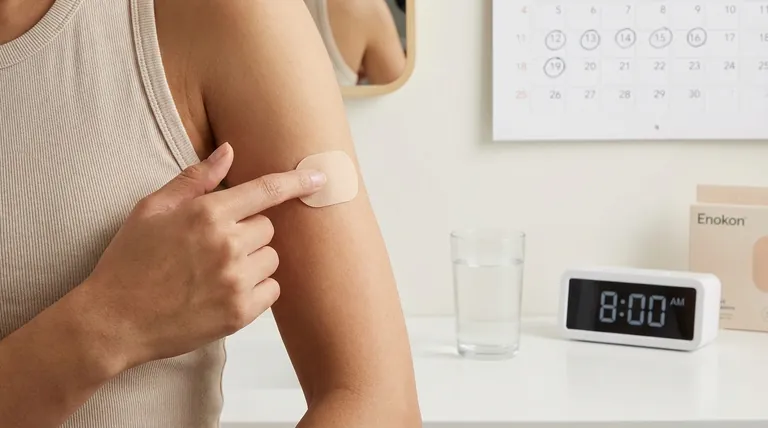
The patch should be placed on the upper body. Common recommended sites include the chest, back, upper arm, or thigh. Avoid areas with significant scarring, calluses, or any skin that is broken or irritated.
The Importance of Site Rotation
To prevent skin irritation and ensure consistent absorption, change the application site with each new patch. Using the same spot every day can lead to redness and rashes, which may affect how the medication enters your system.
Common Pitfalls and Safety Protocols
Proper handling and disposal are just as important as the dosing schedule itself. Mismanagement of nitroglycerin patches can pose risks to you and others.
Handling the Patch
Always wash your hands before and after applying a patch. Do not cut the patch, as this can alter the dose you receive. If a patch happens to fall off, discard it safely and apply a new one.
Safe Storage
Store your patches at room temperature, away from direct heat and moisture. A bathroom medicine cabinet is often not an ideal location due to fluctuating humidity. Most importantly, keep them well out of reach of children and pets.
Responsible Disposal
A used patch still contains active medication. After removing it, fold the patch in half with the sticky sides together and dispose of it in a manner that is inaccessible to children or pets. Check for local drug take-back programs for the safest disposal method.
Making the Right Choice for Your Goal
Adhering to the correct protocol is central to the success of your therapy. Your specific schedule should always be confirmed by your healthcare provider, but these principles are universal.
- If your primary focus is preventing tolerance: Strictly adhere to the 10-12 hour daily patch-free interval without exception.
- If your primary focus is consistent medication delivery: Make patch application a part of a daily routine and always rotate the application site to avoid skin irritation.
- If your primary focus is safety: Ensure used patches are folded and disposed of immediately and correctly to prevent accidental exposure to others.
By understanding the principles behind the schedule, you can partner with your healthcare provider to manage your treatment with confidence and precision.
Summary Table:
| Dosing Schedule Component | Key Details | Purpose |
|---|---|---|
| Patch-On Period | 12 to 14 hours daily | Delivers medication to prevent angina |
| Patch-Off Period (Nitrate-Free Interval) | 10 to 12 hours daily | Prevents drug tolerance by resetting the body's response |
| Application Site | Clean, dry, hairless skin on chest, back, upper arm, or thigh | Ensures proper absorption and minimizes irritation |
| Site Rotation | Change location with each new patch | Prevents skin irritation and ensures consistent dosing |
Need a reliable, high-quality nitroglycerin transdermal patch?
As Enokon, a bulk manufacturer of reliable transdermal patches for leading healthcare and pharmaceutical brands, we understand the critical importance of precise, consistent drug delivery. Our technical expertise ensures every patch meets the highest standards for efficacy and safety.
Partner with us for:
- Custom R&D: Develop patches tailored to specific drug profiles and release schedules.
- Bulk Manufacturing: Scale production with confidence using our GMP-certified facilities.
- Technical Expertise: Leverage our deep knowledge of transdermal technology for your product's success.
Contact our experts today to discuss your transdermal patch development and manufacturing needs.
Visual Guide
Related Products
- Herbal Medicated Anti Diarrhea Patch for Digestive Relief
- Asthma Cough and Pain Relief Patch for Adults and Kids
- Menthol Gel Pain Relief Patch
- Icy Hot Menthol Medicine Pain Relief Patch
- Lidocaine Hydrogel Pain Relief Patch for Pain Relief
People Also Ask
- What activities should be avoided while using this patch? Key Precautions for Safe & Effective Use
- What should be done if a patch falls off or a dose is missed? Quick Fixes & Safety Tips
- What should be avoided when using the patch? Key Safety Tips for Herbal Patch Users
- What should be done if a patch comes loose or falls off? Ensure Continuous & Effective Treatment
- What lifestyle factors should be considered with the patch? Ensure Safe and Effective Medication Delivery