
In short, the rotigotine transdermal patch has a favorable safety profile. The most common side effects are generally mild to moderate and stem from two distinct sources: localized skin reactions from the patch itself and systemic effects related to its stimulation of dopamine receptors in the brain.
The core safety consideration for the rotigotine patch is a balance between managing predictable application site reactions and understanding the effects of its core mechanism as a dopamine agonist, both of which are highly manageable with proper use.
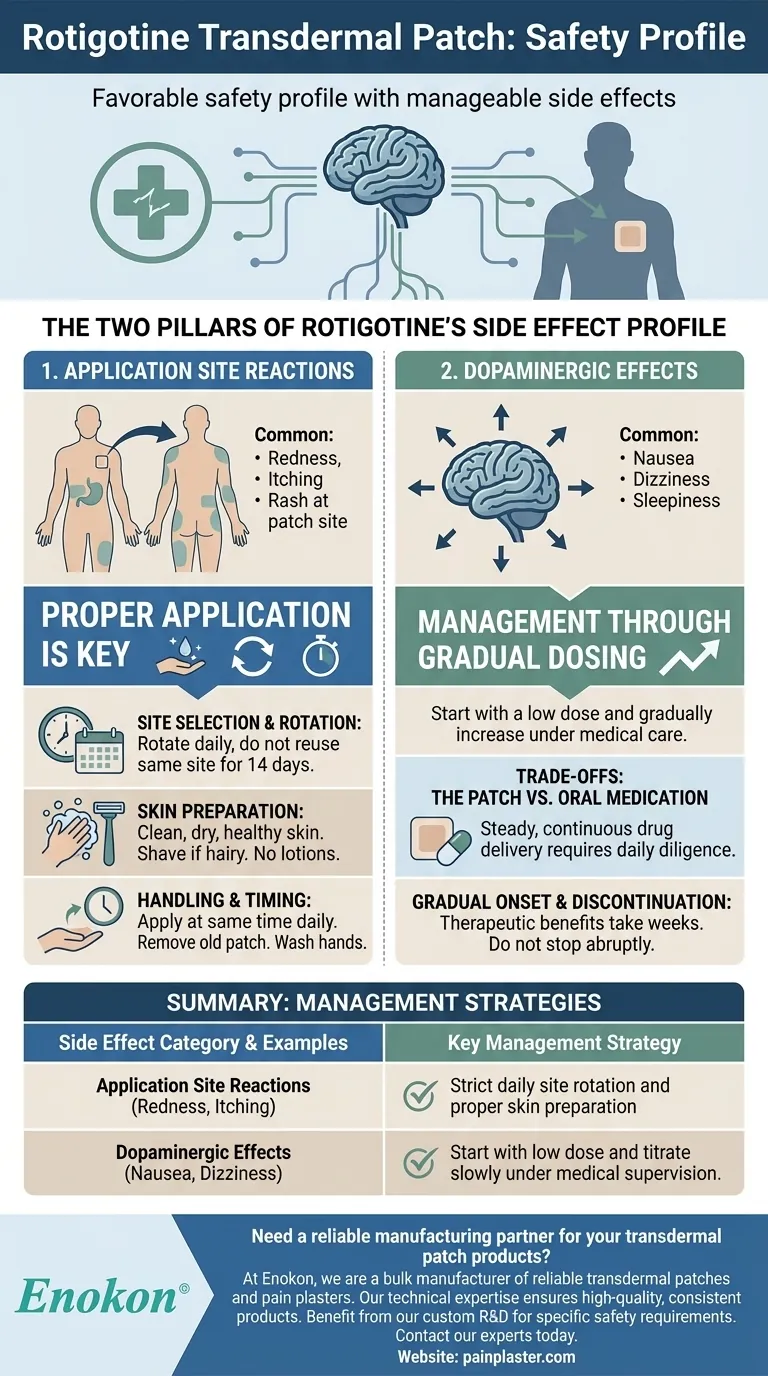
The Two Pillars of Rotigotine's Side Effect Profile
To understand the safety of the rotigotine patch, it's essential to separate the side effects into two categories based on their origin.
1. Application Site Reactions
As a transdermal system, the most frequently reported issues are related to the skin where the patch is applied.
These reactions are a direct result of the transdermal delivery method. They are typically mild and can be minimized by following a strict application routine.
2. Dopaminergic Effects
Rotigotine is a dopamine agonist, meaning it mimics the action of dopamine in the brain to treat symptoms of Parkinson's disease and Restless Legs Syndrome.
Side effects from this action are a result of the drug's intended mechanism. These are managed by starting with a low dose and gradually increasing it under a physician's care, allowing the body to acclimate.
Proper Application Is the Foundation of Safety
The references make it clear that correct application is the single most important factor in minimizing skin-related side effects. This involves a disciplined, daily routine.
Site Selection and Rotation
The patch should be applied to clean, dry, and healthy skin. Approved areas include the stomach, thigh, hip, flank, shoulder, or upper arm.
To prevent irritation, you must rotate the application site daily. A specific site should not be reused for at least 14 days.
Skin Preparation
The chosen area must be free of any creams, lotions, oils, or powders, as these can interfere with adhesion and absorption.
Do not apply the patch to skin that has folds or is under tight clothing. If the area is hairy, it should be shaved at least three days prior to application.
Handling and Timing
Always apply the patch at the same time each day.
Crucially, you must remove the old patch before applying a new one. Always wash your hands after handling the patch.
Understanding the Trade-offs
The decision to use a transdermal patch involves weighing its unique benefits against its specific management requirements.
The Patch vs. Oral Medication
Physicians often choose the patch form specifically for its benefit of providing steady, continuous drug delivery.
The trade-off for this consistency is the need for daily diligence in patch application and site rotation to avoid potential skin irritation.
Gradual Onset and Discontinuation
The therapeutic benefits of rotigotine may take several weeks to become fully apparent. It is designed for long-term symptom control, not immediate relief.
For safety, you should never stop using the patch abruptly. Discontinuation must be done under the guidance of your doctor to avoid complications.
Making the Right Choice for Your Treatment
Your approach to using the rotigotine patch should align with your primary health goals and concerns.
- If your primary focus is avoiding skin irritation: Strict adherence to the daily site rotation schedule and proper skin preparation is non-negotiable.
- If your primary concern is managing potential dopaminergic effects: The key is to follow your doctor's plan for starting at a low dose and increasing it gradually over time.
- If your primary goal is treatment consistency and stability: The patch offers a clear advantage, but this benefit depends entirely on your commitment to the correct daily application routine.
Ultimately, using the rotigotine patch safely and effectively is an active partnership between you and your healthcare provider.
Summary Table:
| Side Effect Category | Common Examples | Key Management Strategy |
|---|---|---|
| Application Site Reactions | Redness, itching, rash at patch site | Strict daily site rotation and proper skin preparation |
| Dopaminergic Effects | Nausea, dizziness, sleepiness | Start with low dose and titrate slowly under medical supervision |
Need a reliable manufacturing partner for your transdermal patch products?
At Enokon, we are a bulk manufacturer of reliable transdermal patches and pain plasters for healthcare and pharmaceutical distributors and brands. Our technical expertise ensures high-quality, consistent products. Benefit from our custom R&D and development services to create a patch that meets your specific safety and efficacy requirements.
Contact our experts today to discuss your transdermal patch needs.
Visual Guide
Related Products
- Far Infrared Heat Pain Relief Patches Transdermal Patches
- Silicone Scar Sheets Patch Transdermal Drug Patch
- Icy Hot Menthol Medicine Pain Relief Patch
- Menthol Gel Pain Relief Patch
- Mugwort Wormwood Pain Relief Patch for Neck Pain
People Also Ask
- Why is the selection of matrix materials critical when developing customized transdermal patches? Optimize Efficacy
- What are the physical impacts of external heat exposure on the performance and safety of transdermal patches? - Guide
- What role does a skin tolerance scoring system play in the safety evaluation of transdermal patches? Key Safety Metrics
- What are the clinical advantages of local transdermal delivery systems? Unlock Safer, More Effective Pain Relief Solutions
- How does high-purity far-infrared ceramic powder contribute to the efficacy of far-infrared physical therapy patches?








