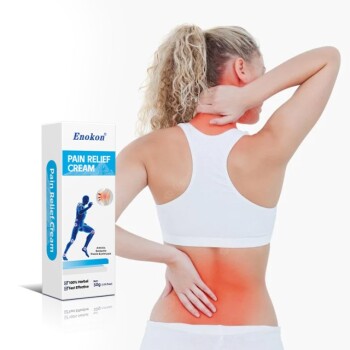
Precision rheological evaluation is the cornerstone of high-performance topical manufacturing. Using a rotational viscometer allows manufacturers to quantify how an analgesic gel behaves under various levels of stress, ensuring the product is easy to extrude, spreads smoothly on the skin, and delivers the medication effectively.
Core Takeaway: For B2B brand owners and distributors, rotational viscometry is a critical quality control metric that guarantees batch-to-batch consistency and consumer satisfaction. It transforms subjective "skin feel" into objective data, ensuring that large-scale production meets the rigorous standards required for global pharmaceutical and cosmetic markets.
Engineering the Ideal Consumer Experience
Achieving Optimal Shear-Thinning Behavior
Analgesic gels must exhibit shear-thinning properties, meaning they become less viscous when force is applied. A rotational viscometer measures this by spinning a spindle at varying speeds to simulate the action of a consumer rubbing the gel onto their skin.
This data ensures the gel spreads effortlessly under pressure but regains its structure—a property known as thixotropy—once the rubbing stops. Without this precise balance, a gel might be too thick to spread or too runny to stay on the target area.
Ensuring Seamless Extrudability
A primary concern for brand owners is how the product exits the packaging, whether it is a tube, pump, or sachet. Rotational viscometry predicts the yield stress required to move the gel through the container's orifice.
Consistent flow behavior prevents "spurting" or resistance, which are common points of consumer frustration. Reliable data at the R&D stage ensures that the formulation is perfectly matched to its intended delivery system.
The Role of Rheology in Drug Efficacy
Predicting Drug Diffusion Dynamics
The viscosity of the gel matrix directly impacts how the active pharmaceutical ingredient (API) moves through the gel and into the skin. If the matrix is too dense, the diffusion rate may be too slow, rendering the analgesic less effective.
High-precision viscometers allow R&D teams to optimize the organizational structure of the gel. This ensures that the matrix provides enough stability for the API while allowing for its timely release upon application.
Improving Adhesion and Dosage Accuracy
For a transdermal product to work, it must adhere to the skin long enough for the medication to be absorbed. Rotational viscometers evaluate the structural stability and skin adhesion of the formulation.
Correct viscosity ensures a consistent film thickness across the application site. This uniformity is vital for providing a predictable and accurate drug dosage to the end-user.
Manufacturing Excellence and Quality Control
Scalability and Batch-to-Batch Consistency
In large-scale OEM/ODM operations, maintaining the same rheological profile across thousands of liters is a significant technical challenge. Rotational viscometers serve as a core indicator for quality control in GMP-certified facilities.
By measuring the resistance of specific spindles during the cooling and mixing phases, technicians can detect deviations early. This prevents costly batch failures and ensures that every unit on a distributor’s shelf performs identically.
Validating Complex Custom Formulations
Modern analgesic gels often use complex emulsifiers and film-forming agents to improve texture. A digital rotational viscometer provides the quantitative data needed to validate these custom formulations during the contract R&D process.
This scientific rigor allows brand owners to confidently market "premium" or "professional-grade" products. Detailed rheological curves provide the technical proof required for global certifications and regulatory compliance.
Understanding the Trade-offs and Pitfalls
Balancing Stability vs. Sensorial Appeal
A common pitfall in gel formulation is over-stabilizing the product, which can lead to a "tacky" or "sticky" residue. While high viscosity improves shelf-life stability, it often degrades the user experience if not carefully balanced.
Risks of Inadequate Testing
Using low-precision equipment or failing to test at multiple shear rates can lead to product syneresis (oil/water separation). Inadequate rheological mapping may result in a product that performs well in the lab but fails during high-speed automated filling or under extreme storage temperatures.
How to Leverage Rheological Data for Your Brand
Making the Right Choice for Your Goal
- If your primary focus is Market Leadership: Partner with a manufacturer that provides comprehensive rheological reports to prove your product’s superior spreadability and skin feel.
- If your primary focus is Regulatory Compliance: Ensure your OEM partner utilizes digital rotational viscometers within a GMP-certified framework to guarantee dosage accuracy and batch uniformity.
- If your primary focus is Product Innovation: Utilize contract R&D services that can manipulate thixotropic properties to create unique textures, such as "film-forming" or "quick-dry" analgesic gels.
By prioritizing precise rheological evaluation, brand owners can ensure their analgesic gels deliver both therapeutic efficacy and a premium user experience at any production scale.
Summary Table:
| Rheological Property | Significance in Manufacturing | Impact on Consumer Experience |
|---|---|---|
| Shear-Thinning | Simulates application force for R&D validation | Ensures the gel spreads smoothly and easily on skin |
| Yield Stress | Determines optimal packaging & filling parameters | Prevents 'spurting' and ensures easy extrusion from tubes |
| Diffusion Rate | Optimizes the gel matrix for API release | Guarantees fast-acting pain relief and drug efficacy |
| Thixotropy | Ensures batch-to-batch structural stability | Maintains gel consistency without dripping after application |
Elevate Your Brand with Enokon’s Precision Manufacturing
Are you looking for a manufacturing partner that prioritizes scientific rigor and batch consistency? Enokon is a trusted global manufacturer specializing in high-volume production and custom R&D for brand owners, distributors, and wholesalers.
Our GMP-certified facilities utilize advanced rheological testing to ensure your analgesic gels and transdermal products meet the highest pharmaceutical standards. Whether you need turnkey OEM/ODM solutions for Lidocaine, Menthol, or Capsicum patches, or custom Medical Cooling Gels, we provide:
- Massive Production Capacity: Reliable high-volume delivery for global markets.
- Expert R&D: Custom formulations and film-forming technology (excluding microneedles).
- Stringent Quality Control: Precise data-driven manufacturing for superior skin feel and efficacy.
Ready to scale your production with a reliable partner? Contact Enokon Today to Request a Quote
References
- Manish Kumar. Development and Evaluation of Transdermal Gel for Pain Relief. DOI: 10.31531/fmrs.1000102
This article is also based on technical information from Enokon Knowledge Base .
Related Products
- Menthol Gel Pain Relief Patch
- Icy Hot Menthol Medicine Pain Relief Patch
- Natural Herbal Tube Cream for Pain Relief Analgesic Cream
- Lidocaine Hydrogel Pain Relief Patch for Pain Relief
- Herbal Pain Relief Cream Pain Relieving Creams
People Also Ask
- How do pain relief patches compare to other pain relief methods? Discover Targeted, Long-Lasting Relief
- How effective are pain relief patches for muscle pain? Target Localized Pain with Transdermal Delivery
- Who should consult a healthcare professional before using pain relief patches? Ensure Your Safety with Medical Advice
- Can pregnant women use pain relief patches? Your Essential Guide to Safe Pain Management
- What are the different types of pain relief patches available? Find the Right Solution for Your Pain