
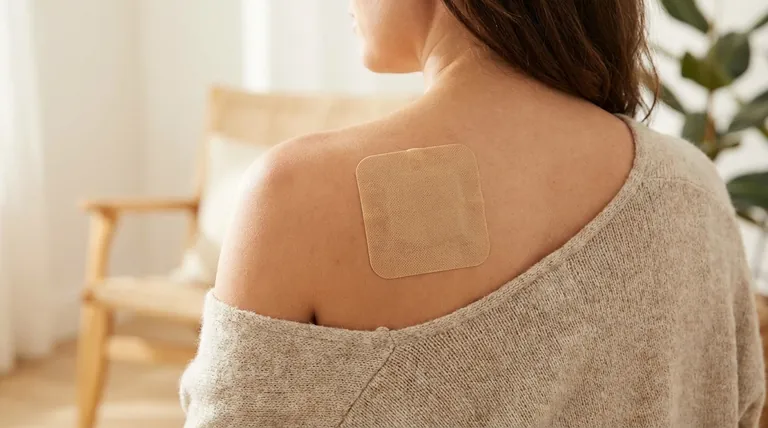
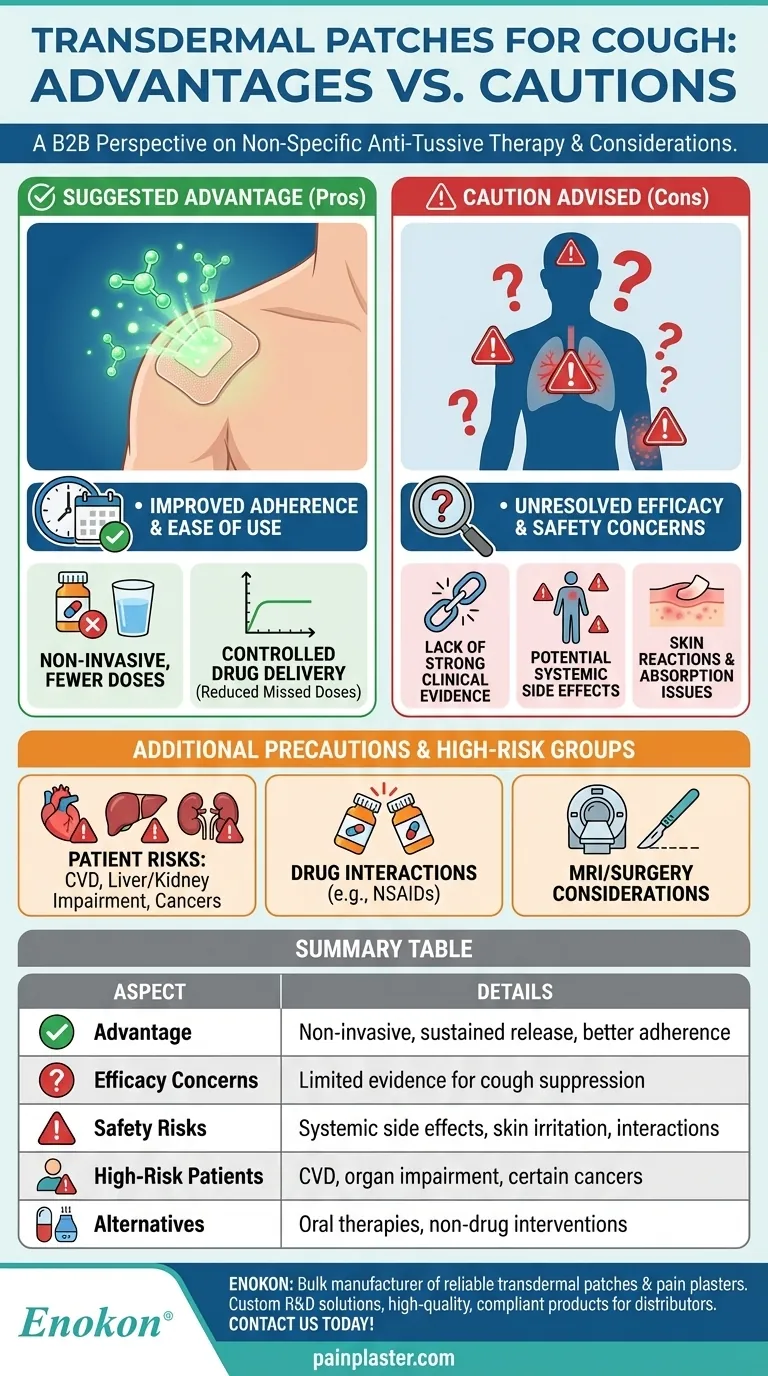
The suggested advantage of the transdermal patch as a non-specific anti-tussive therapy is its ease of use and improved patient adherence, which stems from its non-invasive application and sustained drug delivery. However, significant caution is advised due to unresolved efficacy and safety concerns, including potential systemic side effects and lack of robust clinical evidence supporting its use for cough suppression.
Key Points Explained:
-
Advantage: Adherence and Ease of Use
- Transdermal patches bypass the need for frequent oral dosing, making them convenient for patients.
- They provide controlled drug release, reducing the risk of missed doses.
- Particularly beneficial for patients who struggle with swallowing pills or remembering multiple daily doses.
-
Caution: Efficacy and Safety Concerns
- Lack of Strong Evidence: The effectiveness of transdermal patches as anti-tussive agents is not well-established in clinical studies.
- Systemic Side Effects: Since the drug is absorbed through the skin, there is a risk of unintended systemic effects, especially with long-term use.
- Skin Reactions: Improper application (e.g., on irritated or oily skin) can lead to irritation or reduced absorption.
-
Additional Precautions
- Patient-Specific Risks: Individuals with a history of cardiovascular disease, liver/kidney impairment, or certain cancers should avoid or use these patches under strict medical supervision.
- Drug Interactions: NSAIDs (like diclofenac patches) may interact with other medications, increasing bleeding risks or reducing efficacy.
- MRI/Surgery Considerations: Patients must inform healthcare providers about patch use before undergoing imaging or surgical procedures.
-
Alternative Considerations
- Given the uncertainties, healthcare providers should reassess whether transdermal patches are the best option for cough management or if traditional oral therapies or other non-drug interventions (e.g., humidifiers, throat lozenges) might be safer.
While transdermal patches offer convenience, their role in cough suppression remains controversial. A thorough risk-benefit analysis is essential before prescribing or using them for this purpose.
Summary Table:
| Aspect | Details |
|---|---|
| Advantage | Non-invasive, sustained drug release, improved patient adherence |
| Efficacy Concerns | Limited clinical evidence for cough suppression |
| Safety Risks | Systemic side effects, skin irritation, drug interactions |
| High-Risk Patients | Cardiovascular disease, liver/kidney impairment, certain cancers |
| Alternatives | Oral therapies, non-drug interventions (e.g., humidifiers, throat lozenges) |
Considering transdermal patches for your patients? Enokon, a bulk manufacturer of reliable transdermal patches and pain plasters, offers custom R&D solutions tailored to your needs. Our technical expertise ensures high-quality, compliant products for healthcare and pharma distributors. Contact us today to discuss your requirements!
Visual Guide
Related Products
- Far Infrared Heat Pain Relief Patches Transdermal Patches
- Silicone Scar Sheets Patch Transdermal Drug Patch
- Icy Hot Menthol Medicine Pain Relief Patch
- Menthol Gel Pain Relief Patch
- Mugwort Wormwood Pain Relief Patch for Neck Pain
People Also Ask
- Why is the selection of matrix materials critical when developing customized transdermal patches? Optimize Efficacy
- What are the clinical advantages of local transdermal delivery systems? Unlock Safer, More Effective Pain Relief Solutions
- What are the physical impacts of external heat exposure on the performance and safety of transdermal patches? - Guide
- What role does a skin tolerance scoring system play in the safety evaluation of transdermal patches? Key Safety Metrics
- How does high-purity far-infrared ceramic powder contribute to the efficacy of far-infrared physical therapy patches?

















