
At its core, a transdermal patch is a medicated adhesive patch used to deliver a specific dose of medication through the skin and into the bloodstream. Based on the type, it is prescribed as a prescription treatment for chronic conditions in adults, most notably schizophrenia, the signs and symptoms of Parkinson's disease, and restless legs syndrome.
A transdermal patch is not a single treatment but a drug delivery system. Its purpose is to provide a steady, controlled release of medication for specific long-term conditions, bypassing the digestive system and offering a convenient alternative to oral pills.
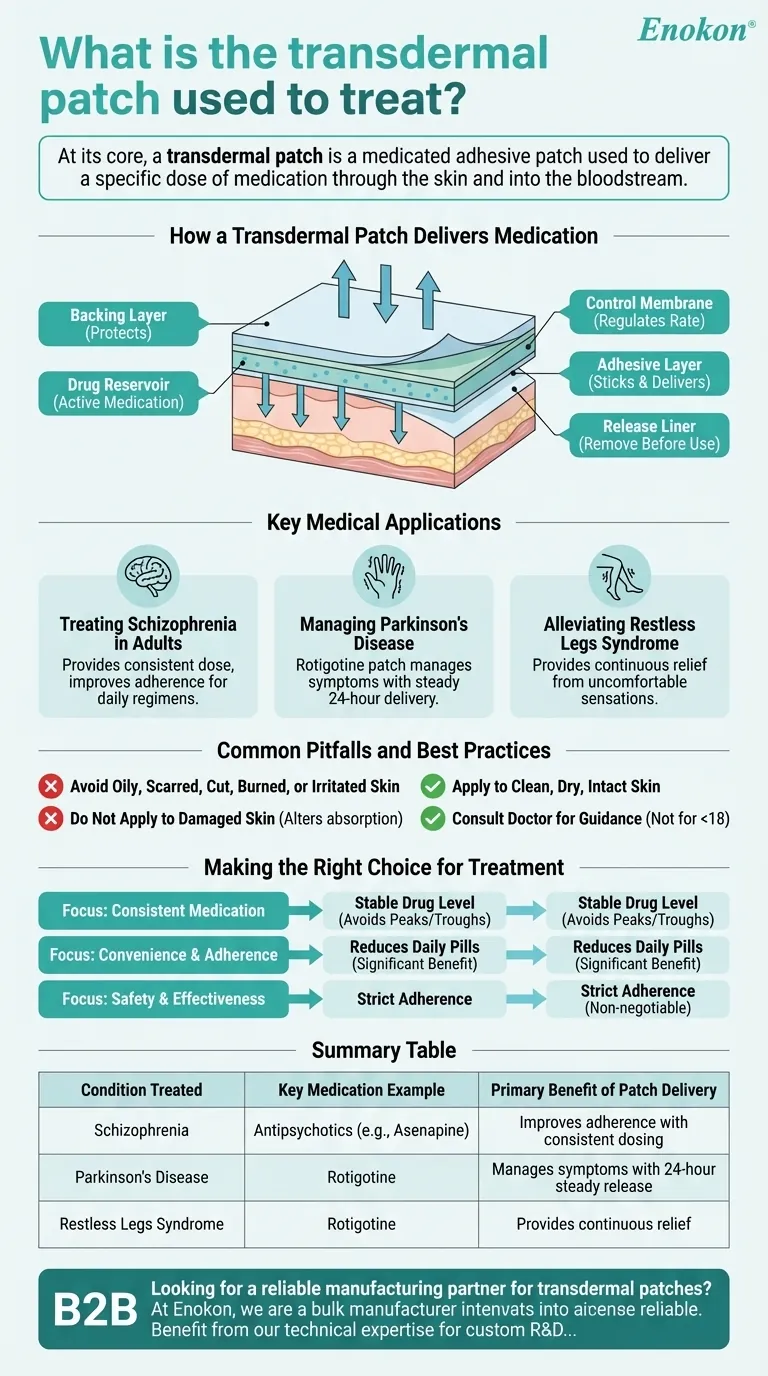
How a Transdermal Patch Delivers Medication
A transdermal patch functions as a multi-layered system designed for controlled and continuous drug administration. Each component plays a critical role in getting the medication from the patch into your body safely and effectively.
The Core Components
A patch is made of several distinct layers. The backing layer is the outermost part that protects the patch from the environment.
The drug reservoir contains the active medication, which may be mixed directly into the adhesive or held in a separate layer.
A control membrane, present in some designs, regulates the rate at which the medication is released from the reservoir to the skin, ensuring a steady dose.
The adhesive layer serves a dual purpose: it ensures the patch sticks securely to the skin and can also be part of the drug delivery mechanism itself.
Finally, the release liner is a protective film that is peeled off just before application to expose the adhesive and medication.
Key Medical Applications
While the technology can be adapted for various drugs, specific approved uses highlight its benefits for chronic disease management.
Treating Schizophrenia in Adults
For adults with schizophrenia, a transdermal patch provides a consistent dose of antipsychotic medication. This method can improve adherence for patients who have difficulty with daily oral medication regimens.
Managing Parkinson's Disease
The rotigotine transdermal patch is used to treat the symptoms of Parkinson's disease. It helps manage shaking, stiffness, slowed movements, and balance problems by delivering medication steadily over 24 hours.
Alleviating Restless Legs Syndrome
The same patch used for Parkinson's is also prescribed to treat moderate to severe restless legs syndrome. It provides continuous relief from the uncomfortable sensations that characterize the condition.
Common Pitfalls and Best Practices
The effectiveness of a transdermal patch is highly dependent on proper use. Misapplication can lead to incorrect dosing or skin irritation.
Application Site is Critical
You must avoid applying patches to skin that is oily, scarred, cut, burned, or irritated. Areas with heavy perspiration or excessive hair should also be avoided as they can interfere with adhesion.
Skin Condition Matters
Placing a patch on damaged skin can alter the rate of drug absorption, potentially leading to an incorrect dosage. Always apply it to a clean, dry, and intact area of skin.
Adherence to Medical Guidance
These patches are prescription medications and are not approved for all populations, such as children under 18 years of age. If a recommended application location is unsuitable, a doctor must be consulted for guidance.
Making the Right Choice for Treatment
Understanding this delivery system helps you and your doctor decide if it's the appropriate method for a specific medical goal.
- If your primary focus is consistent medication for a chronic neurological condition: A patch can provide a stable drug level in your bloodstream, avoiding the peaks and troughs of oral dosing.
- If your primary focus is treatment convenience and adherence: Patches reduce the need to remember daily pills, which is a significant benefit for long-term therapy.
- If your primary focus is safety and effectiveness: Strict adherence to application instructions on clean, healthy skin is non-negotiable for achieving the intended therapeutic outcome.
Ultimately, the transdermal patch is a powerful tool for managing specific chronic diseases by transforming how medication is delivered to the body.
Summary Table:
| Condition Treated | Key Medication Example | Primary Benefit of Patch Delivery |
|---|---|---|
| Schizophrenia | Antipsychotics (e.g., Asenapine) | Improves adherence with consistent dosing |
| Parkinson's Disease | Rotigotine | Manages symptoms with 24-hour steady release |
| Restless Legs Syndrome | Rotigotine | Provides continuous relief from uncomfortable sensations |
Looking for a reliable manufacturing partner for transdermal patches?
At Enokon, we are a bulk manufacturer of reliable transdermal patches & pain plasters for healthcare and pharmaceutical distributors and brands. Benefit from our technical expertise for custom R&D and development to create a patch solution tailored to your specific drug and patient needs.
Contact our experts today to discuss your project and discover how we can support your product development.
Visual Guide
Related Products
- Far Infrared Heat Pain Relief Patches Transdermal Patches
- Silicone Scar Sheets Patch Transdermal Drug Patch
- Icy Hot Menthol Medicine Pain Relief Patch
- Menthol Gel Pain Relief Patch
- Mugwort Wormwood Pain Relief Patch for Neck Pain
People Also Ask
- Why is the selection of matrix materials critical when developing customized transdermal patches? Optimize Efficacy
- What role does a skin tolerance scoring system play in the safety evaluation of transdermal patches? Key Safety Metrics
- What are the physical impacts of external heat exposure on the performance and safety of transdermal patches? - Guide
- What are the clinical advantages of local transdermal delivery systems? Unlock Safer, More Effective Pain Relief Solutions
- How does high-purity far-infrared ceramic powder contribute to the efficacy of far-infrared physical therapy patches?



















