
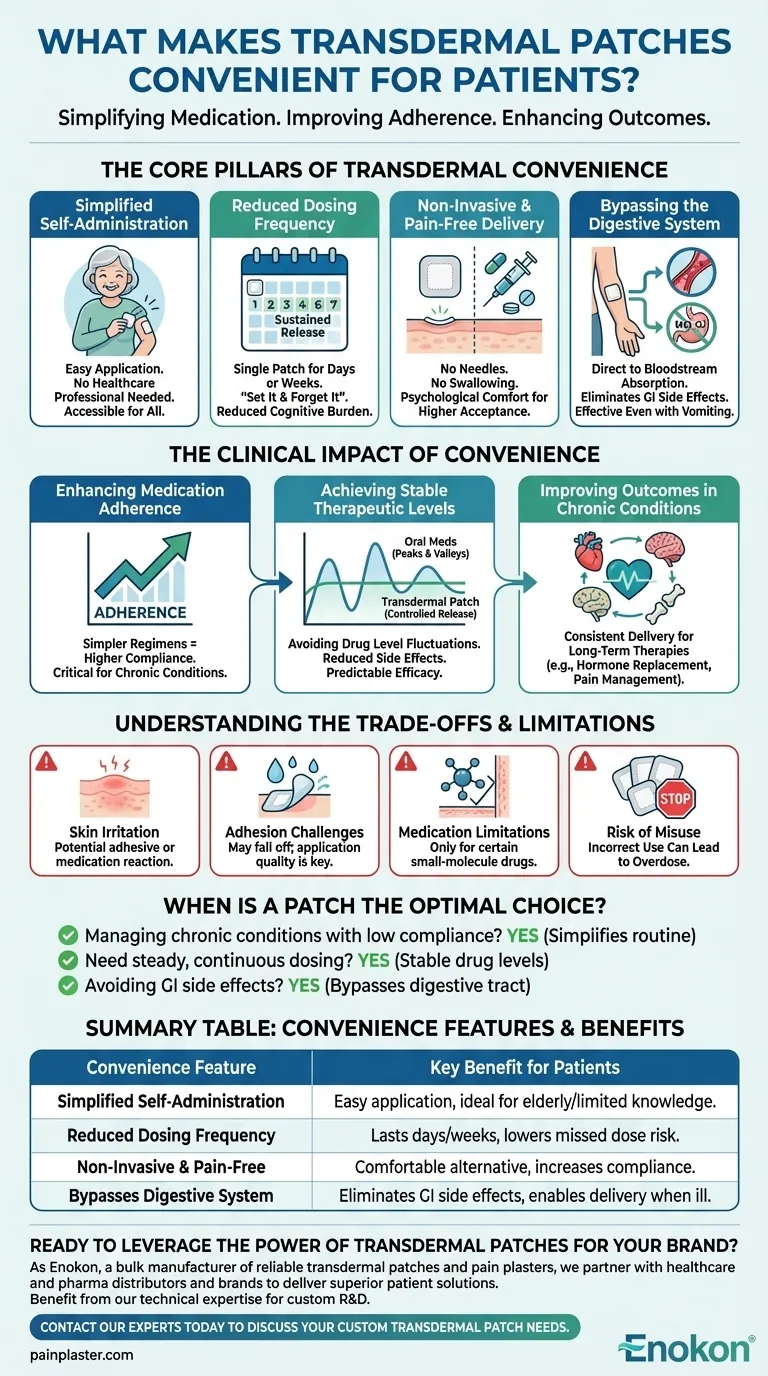
At its core, a transdermal patch is convenient because it fundamentally simplifies the act of taking medication. Patients can typically apply the patch themselves, it requires infrequent dosing that can last for days or weeks, and it delivers medicine in a non-invasive, pain-free way, which collectively drives higher rates of treatment adherence.
The defining advantage of a transdermal patch is not merely its ease of use, but how that simplicity translates directly into better medical outcomes. By removing common barriers like frequent dosing and digestive side effects, patches make it easier for patients to stick to their treatment plan, especially for chronic conditions.

The Core Pillars of Transdermal Convenience
The convenience of a transdermal patch stems from a few key design principles that address common points of failure in other medication delivery systems.
Simplified Self-Administration
A primary benefit is the ease of application. Most patients can apply a patch on their own without the need for a healthcare professional or frequent clinic visits.
This user-friendly nature makes patches a viable option for a wide range of individuals, including the elderly or those with limited medical knowledge.
Reduced Dosing Frequency
Unlike pills that may require multiple doses per day, a single transdermal patch can deliver medication for hours, days, or even a full week.
This "set it and forget it" model drastically reduces the cognitive burden on the patient, lowering the risk of missed doses and improving the consistency of the treatment.
Non-Invasive and Pain-Free Delivery
For patients who are averse to needles, patches offer a completely non-invasive and painless alternative to injections.
This psychological comfort is a significant factor in patient acceptance and long-term compliance with a prescribed therapy.
Bypassing the Digestive System
Medication from a patch is absorbed directly through the skin into the bloodstream, completely avoiding the gastrointestinal (GI) tract.
This offers two convenience benefits: it eliminates common GI side effects like nausea, and it allows for medication delivery even if a patient is vomiting or unconscious.
The Clinical Impact of Convenience
This combination of convenient features has a direct and measurable effect on the success of a medical treatment, moving beyond patient comfort to improve therapeutic efficacy.
Enhancing Medication Adherence
The single greatest clinical impact is improved medication adherence, also known as compliance. The simpler the treatment regimen, the more likely a patient is to follow it correctly.
This is especially critical in managing chronic conditions like hypertension, Parkinson's disease, or Alzheimer's, where consistent medication levels are essential for long-term health.
Achieving Stable Therapeutic Levels
Patches are designed for controlled, steady release. This avoids the "peaks and valleys" in drug concentration common with oral medications.
Maintaining a stable drug level in the bloodstream can reduce the incidence of side effects and ensure the medication works more effectively and predictably over time.
Improving Outcomes in Chronic Conditions
The benefits of adherence and stable dosing are particularly pronounced in long-term treatments.
Patches are highly effective for hormone replacement therapy, chronic pain management, and nicotine addiction, where consistent delivery over extended periods is key to a successful outcome.
Understanding the Trade-offs and Limitations
While highly convenient, transdermal patches are not a universal solution. It is critical to recognize their limitations to determine if they are the right choice for a specific therapy.
Potential for Skin Irritation
The adhesive and the medication can cause skin irritation, redness, or itching at the application site for some individuals.
Adhesion and Application Challenges
Patches can sometimes lose adhesion and fall off, especially with exposure to water, sweat, or friction. Proper application is essential for effectiveness.
Limitations on Medication Type
Only certain types of drugs can be made into a patch. The medication's molecules must be small enough to pass through the skin barrier effectively.
Risk of Misuse or Error
While less prone to misuse than other forms, errors can still occur. Applying too many patches, cutting a patch, or incorrect disposal can lead to overdose or exposure to others.
When is a Patch the Optimal Choice?
Choosing a delivery method depends entirely on the patient, the condition, and the therapeutic goal.
- If your primary focus is managing a chronic condition with low compliance: A patch is an excellent choice to simplify the daily routine and improve adherence.
- If your primary focus is delivering a steady, continuous dose: Patches are superior for therapies like pain management or hormone replacement that benefit from stable drug levels.
- If your primary focus is avoiding gastrointestinal side effects: A patch is an ideal alternative for patients who experience nausea or other digestive issues with oral medication.
Ultimately, the convenience of a transdermal patch is a powerful therapeutic tool that makes effective treatment more accessible and achievable for the patient.
Summary Table:
| Convenience Feature | Key Benefit for Patients |
|---|---|
| Simplified Self-Administration | Easy to apply without professional help, ideal for the elderly or those with limited medical knowledge. |
| Reduced Dosing Frequency | A single patch can last for days or a week, reducing the cognitive burden and risk of missed doses. |
| Non-Invasive & Pain-Free | Offers a comfortable alternative to needles, increasing patient acceptance and long-term compliance. |
| Bypasses Digestive System | Eliminates GI side effects like nausea and allows delivery even if a patient is vomiting. |
Ready to leverage the power of transdermal patches for your brand?
As Enokon, a bulk manufacturer of reliable transdermal patches and pain plasters, we partner with healthcare and pharma distributors and brands to deliver superior patient solutions. Benefit from our technical expertise for custom R&D and development to create patches that improve adherence and outcomes.
Contact our experts today to discuss your custom transdermal patch needs.
Visual Guide
Related Products
- Far Infrared Heat Pain Relief Patches Transdermal Patches
- Silicone Scar Sheets Patch Transdermal Drug Patch
- Icy Hot Menthol Medicine Pain Relief Patch
- Menthol Gel Pain Relief Patch
- Mugwort Wormwood Pain Relief Patch for Neck Pain
People Also Ask
- Why is the selection of matrix materials critical when developing customized transdermal patches? Optimize Efficacy
- What are the physical impacts of external heat exposure on the performance and safety of transdermal patches? - Guide
- What role does a skin tolerance scoring system play in the safety evaluation of transdermal patches? Key Safety Metrics
- What are the clinical advantages of local transdermal delivery systems? Unlock Safer, More Effective Pain Relief Solutions
- How does high-purity far-infrared ceramic powder contribute to the efficacy of far-infrared physical therapy patches?



















