
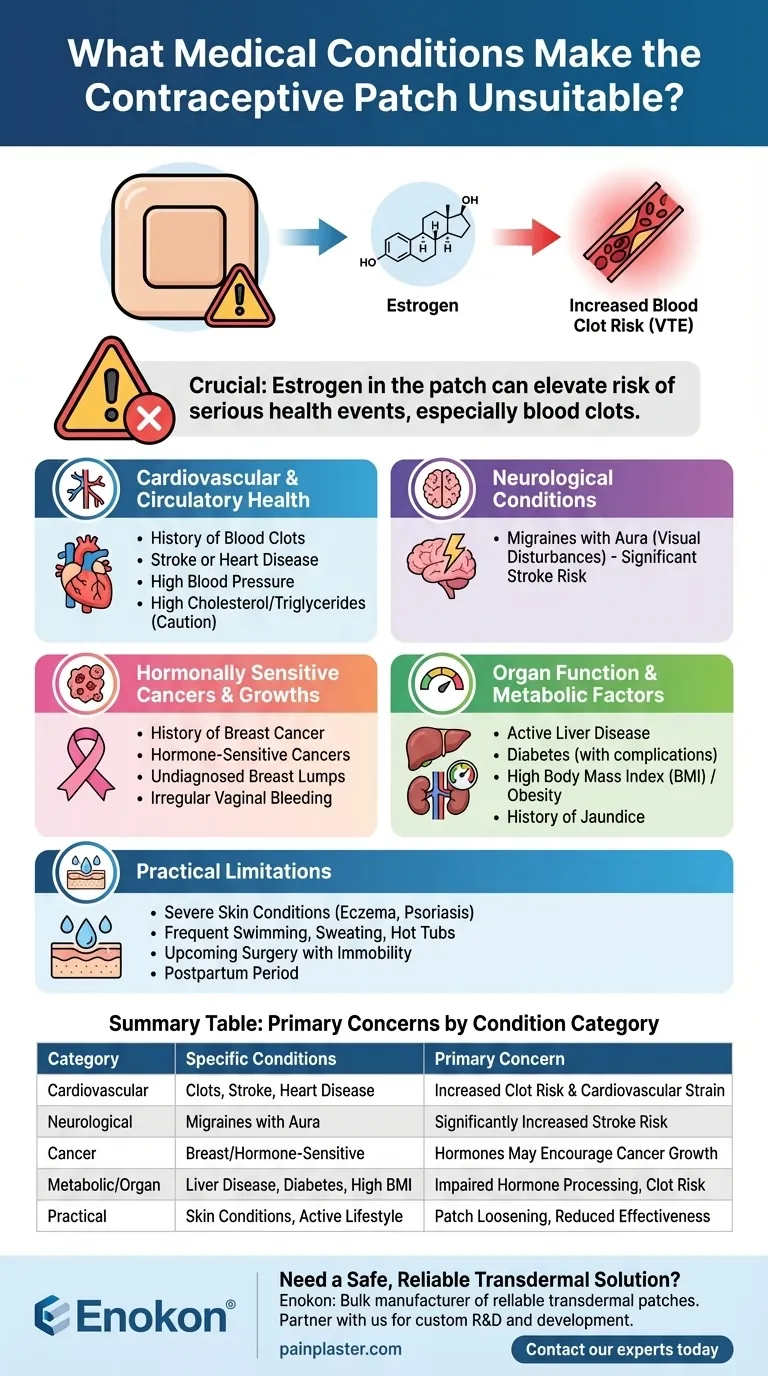
Crucially, several medical conditions can make the contraceptive patch unsuitable or unsafe due to the risks associated with its key hormone, estrogen. These primarily involve a history of cardiovascular issues like blood clots, stroke, or heart disease, certain hormone-sensitive cancers, severe liver disease, and specific types of migraines. A thorough evaluation with a healthcare provider is essential to determine your personal risk profile.
The core issue is that the estrogen in the patch can increase the risk of serious health events, particularly blood clots. Therefore, any pre-existing condition that already elevates this risk, or is sensitive to hormones, must be carefully considered.
Why Certain Health Conditions Conflict with the Patch
Understanding the mechanism of the patch—delivering a combination of estrogen and progestin hormones—is key to understanding its contraindications. The presence of estrogen is the primary driver behind most of the significant health warnings.
The Central Role of Estrogen and Clotting Risk
The estrogen delivered through the patch can slightly increase the levels of clotting factors in your blood. This elevates the risk of developing a dangerous blood clot, known as a venous thromboembolism (VTE).
For most healthy individuals, this increase in risk is very small. However, for those with certain underlying conditions, this added risk becomes medically unacceptable.
Cardiovascular and Circulatory Health
Conditions that put stress on your circulatory system are a major concern. The patch can amplify existing dangers.
You should not use the patch if you have a history of high blood pressure, stroke, or certain heart conditions. Adding estrogen can further strain your cardiovascular system.
Similarly, a history of high cholesterol or triglycerides requires careful discussion with your provider, as these are also risk factors for heart disease.
History of Blood Clots
A personal history of a blood clot in your legs (deep vein thrombosis) or lungs (pulmonary embolism) is a definitive reason to avoid the patch.
The risk of a recurrent clot is already elevated in these individuals, and the hormones in the patch would raise that risk to a dangerous level.
Migraines with Aura
This is a very specific but critical contraindication. Migraines that are preceded or accompanied by an "aura" (visual disturbances like flashing lights or blind spots) are linked to a higher baseline risk of stroke.
Combining migraines with aura and an estrogen-containing contraceptive like the patch significantly increases this stroke risk.
Conditions Requiring Careful Medical Evaluation
Some conditions don't automatically rule out the patch but require a detailed risk-benefit analysis with a healthcare professional. Your unique health profile is the deciding factor.
Hormonally Sensitive Cancers
If you have or have had breast cancer or other cancers sensitive to female hormones, you should not use the patch. The hormones could potentially encourage the growth of cancer cells.
Any new breast lumps or changes must be fully investigated before you start using the patch.
Liver and Kidney Function
Your liver is responsible for processing the hormones from the patch. If you have active liver disease or significantly impaired liver function, you may not be able to clear the hormones effectively.
A history of jaundice during a past pregnancy can also be a sign of underlying liver sensitivity that needs to be considered.
Metabolic Factors: Diabetes and Obesity
Diabetes, particularly if it has led to complications affecting your circulation or blood vessels, increases the risk of heart attack or stroke. The patch can add to this risk.
A high Body Mass Index (BMI) or obesity is an independent risk factor for blood clots. Using the patch adds another layer of risk, which must be carefully weighed.
Understanding the Practical Limitations and Trade-offs
Beyond major medical conditions, practical issues and temporary health situations can also make the patch a poor choice.
Skin Adhesion and Effectiveness
The patch is only effective if it remains securely attached to your skin.
If you have a skin condition like eczema or psoriasis, it may be difficult to find a clear patch of skin for application.
Likewise, if you swim frequently, sweat profusely, or often use hot tubs and baths, the patch may loosen and become less effective.
Undiagnosed Symptoms
It is vital to tell your provider about symptoms like irregular or unexplained vaginal bleeding. This must be diagnosed before starting hormonal contraception, as it could be a sign of a serious underlying condition.
Temporary Risk Factors
Your clot risk is temporarily elevated after childbirth, miscarriage, or abortion. You will need to wait a period of time before it is safe to start the patch.
Similarly, any upcoming surgery that will result in prolonged immobility significantly raises your clot risk. You should not use the patch during this time.
Making the Safest Choice for Your Health
The decision to use the patch must be personalized to your specific health profile and history. Always provide your doctor with a complete and honest medical history.
- If your primary focus is safety with a known history of blood clots, stroke, or heart disease: The patch is not a suitable option, and you must explore progestin-only or non-hormonal methods.
- If your primary focus is managing risk factors like high blood pressure, diabetes, or migraines with aura: A thorough consultation with your provider is essential to determine if the patch's risks are acceptable in your specific case.
- If your primary focus is reliable effectiveness with a highly active lifestyle: You must honestly assess if the patch can reliably adhere to your skin to prevent contraceptive failure.
A transparent conversation with your healthcare provider is the most critical step in finding a contraceptive method that is both effective and safe for you.
Summary Table:
| Condition Category | Specific Conditions | Primary Concern |
|---|---|---|
| Cardiovascular & Circulatory | History of blood clots, stroke, heart disease, high blood pressure | Increased risk of dangerous clots and cardiovascular strain |
| Neurological | Migraines with aura (visual disturbances) | Significantly increased risk of stroke |
| Cancer & Growths | History of breast cancer or other hormone-sensitive cancers; undiagnosed breast lumps | Hormones may encourage cancer cell growth |
| Metabolic & Organ Function | Active liver disease, diabetes with complications, high BMI/obesity | Impaired hormone processing and increased clot/stroke risk |
| Practical Considerations | Severe skin conditions (eczema), frequent swimming/bathing | Potential for patch to loosen, reducing effectiveness |
Need a Safe, Reliable Transdermal Solution for Your Patients?
At Enokon, we are a bulk manufacturer of reliable transdermal patches and pain plasters. We understand that patient safety is paramount. Our technical expertise allows us to partner with healthcare and pharmaceutical distributors and brands to develop custom transdermal solutions tailored to specific patient needs and risk profiles.
Benefit from our expertise for your custom R&D and development projects. Let's collaborate to create a product that prioritizes efficacy and safety.
Contact our experts today to discuss your requirements.
Visual Guide
Related Products
- Heating Pain Relief Patches for Menstrual Cramps
- Prostate Pain Kidney Health Care Patch for Men
- Silicone Scar Sheets Patch Transdermal Drug Patch
- Lidocaine Hydrogel Pain Relief Patch for Pain Relief
- Icy Hot Menthol Medicine Pain Relief Patch
People Also Ask
- What are the benefits of Period Pain Heat Patches? Drug-Free, On-the-Go Relief
- What are the key benefits of heating patches for elderly individuals? Relieve Pain & Improve Mobility
- What are the different types of heat patches? Find the Right Pain Relief for Your Needs
- What are the key differences between conventional heat patches and deep heat devices? Choosing the Right Pain Relief Solution
- What percentage of people with back pain use heat patches for relief? Discover the Popular Choice for Pain Management













