
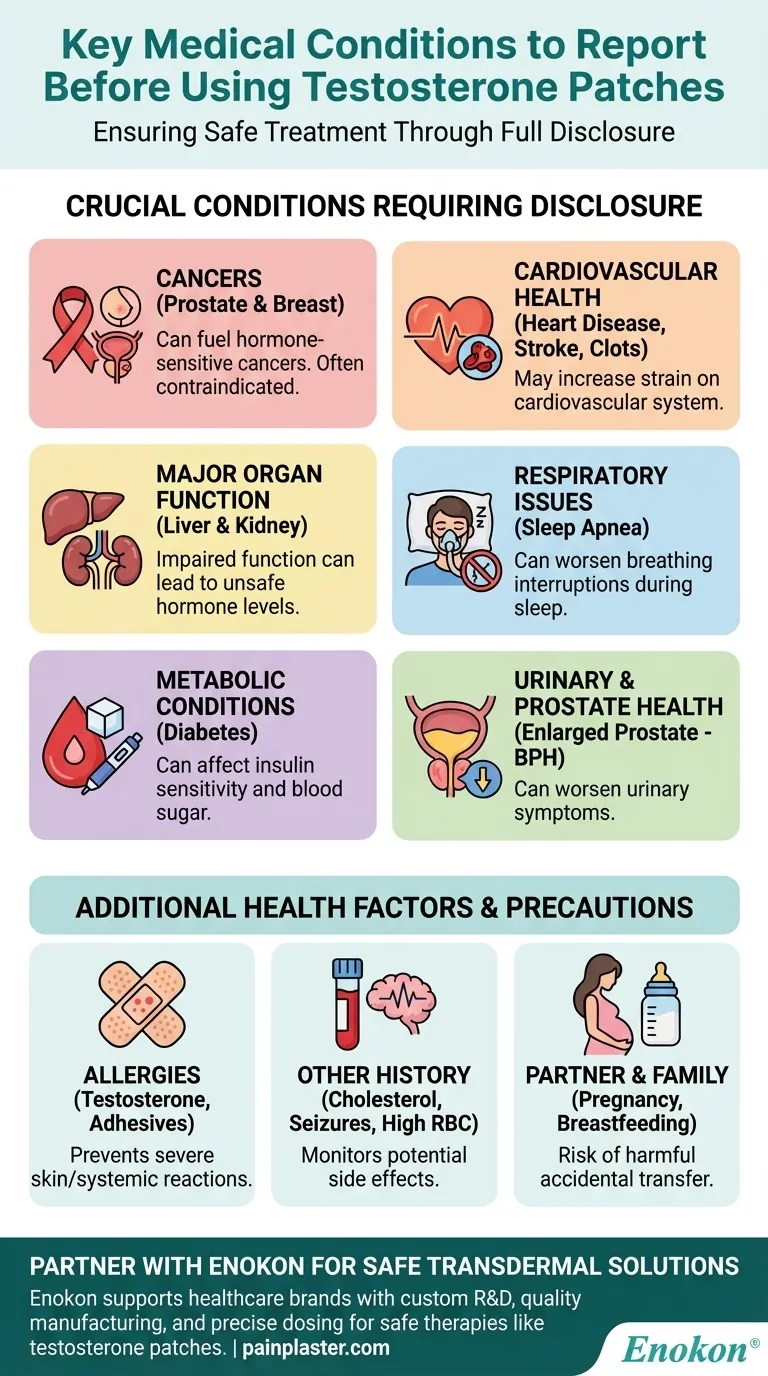
Before starting testosterone patches, you must inform your doctor about a specific set of medical conditions to ensure the treatment is safe for you. The most critical conditions to report include any history of prostate or breast cancer, significant heart, kidney, or liver disease, as well as sleep apnea, diabetes, and urinary problems related to an enlarged prostate. Disclosing any allergies, especially to testosterone or patch adhesives, is also essential.
Full transparency with your healthcare provider is not a formality—it is the single most important step in preventing serious health complications. Testosterone is a powerful hormone that can significantly worsen certain pre-existing conditions, making a complete medical history foundational to safe treatment.

Why Your Medical History is Crucial for Testosterone Therapy
Testosterone replacement therapy (TRT) can offer significant benefits for those with clinically low levels, but it also interacts with nearly every system in the body.
Applying this hormone without a full understanding of your health profile can turn a beneficial treatment into a dangerous one. Your doctor uses this information to weigh the risks against the benefits and determine if patches are the right choice for you.
Key Conditions Requiring Full Disclosure
Certain health issues are particularly sensitive to changes in testosterone levels. Informing your provider about them is non-negotiable.
Cancers (Prostate and Breast)
Testosterone can act as a fuel for certain hormone-sensitive cancers. If you have or have had prostate or breast cancer, testosterone therapy is generally not recommended as it could stimulate cancer cell growth.
Cardiovascular Health
This category includes a history of heart disease, heart attack, stroke, blood clots, or high blood pressure. Testosterone can affect fluid retention, red blood cell counts, and cholesterol levels, all of which can increase the strain on your cardiovascular system.
Major Organ Function (Liver and Kidney)
The liver is responsible for metabolizing testosterone, and the kidneys help clear its byproducts. If you have pre-existing liver or kidney disease, your body may not be able to process the hormone safely, leading to potentially toxic levels.
Respiratory Issues (Sleep Apnea)
Testosterone therapy has been shown to worsen sleep apnea, a condition where breathing repeatedly stops and starts during sleep. If you already have this condition, adding testosterone could make it more severe.
Metabolic Conditions (Diabetes)
Testosterone can influence your body's sensitivity to insulin and affect blood sugar levels. If you have diabetes, your doctor will need to monitor you closely and may need to adjust your diabetes medications.
Urinary and Prostate Health
If you have an enlarged prostate, also known as Benign Prostatic Hyperplasia (BPH), you may experience difficulty urinating. Testosterone can worsen these symptoms by further stimulating prostate growth.
Additional Health Factors to Discuss
Beyond the major conditions, a complete picture of your health ensures a safer experience.
Known Allergies
You must report any known allergy to testosterone itself. It is also critical to mention any allergic reactions to adhesives, as this is the delivery mechanism for the patch. Some patch formulations may also contain ingredients like menthol or salicylates.
Other Medical History
Be sure to mention other relevant conditions such as a history of high cholesterol, seizures, or a high red blood cell count. This complete picture allows your doctor to monitor for potential side effects more effectively.
Partner and Family Considerations
Because testosterone can be transferred through skin contact, it is critical to inform your doctor if a female partner is pregnant, planning to become pregnant, or breastfeeding. Accidental exposure can be harmful to a developing fetus or a nursing infant.
Beyond Conditions: Application and Usage Precautions
Proper use of the patch itself is a key part of safety. The instructions are not suggestions but are based on how the drug is absorbed and how to minimize risks.
Correct Patch Placement
Patches should only be applied to clean, dry, intact skin on the back, abdomen, upper arms, or thighs. Never apply a patch to the scrotum, to irritated or broken skin, or to bony areas.
Rotate Application Sites
To prevent skin irritation, you must rotate the application site. A common recommendation is to wait at least seven days before reusing the same spot.
Adhesion and Water Exposure
The patch must remain in full contact with the skin to deliver the correct dose. Most manufacturers advise avoiding showering, bathing, or swimming for at least three hours after application to ensure it adheres properly.
Following the Prescribed Dosage
Do not cut the patches or apply more than one unless specifically instructed by your doctor. Altering the patch can lead to improper and unpredictable dosing.
Ensuring a Safe and Effective Treatment Plan
Your goal is to work with your provider to make an informed decision. Use this information to guide your conversation.
- If your primary concern is a history of cancer (prostate or breast): You must understand that testosterone therapy is almost always contraindicated.
- If your primary concern is heart, liver, or kidney disease: Your doctor will need to conduct a thorough risk assessment to see if the therapy is safe enough to even consider.
- If your primary concern is sleep apnea or prostate enlargement (BPH): This therapy could worsen your condition, so you must discuss monitoring and alternative treatments with your provider.
- If your primary concern is diabetes or allergies: These factors require careful management, monitoring, and potentially selecting a specific patch formulation to ensure safety.
A transparent and comprehensive conversation with your healthcare provider is the foundation of a safe and successful testosterone therapy journey.
Summary Table:
| Key Medical Condition to Report | Why It's Critical to Disclose |
|---|---|
| Prostate or Breast Cancer | Testosterone can fuel cancer cell growth; therapy is often contraindicated. |
| Heart Disease, Stroke, or Blood Clots | Testosterone may increase strain on the cardiovascular system. |
| Liver or Kidney Disease | Impaired organ function can lead to unsafe hormone levels. |
| Sleep Apnea | Therapy can worsen breathing interruptions during sleep. |
| Diabetes | Testosterone can affect insulin sensitivity and blood sugar control. |
| Enlarged Prostate (BPH) | Can worsen urinary symptoms by stimulating prostate growth. |
| Allergies to Testosterone or Adhesives | Prevents severe skin reactions or systemic allergic responses. |
Partner with Enokon for Your Transdermal Patch Needs
As a trusted bulk manufacturer of reliable transdermal patches and pain plasters, Enokon supports healthcare and pharmaceutical distributors and brands in delivering safe, effective therapies like testosterone patches. Our technical expertise in custom R&D and development ensures your products meet the highest standards of quality, adhesion, and precise dosing—critical for patient safety.
Let us help you develop or supply patches that prioritize patient health. Contact our experts today to discuss your requirements.
Visual Guide
Related Products
- Prostate Pain Kidney Health Care Patch for Men
- Cooling Fever Patches Color Change Cold Fever Patch
- Heating Pain Relief Patches for Menstrual Cramps
- Menthol Gel Pain Relief Patch
- Lidocaine Hydrogel Pain Relief Patch for Pain Relief
People Also Ask
- What are the key components of Chinese herbal pain patches? Discover the Science Behind Natural Pain Relief
- What are the main benefits of using Chinese pain patches? Holistic Relief for Musculoskeletal Pain
- What complementary practices enhance the effectiveness of Chinese pain patches? Boost Relief with Holistic Care
- What additional practices can enhance the effectiveness of Chinese pain patches? Boost Relief with Holistic Strategies
- How can Chinese pain patches help with back pain? Natural Relief & Healing Benefits















