
Fentanyl patches, a potent opioid used for chronic pain management, interact with a wide range of medications across multiple drug classes. These interactions can lead to increased sedation, respiratory depression, or altered drug metabolism, posing significant risks. Understanding these interactions is critical for safe prescribing and patient monitoring.
Key Points Explained:
-
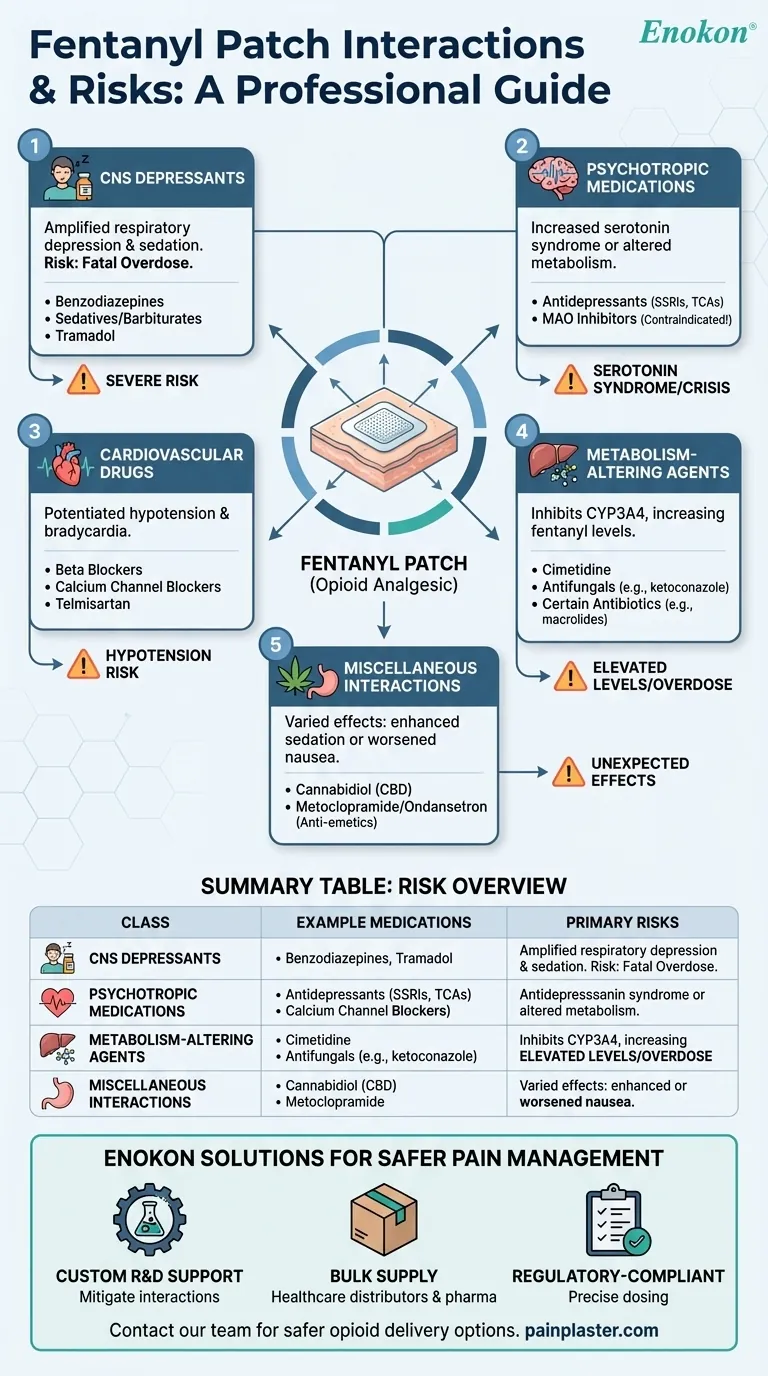
Central Nervous System (CNS) Depressants
- Sedatives, Benzodiazepines, Barbiturates: These amplify fentanyl's respiratory depressant effects, potentially leading to fatal overdose.
- Tramadol: Another opioid that increases CNS depression and seizure risk when combined with Fentanyl Patch.
-
Psychotropic Medications
- Antidepressants (e.g., SSRIs, TCAs): May increase serotonin syndrome risk or alter fentanyl metabolism.
- MAO Inhibitors: Contraindicated due to severe hypertensive crises or CNS excitation.
-
Cardiovascular Drugs
- Beta Blockers & Calcium Channel Blockers: Can potentiate hypotension and bradycardia.
- Telmisartan: Hypotensive effects may be exaggerated.
-
Metabolism-Altering Agents
- Cimetidine: Inhibits CYP3A4, increasing fentanyl blood levels.
- Antifungals (e.g., ketoconazole): Similarly inhibit CYP3A4, raising overdose risk.
- Certain Antibiotics (e.g., macrolides): Interfere with fentanyl clearance.
-
Miscellaneous Interactions
- Cannabidiol (CBD): May enhance sedation and hypotensive effects.
- Metoclopramide/Ondansetron: Anti-emetics that can paradoxically worsen nausea/vomiting when combined with opioids.
Practical Consideration: Always review a patient’s full medication list before prescribing fentanyl patches, and consider alternative pain management strategies if high-risk interactions are identified. For prescribers, tools like drug interaction checkers can help flag potential issues early.
Did you know? Even herbal supplements like St. John’s wort (not listed here but relevant per HRT patch data) can reduce fentanyl efficacy by inducing CYP3A4—highlighting the need for holistic medication reviews.
Summary Table:
| Drug Class | Example Medications | Interaction Risk |
|---|---|---|
| CNS Depressants | Benzodiazepines, Tramadol | Severe respiratory depression, fatal overdose risk |
| Psychotropics | SSRIs, MAO Inhibitors | Serotonin syndrome, hypertensive crises |
| Cardiovascular Drugs | Beta Blockers, Telmisartan | Potentiated hypotension/bradycardia |
| Metabolism-Altering | Cimetidine, Antifungals | Elevated fentanyl levels, overdose risk |
| Miscellaneous | CBD, Anti-emetics | Enhanced sedation, worsened nausea |
Ensure patient safety with expert-formulated transdermal solutions.
As a trusted manufacturer of fentanyl patches and specialized pain management systems, Enokon provides:
- Custom R&D support to mitigate interaction risks
- Bulk supply for healthcare distributors & pharma brands
- Regulatory-compliant formulations with precise dosing
Contact our team to discuss safer opioid delivery options tailored to your patients' needs.
Visual Guide
Related Products
- Menthol Gel Pain Relief Patch
- Icy Hot Menthol Medicine Pain Relief Patch
- Capsaicin Chili Medicated Pain Relief Patches
- Lidocaine Hydrogel Pain Relief Patch for Pain Relief
- Asthma Cough and Pain Relief Patch for Adults and Kids
People Also Ask
- How effective are pain relief patches for muscle pain? Target Localized Pain with Transdermal Delivery
- How do pain relief patches compare to other pain relief methods? Discover Targeted, Long-Lasting Relief
- Who should consult a healthcare professional before using pain relief patches? Ensure Your Safety with Medical Advice
- How do drug loading and permeation enhancers ensure patch efficacy? Achieve Superior Clinical-Grade Pain Relief.
- What are some common applications of pain relief patches? Effective Relief for Muscle & Joint Pain



















