
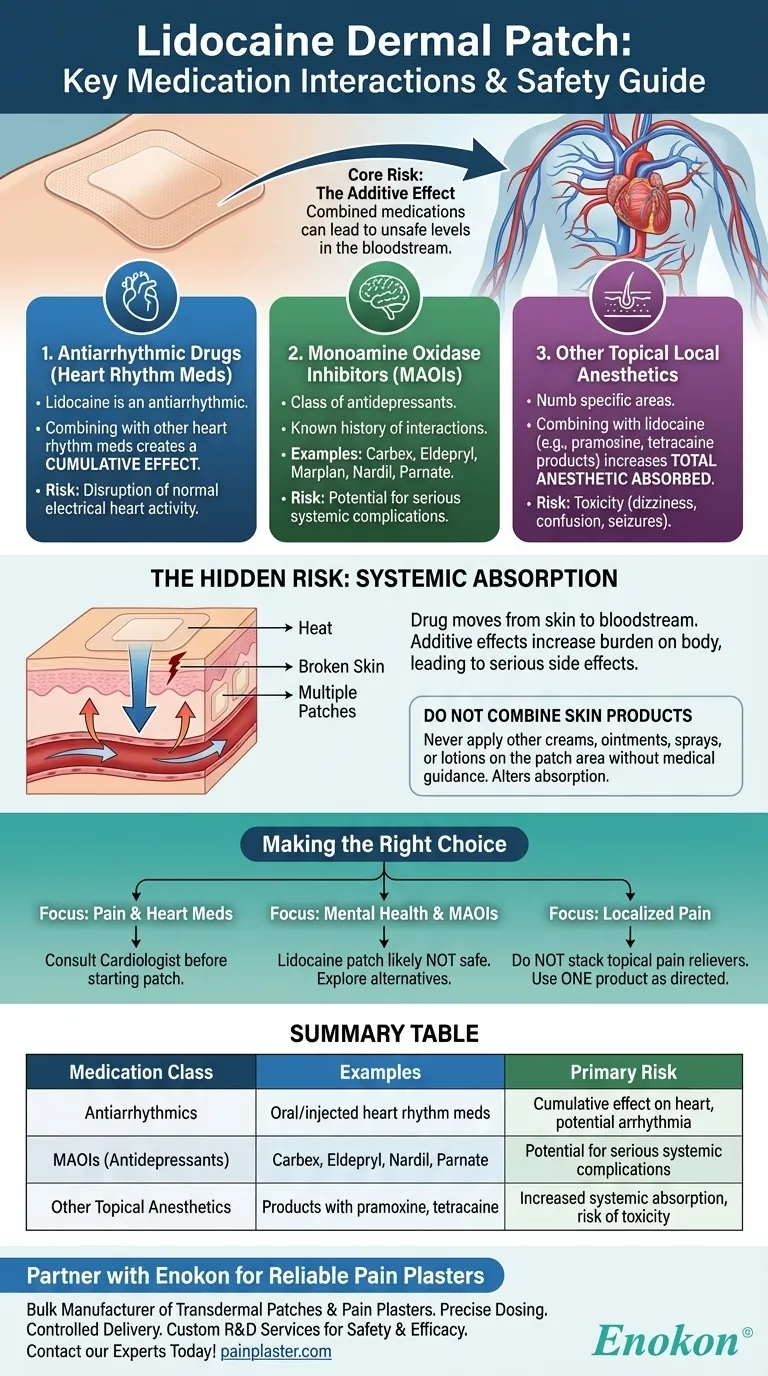
To be direct, the lidocaine dermal patch has known interactions with three primary classes of medication. You must avoid using it with certain drugs for irregular heartbeat (antiarrhythmics), a class of antidepressants known as MAOIs, and other topical local anesthetics.
The central risk with lidocaine patch interactions is not from the patch alone, but from the additive effect it creates when combined with other medications that have similar impacts on your heart or nervous system. This can lead to an unsafe level of the drug in your bloodstream.

A Closer Look at Key Drug Interactions
Understanding why these interactions occur is the key to using the lidocaine patch safely. The concern is that even though the patch is applied to the skin, a certain amount of lidocaine is absorbed systemically into your blood.
Antiarrhythmic Drugs (Irregular Heartbeat Medications)
Lidocaine itself is a type of antiarrhythmic medication. It works by stabilizing the rhythm of the heart.
When you use a lidocaine patch while also taking another oral or injected antiarrhythmic, you risk a cumulative effect. This can potentially disrupt your heart's normal electrical activity.
Monoamine Oxidase Inhibitors (MAOIs)
MAOIs are a class of medication often used for depression and other neurological conditions. They have a well-documented history of interacting with a wide range of other drugs.
Specific examples of MAOIs include Carbex, Eldepryl, Marplan, Nardil, and Parnate. Combining them with a lidocaine patch is not recommended due to potential complications.
Other Local Anesthetics
This interaction is the most straightforward. Local anesthetics work by blocking nerve signals in a specific area to numb it.
Using a lidocaine patch alongside other topical anesthetics, such as those containing pramoxine or tetracaine, significantly increases the total amount of anesthetic being absorbed by your body. This raises the risk of reaching toxic levels in the bloodstream.
The Hidden Risk: Systemic Absorption
The fundamental issue behind these drug interactions is systemic absorption—the process of the drug moving from your skin into your bloodstream and circulating throughout your body.
When a Topical Treatment Becomes Systemic
While designed for local pain relief, the patch continuously releases lidocaine that passes through the skin barrier. Factors like heat, broken skin, or the use of multiple patches can increase this absorption.
The Danger of Additive Effects
The primary danger of combining these medications is the cumulative burden on your body. Too much anesthetic or antiarrhythmic effect can lead to serious side effects, including dizziness, confusion, irregular heartbeat, and, in rare cases, seizure.
Do Not Combine Skin Products
You should never apply other medicated creams, ointments, sprays, or lotions to the same area where you are wearing a lidocaine patch without explicit medical guidance. These products can alter the skin's permeability and change how much lidocaine is absorbed, making the dose unpredictable and potentially unsafe.
Making the Right Choice for Your Goal
To ensure safety, your prescribing physician and pharmacist must have a complete picture of every medication and supplement you take.
- If your primary focus is managing pain while taking a heart medication: You must have a direct conversation with your cardiologist or prescribing doctor before starting a lidocaine patch.
- If your primary focus is mental health treatment with an MAOI: The lidocaine patch is likely not a safe option, and you should explore alternative pain management strategies with your provider.
- If your primary focus is localized relief for a specific area: Do not "stack" multiple topical pain relievers on the same spot; use one product at a time as directed.
Proactively discussing all your medications with your healthcare provider is the most effective way to use a lidocaine patch safely and achieve your pain relief goals.
Summary Table:
| Medication Class | Examples | Primary Risk |
|---|---|---|
| Antiarrhythmic Drugs | Oral/injected heart rhythm medications | Cumulative effect on the heart, potential for arrhythmia |
| MAOIs (Antidepressants) | Carbex, Eldepryl, Marplan, Nardil, Parnate | Potential for serious systemic complications |
| Other Local/Topical Anesthetics | Products containing pramoxine, tetracaine | Increased systemic absorption, risk of toxicity (dizziness, seizures) |
Need a reliable, high-quality lidocaine patch for your brand or distribution network?
At Enokon, we are a bulk manufacturer of reliable transdermal patches and pain plasters. We partner with healthcare and pharmaceutical distributors and brands to deliver safe, effective products. Our technical expertise ensures precise dosing and controlled delivery, minimizing risks like unwanted systemic absorption.
Benefit from our custom R&D services to develop patches tailored to your specific safety and efficacy requirements.
Contact our experts today to discuss your project and ensure your patients receive the safest possible pain relief.
Visual Guide
Related Products
- Lidocaine Hydrogel Pain Relief Patch for Pain Relief
- Menthol Gel Pain Relief Patch
- Icy Hot Menthol Medicine Pain Relief Patch
- Silicone Scar Sheets Patch Transdermal Drug Patch
- Far Infrared Heat Pain Relief Patches Transdermal Patches
People Also Ask
- How does the aqueous base in a lidocaine patch contribute to drug delivery? Unlocking Sustained Pain Relief Technology
- What are the advantages of topical anesthetics over invasive Lidocaine infiltration? Discover Safer, Scalable Relief
- Which pain patch is most effective for arthritis? Find the Best Relief for Your Joint Pain
- Will a GP routinely continue prescribing lidocaine patches after the initial period? Understanding Short-Term Pain Relief
- Why are lidocaine patches preferred over oral medications? Targeted Relief & Scale Your Brand with OEM R&D Solutions












