
To significantly increase your chances of quitting smoking, you must combine the nicotine patch with methods that address acute cravings and the psychological habit of smoking. The most effective complementary strategies include other fast-acting Nicotine Replacement Therapies (NRTs), prescription medications, and structured behavioral support.
The nicotine patch is designed to provide a steady, low dose of nicotine to manage baseline withdrawal symptoms. However, true success often requires a multi-faceted approach that also provides on-demand relief for sudden cravings and tools to break the behavioral addiction.

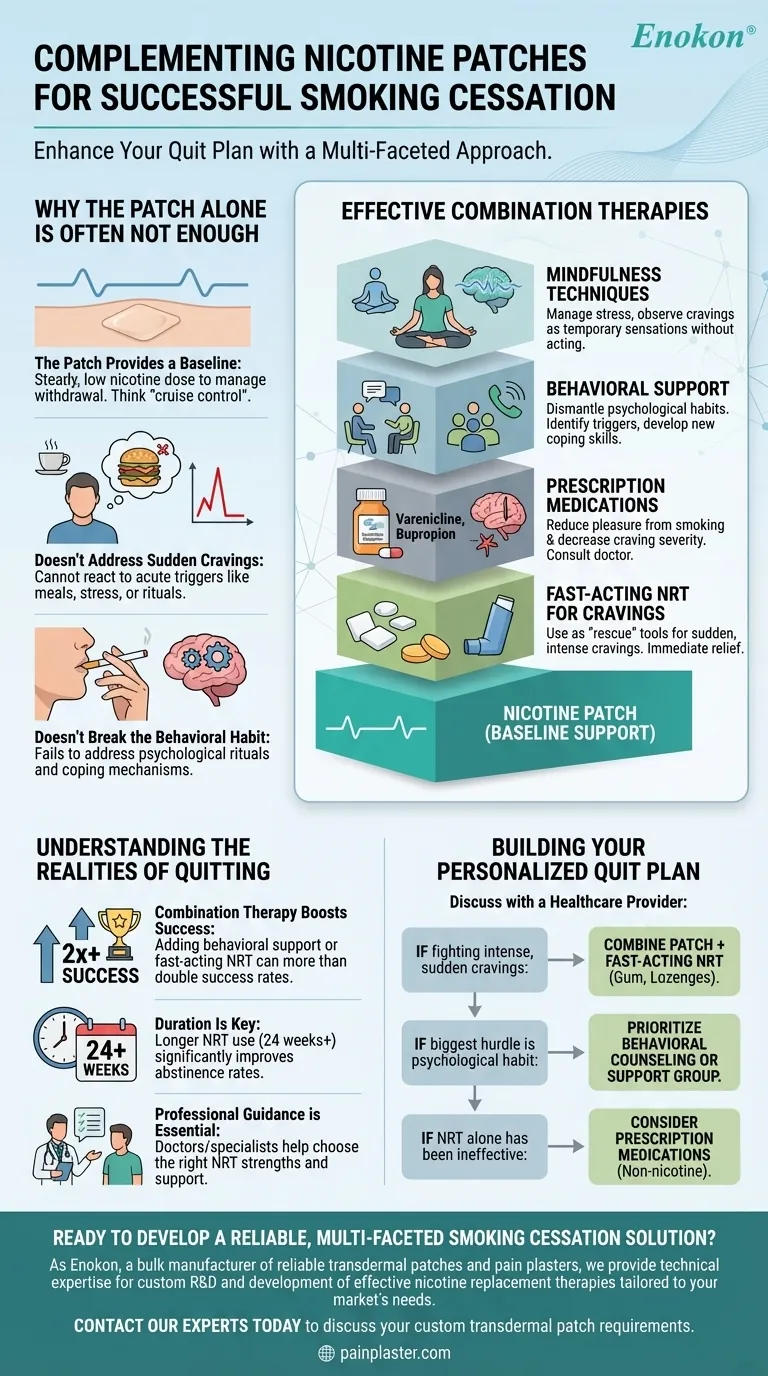
Why the Patch Alone Is Often Not Enough
The nicotine patch is a foundational tool, but its mechanism of action reveals why it works best as part of a larger strategy. Understanding this is key to building a successful quit plan.
The Patch Provides a Baseline
A nicotine patch works by delivering a slow, controlled amount of nicotine through your skin into your bloodstream. Think of it as a cruise control for nicotine, preventing the severe troughs of withdrawal that can derail a quit attempt.
It Doesn't Address Sudden Cravings
This slow, steady delivery is also its primary limitation. The patch cannot react to sudden triggers—like finishing a meal, having a coffee, or experiencing stress—that cause an intense, immediate craving.
It Doesn't Break the Behavioral Habit
The patch helps manage the chemical dependency, but it does nothing to address the powerful psychological habits and rituals built around smoking. This includes the hand-to-mouth motion, the social context, and the use of smoking as a coping mechanism.
Effective Combination Therapies
Layering strategies to address the patch's limitations is the most effective path to quitting. Each layer serves a specific purpose, creating a comprehensive support system.
Add Fast-Acting NRT for Cravings
Combining the patch with a fast-acting NRT like nicotine gum, lozenges, or an inhaler is a highly effective strategy. While the patch handles the background withdrawal, you can use the gum or lozenge as a "rescue" tool to fight off sudden, intense cravings the moment they strike.
Use Prescription Medications
Non-nicotine prescription medications can be a powerful addition. Drugs like varenicline or bupropion work on brain chemistry to reduce the pleasure you get from smoking and decrease the severity of cravings. These must be discussed with and prescribed by a healthcare professional.
Prioritize Behavioral Support
This is arguably the most critical component. Behavioral counseling, support groups, and quitlines provide the tools to dismantle the psychological side of the addiction. You learn to identify your triggers, develop new coping skills, and re-wire the routines that once revolved around smoking.
Incorporate Mindfulness Techniques
Mindfulness and meditation can help you manage stress and become more aware of your cravings without acting on them. These techniques teach you to observe the urge to smoke as a temporary sensation that will pass, giving you a greater sense of control.
Understanding the Realities of Quitting
An objective view of the process helps set realistic expectations and reinforces the need for a robust plan.
Combination Therapy Dramatically Boosts Success
Clinical studies show nicotine patches alone provide a modest but clear benefit over a placebo. However, the real gains are seen when they are combined with other methods. Adding behavioral support or a fast-acting NRT can more than double your chances of successfully quitting.
Duration Is Key
Quitting is not a short-term process. Research suggests that using NRT for longer durations, such as 24 weeks or more, can significantly improve abstinence rates. This gives your brain more time to adapt to functioning without nicotine from cigarettes.
Professional Guidance is Essential
Building the right combination plan should not be a guessing game. A doctor or a trained smoking cessation specialist can help you choose the right NRT strengths, discuss prescription options, and connect you with effective behavioral support.
Building Your Personalized Quit Plan
Your ideal strategy depends on your specific challenges. Use these points as a guide for discussion with a healthcare provider.
- If your primary focus is fighting intense, sudden cravings: Combine the patch with a fast-acting NRT like nicotine gum or lozenges for immediate relief.
- If your biggest hurdle is the psychological habit: Prioritize behavioral counseling or a support group to develop new coping strategies for your triggers.
- If NRT alone has not been effective for you in the past: Speak with your doctor about prescription medications as a more powerful, non-nicotine intervention.
By strategically layering these tools, you transform quitting from a test of willpower into a well-supported plan for success.
Summary Table:
| Complementary Method | Purpose | Key Examples |
|---|---|---|
| Fast-Acting NRT | Provides immediate relief for sudden cravings | Nicotine gum, lozenges, inhaler |
| Prescription Medications | Reduces pleasure from smoking & cravings | Varenicline, Bupropion |
| Behavioral Support | Breaks psychological habits & manages triggers | Counseling, support groups, quitlines |
| Mindfulness Techniques | Helps manage stress and observe cravings | Meditation, mindfulness practices |
Ready to develop a reliable, multi-faceted smoking cessation solution?
As Enokon, a bulk manufacturer of reliable transdermal patches and pain plasters, we provide healthcare and pharmaceutical distributors and brands with the technical expertise for custom R&D and development. Let us help you create effective nicotine replacement therapies tailored to your market's needs.
Contact our experts today to discuss your custom transdermal patch requirements.
Visual Guide
Related Products
- Menthol Gel Pain Relief Patch
- Capsaicin Chili Medicated Pain Relief Patches
- Icy Hot Menthol Medicine Pain Relief Patch
- Lidocaine Hydrogel Pain Relief Patch for Pain Relief
- Mugwort Wormwood Pain Relief Patch for Neck Pain
People Also Ask
- How do pain relief patches compare to other pain relief methods? Discover Targeted, Long-Lasting Relief
- How effective are pain relief patches for muscle pain? Target Localized Pain with Transdermal Delivery
- Who should consult a healthcare professional before using pain relief patches? Ensure Your Safety with Medical Advice
- What are some common applications of pain relief patches? Effective Relief for Muscle & Joint Pain
- What are pain relief patches and how do they work? Discover Non-Invasive Pain Management

















