
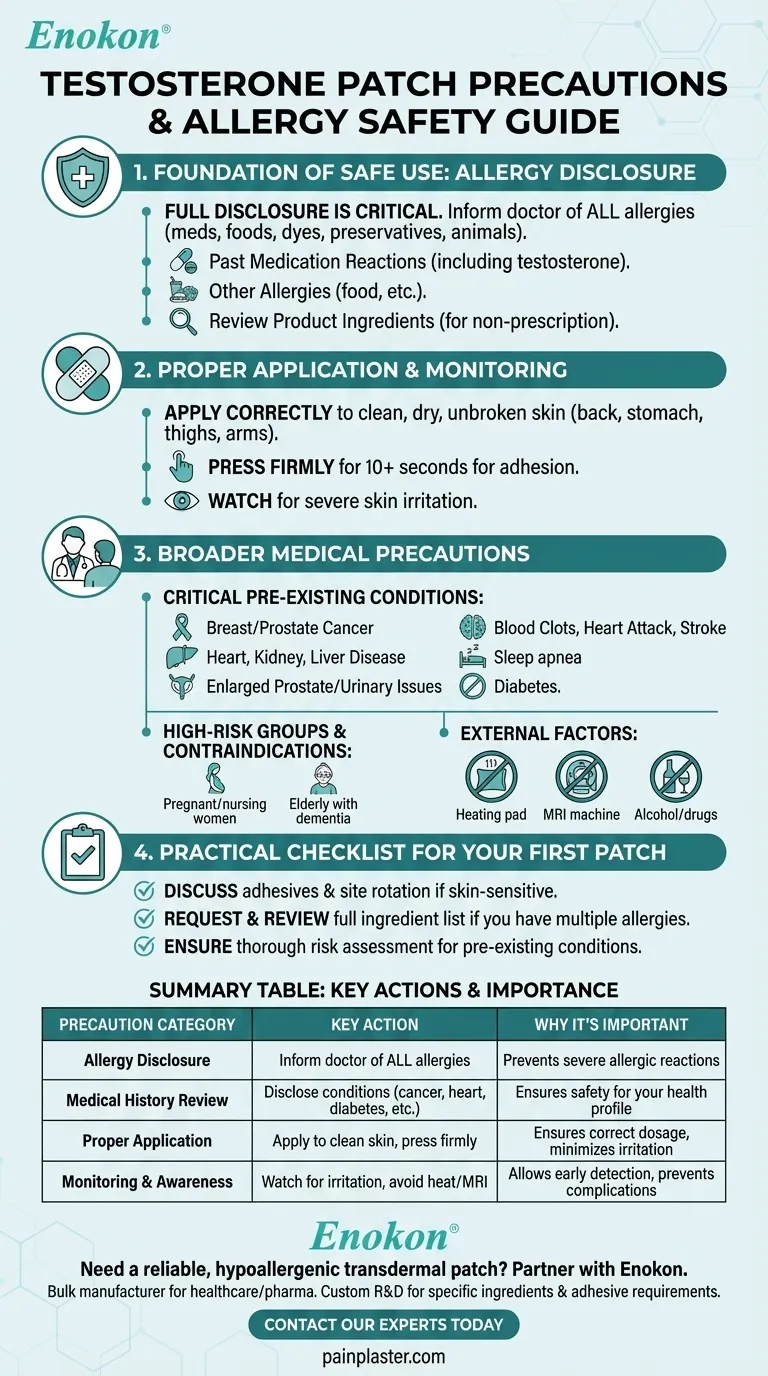
Before using a testosterone transdermal patch, you must inform your doctor about any and all allergies you have. This includes not only previous reactions to medicines but also any known sensitivities to foods, dyes, preservatives, or even animals. For non-prescription products, it is essential to carefully read the label and package ingredients yourself.
The most critical precaution is comprehensive disclosure. Effective and safe use of a testosterone patch hinges on providing your doctor with a complete history of all your allergies and medical conditions, as risks extend far beyond simple skin irritation.

The Foundation of Safe Use: Full Disclosure
Your medical history is the primary tool your doctor has to ensure your safety. Incomplete information can lead to preventable adverse reactions.
Disclosing Past Medication Reactions
You must tell your healthcare provider if you have ever had an unusual or allergic reaction to testosterone in any form. It is equally important to report any past reactions to any other medicines, as this can indicate a broader sensitivity.
Beyond Medications: Other Allergies
Allergies are not limited to drugs. Inform your doctor about any known allergies to foods, dyes, preservatives, or animals. The inactive ingredients in the patch adhesive or other components could potentially trigger a reaction.
Reviewing Product Ingredients
For any non-prescription products, take the personal responsibility to read the ingredient list carefully. This allows you to cross-reference the components with your known sensitivities before you even apply the product.
Managing Reactions and Ensuring Proper Application
How you use the patch is just as important as determining if you should use it in the first place. Proper technique minimizes risks.
The Importance of Correct Application
Always apply the patch to clean, dry, and unbroken skin. Ideal locations are the back, stomach, thighs, or upper arms. Avoid areas that are oily, hairy, prone to heavy perspiration, or have existing irritation.
Pressing for Adhesion
After applying the patch, press down firmly for at least 10 seconds to ensure it is sealed securely to the skin. This helps with proper medication delivery and reduces the chance of it peeling off.
Watching for Skin Irritation
It is common to experience some redness or irritation at the application site. However, you should watch for signs of a more significant allergic reaction. If irritation is severe or spreads, contact your doctor.
Understanding the Broader Medical Precautions
An allergy check is just one part of a comprehensive safety assessment. Testosterone therapy has significant effects and is not appropriate for everyone.
Critical Pre-existing Conditions
The use of testosterone patches can be affected by a wide range of medical conditions. It is vital to discuss your history if you have:
- Breast or prostate cancer
- Heart, kidney, or liver disease
- An enlarged prostate or urinary problems
- A history of blood clots, heart attack, or stroke
- Sleep apnea
- Diabetes
High-Risk Groups and Contraindications
Testosterone patches should not be used by individuals who are pregnant or nursing. They are also associated with an increased risk of death in elderly patients with dementia-related psychosis.
Interactions with External Factors
Avoid placing heating pads over the patch, as this can increase absorption to dangerous levels. You must also remove the patch before an MRI scan. Refrain from using alcohol or illegal drugs while on this therapy.
A Practical Checklist Before Your First Patch
Use these points to guide the conversation with your healthcare provider to ensure your treatment is both safe and effective.
- If your primary focus is avoiding skin reactions: Discuss patch adhesives with your doctor and create a plan for rotating application sites to give your skin a rest.
- If you have multiple known allergies (food, environmental, etc.): Request a full ingredient list for the prescribed patch and review it thoroughly with your doctor or pharmacist.
- If you have any significant pre-existing health conditions: Ensure your doctor has conducted a thorough risk assessment specifically weighing the benefits of testosterone therapy against the potential complications for your condition.
Proactive and honest communication with your healthcare team is the single most effective precaution you can take.
Summary Table:
| Precaution Category | Key Action | Why It's Important |
|---|---|---|
| Allergy Disclosure | Inform your doctor of all drug, food, dye, preservative, and animal allergies. | Prevents severe allergic reactions from patch ingredients or adhesives. |
| Medical History Review | Disclose conditions like cancer, heart disease, diabetes, or blood clots. | Ensures testosterone therapy is safe and appropriate for your health profile. |
| Proper Application | Apply to clean, dry, unbroken skin and press firmly for 10+ seconds. | Ensures correct dosage delivery and minimizes skin irritation. |
| Monitoring & Awareness | Watch for severe skin irritation and avoid heat/MRI scans while wearing the patch. | Allows for early detection of adverse reactions and prevents complications. |
Need a reliable, hypoallergenic transdermal patch? Partner with Enokon.
As a bulk manufacturer of reliable transdermal patches and pain plasters for healthcare and pharma distributors, we understand the critical importance of safety and precision. Our technical expertise allows for custom R&D and development to meet specific ingredient and adhesive requirements, helping you deliver trusted products to your customers.
Contact our experts today to discuss your custom transdermal patch needs.
Visual Guide
Related Products
- Far Infrared Heat Pain Relief Patches Transdermal Patches
- Silicone Scar Sheets Patch Transdermal Drug Patch
- Menthol Gel Pain Relief Patch
- Icy Hot Menthol Medicine Pain Relief Patch
- Cooling Fever Patches Color Change Cold Fever Patch
People Also Ask
- Why is the selection of matrix materials critical when developing customized transdermal patches? Optimize Efficacy
- What are the physical impacts of external heat exposure on the performance and safety of transdermal patches? - Guide
- What are the clinical advantages of local transdermal delivery systems? Unlock Safer, More Effective Pain Relief Solutions
- What role does a skin tolerance scoring system play in the safety evaluation of transdermal patches? Key Safety Metrics
- How does high-purity far-infrared ceramic powder contribute to the efficacy of far-infrared physical therapy patches?







