
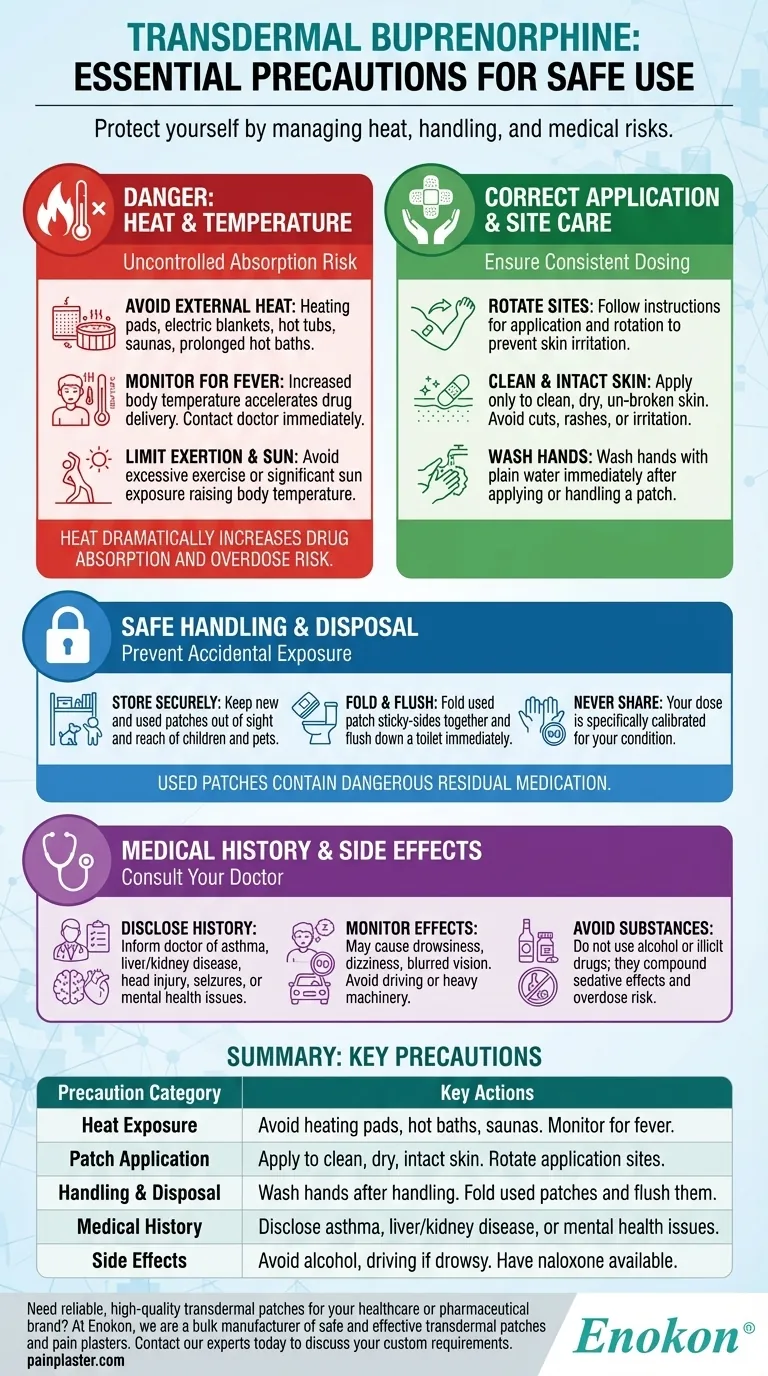
Using transdermal buprenorphine safely requires strict adherence to precautions regarding heat exposure, patch handling, and awareness of your personal medical history. This powerful opioid medication is delivered through the skin, and factors that alter skin temperature or integrity can dangerously increase the rate of drug absorption, creating a risk of overdose.
The central challenge with transdermal buprenorphine is ensuring a controlled, consistent dose. The primary precaution is to avoid all external heat sources near the patch and monitor for fever, as increased temperature can accelerate drug delivery to dangerous levels.
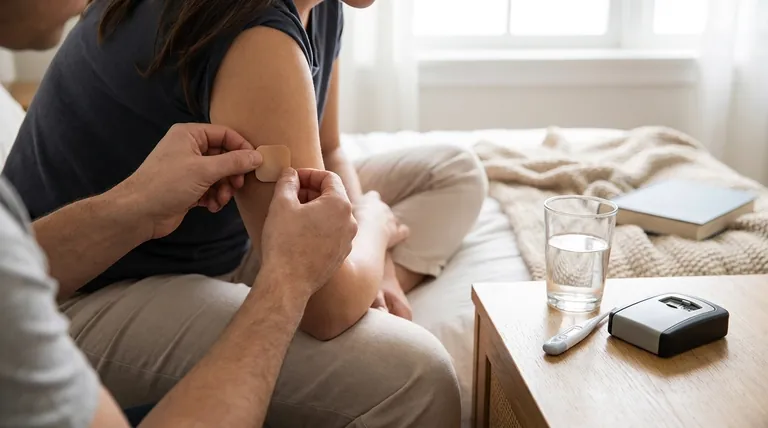
The Core Risk: Uncontrolled Absorption
The effectiveness and safety of a buprenorphine patch depend entirely on its ability to release a steady, predictable amount of medication over several days. Any factor that disrupts this process can lead to either therapeutic failure or a life-threatening overdose.
The Danger of Heat
Increased temperature dramatically increases blood flow to the skin and can alter the patch's adhesive properties, causing a rapid and uncontrolled release of buprenorphine.
You must avoid exposing the patch area to any direct heat source. This includes heating pads, electric blankets, hot tubs, saunas, and prolonged, hot baths.
Be vigilant about body temperature. A fever (100.4°F / 38°C or higher) can also increase absorption. Contact your doctor immediately if you develop a fever while wearing a patch.
Excessive exercise or sun exposure that significantly raises your body temperature should also be avoided.
The Importance of Correct Application
Applying the patch correctly is crucial for proper absorption. This includes choosing the right location on the body and preparing the skin.
Always follow your pharmacist's instructions for application and site rotation. Using the same spot repeatedly can cause skin irritation, which may affect how the medication is absorbed.
Ensure the patch is applied to clean, dry, and intact skin. Do not apply it over cuts, rashes, or irritated areas.
Essential Handling and Disposal Protocols
Buprenorphine is a potent opioid that can be extremely dangerous, or even fatal, to someone for whom it was not prescribed, especially children and pets.
Preventing Accidental Exposure
Always store new and used patches out of sight and reach of children and pets. Even a used patch contains enough residual medication to cause serious harm.
Wash your hands with plain water immediately after applying or handling a patch.
Never share this medication. Your dose is calibrated specifically for your medical condition and body chemistry.
Safe Disposal of Used Patches
When you remove a used patch, fold it in half with the sticky sides together. This seals in most of the remaining medication.
The recommended disposal method is to flush the folded patch down a toilet immediately after removal. This prevents accidental exposure from the household trash.
Medical Contraindications and Side Effects
This medication is not safe for everyone. A transparent conversation with your healthcare provider about your full medical history is essential for your safety.
Who Should Not Use This Patch
You should not use this patch if you have a known allergy to buprenorphine, severe asthma or other breathing problems, or a blockage in your gut (paralytic ileus).
Individuals with dementia-related psychosis face an increased risk of death and should avoid this medication. It is also not recommended for those who are pregnant or nursing.
Critical Information for Your Doctor
Before starting treatment, you must inform your doctor of any history of head injury, seizures, urinary problems, heart conditions, liver or kidney disease, or mental health issues.
Disclose any history of alcohol use, opioid use disorder, electrolyte imbalances, or brain tumors, as these conditions can significantly increase your risk of severe side effects.
Common Side Effects to Monitor
Buprenorphine may cause drowsiness, dizziness, or blurred vision. Do not drive, operate heavy machinery, or perform any dangerous tasks until you know how the medication affects you.
Avoid all alcohol and illicit drugs, as they can dangerously compound the sedative effects of buprenorphine and increase the risk of respiratory depression.
Understanding the Risks and Trade-offs
While effective for pain management, transdermal buprenorphine carries significant risks that must be actively managed by the patient and their care team.
Risk of Dependence and Overdose
Buprenorphine is an opioid and carries a risk of physical dependence. This is a predictable physiological response, not necessarily addiction, but requires medical supervision.
The greatest acute risk is respiratory depression (slowed or stopped breathing) from an overdose. It is highly recommended to have naloxone, an opioid overdose reversal medication, available.
Potential for Skin Reactions
Local skin irritation, redness, or rash at the application site is a common side effect. Report any persistent or severe skin reactions to your doctor.
In rare cases, a more serious allergic reaction can occur.
Inconsistent Treatment Efficacy
If the patch does not adhere properly or if there are issues with absorption through your skin, you may experience insufficient pain relief. Do not alter the patch or apply a new one without medical guidance.
Making the Right Choice for Your Goal
To use transdermal buprenorphine successfully, you must actively participate in managing its risks.
- If your primary focus is preventing overdose: Make heat avoidance your absolute top priority and ensure naloxone is immediately accessible.
- If your primary focus is consistent pain relief: Adhere strictly to the prescribed schedule for applying new patches and rotating application sites on clean, intact skin.
- If your primary focus is family safety: Treat every patch—new or used—as a potential danger and follow handling and disposal instructions without exception.
Responsible and informed use is the key to leveraging the benefits of this medication while minimizing its inherent risks.
Summary Table:
| Precaution Category | Key Actions |
|---|---|
| Heat Exposure | Avoid heating pads, hot baths, saunas. Monitor for fever. |
| Patch Application | Apply to clean, dry, intact skin. Rotate application sites. |
| Handling & Disposal | Wash hands after handling. Fold used patches and flush them. |
| Medical History | Disclose asthma, liver/kidney disease, or mental health issues to your doctor. |
| Side Effects | Avoid alcohol, driving if drowsy. Have naloxone available for overdose risk. |
Need reliable, high-quality transdermal patches for your healthcare or pharmaceutical brand?
At Enokon, we are a bulk manufacturer of safe and effective transdermal patches and pain plasters. Our technical expertise ensures custom R&D and development tailored to your specific needs, helping you deliver trusted products to your customers.
Contact our experts today to discuss your custom transdermal patch requirements.
Visual Guide
Related Products
- Silicone Scar Sheets Patch Transdermal Drug Patch
- Far Infrared Heat Pain Relief Patches Transdermal Patches
- Icy Hot Menthol Medicine Pain Relief Patch
- Menthol Gel Pain Relief Patch
- Mugwort Wormwood Pain Relief Patch for Neck Pain
People Also Ask
- What role does a silicone-based transdermal delivery system play in Parkinson's? Enhancing Early-Stage Patient Care
- How is the long-term skin tolerance of silicone-based transdermal patches evaluated in clinical settings? R&D and Safety
- Why is a polarizing microscope used to evaluate the long-term stability of transdermal drug patches? Ensure Efficacy.
- What are common adverse effects of transdermal drug delivery? Risks & Prevention Tips
- What are the advantages of transdermal drug patches? Optimize Medication Delivery with Patches


















