
To use a nicotine patch safely, you must apply it to clean, dry, and non-irritated skin, rotating the location daily to prevent rashes. It is critical to avoid exposing the patch to any heat source, such as a heating pad or direct sunlight, and to remove it before any MRI scan to prevent serious burns. Always inform your healthcare provider of your full medical history and all medications before you begin using the patch.
The core principle behind all nicotine patch precautions is maintaining a controlled, steady dose. Most safety risks arise from factors that disrupt this control—either by damaging the skin's barrier or by increasing blood flow, which can lead to dangerously rapid nicotine absorption.
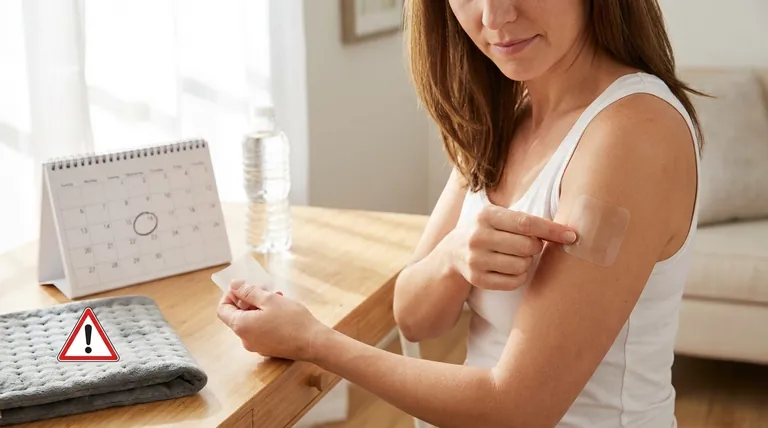
The Foundation: Proper Application and Handling
The effectiveness and safety of your nicotine patch begin with how you apply and handle it. These steps are not suggestions; they are essential for ensuring the medication works as intended without causing harm.
Why Skin Condition Is Critical
You must apply the patch to a clean, dry, and hairless area of skin on your upper body, such as your chest, back, or the outside of your arm.
Never apply a patch to skin that is red, irritated, or has cuts or sores. Do not use lotions, creams, or other skin products on the area where you plan to place the patch, as they can interfere with adhesion and absorption.
The Importance of Daily Site Rotation
To prevent significant skin irritation, rotate the application site every day. Do not use the same spot more than once a week.
This simple practice gives your skin time to recover and dramatically reduces the likelihood of developing a rash or sensitivity that could force you to stop treatment.
Handling the Patch Correctly
Always wash your hands with water after applying or removing a patch. Nicotine residue on your fingers can be easily transferred to your eyes, nose, or mouth, causing irritation.
When you remove a used patch, fold it in half with the sticky sides together. Dispose of it in a place where children and pets cannot reach it.
The Critical Hazard: Heat and Over-Absorption
Perhaps the single most important precaution is to avoid heat. Exposing the patch to heat dramatically increases the rate at which your body absorbs nicotine, creating a serious risk of overdose.
External Heat Sources to Avoid
Do not place heating pads, hot water bottles, or electric blankets over the patch. You should also avoid saunas, hot tubs, and prolonged, direct sunlight on the patch area.
Even applying a patch immediately after a hot bath or shower can increase absorption rates. Allow your skin to cool completely first.
How Heat Increases Risk
Heat widens the blood vessels in your skin, a process called vasodilation. This increased blood flow under the patch pulls nicotine into your bloodstream much faster than intended, which can lead to symptoms of overdose like dizziness, nausea, and rapid heartbeat.
Navigating Medical Care and Conditions
The nicotine patch is a potent medication that can interact with medical conditions and procedures. Full transparency with your healthcare team is non-negotiable for your safety.
The MRI and Cardioversion Warning
You must remove the nicotine patch before an MRI scan. Many patches contain aluminum or other metals in their backing, which can heat up during the procedure and cause severe skin burns.
Similarly, the patch should be removed before cardioversion, a procedure to restore normal heart rhythm.
Informing Your Healthcare Team
Before any surgery, CT scan, or other medical procedure, tell your doctors and technicians that you are using a nicotine patch. They may require you to remove it beforehand.
Disclosing Your Full Medical History
Before you start using the patch, discuss your complete medical history with your doctor. This is especially important if you have heart disease, high blood pressure, diabetes, or a history of seizures.
Pregnant or breastfeeding individuals must consult a doctor before use, as nicotine poses significant risks to a developing baby.
Common Pitfalls to Avoid
Simple mistakes can undermine the patch's effectiveness or create unnecessary risks. Being aware of these common errors is a key part of using the patch successfully.
Using Damaged or Multiple Patches
Never use a patch that has been cut or damaged, as this can lead to an unpredictable nicotine dose.
Use only one patch at a time unless specifically instructed otherwise by your doctor. Applying more than one patch significantly increases your risk of overdose.
Covering or Bandaging the Patch
Do not cover the patch with a bandage or tight clothing. This can trap heat against the skin and increase the rate of nicotine absorption, similar to using a heating pad.
Reporting Adverse Reactions
Pay attention to how your body responds. If you experience a severe skin reaction that doesn't clear up, vision changes, or other concerning side effects, contact your doctor immediately.
Making the Right Choice for Your Goal
Understanding these precautions allows you to use the nicotine patch as an effective tool in your journey to quit smoking. Tailor your focus based on your primary concern.
- If your primary focus is immediate safety: Your top priorities are avoiding all heat sources on the patch and always removing it before an MRI.
- If your primary focus is long-term effectiveness: Consistently rotating application sites on clean, dry skin is key to preventing irritation that could disrupt your treatment.
- If you have existing health conditions: Your first and most important step is a thorough discussion with your doctor to ensure the patch is a safe option for you.
By treating the nicotine patch with the respect due to a serious medication, you can safely and effectively move toward a smoke-free life.
Summary Table:
| Precaution Category | Key Action | Why It's Important |
|---|---|---|
| Application & Handling | Apply to clean, dry, hairless skin; rotate site daily. | Prevents skin irritation and ensures consistent nicotine dose. |
| Heat Exposure | Avoid heating pads, hot baths, saunas, and direct sunlight on the patch. | Heat increases nicotine absorption rate, risking overdose. |
| Medical Procedures | Remove patch before an MRI or cardioversion. | Prevents severe skin burns from metal in the patch backing. |
| Health Conditions | Disclose full medical history to your doctor before use. | Ensures the patch is safe for conditions like heart disease. |
Ready to develop safe and effective transdermal solutions?
As Enokon, a bulk manufacturer of reliable transdermal patches and pain plasters, we provide healthcare and pharma distributors with the technical expertise for custom R&D and development. Let us help you create products that prioritize user safety and efficacy. Contact our experts today to discuss your project needs.
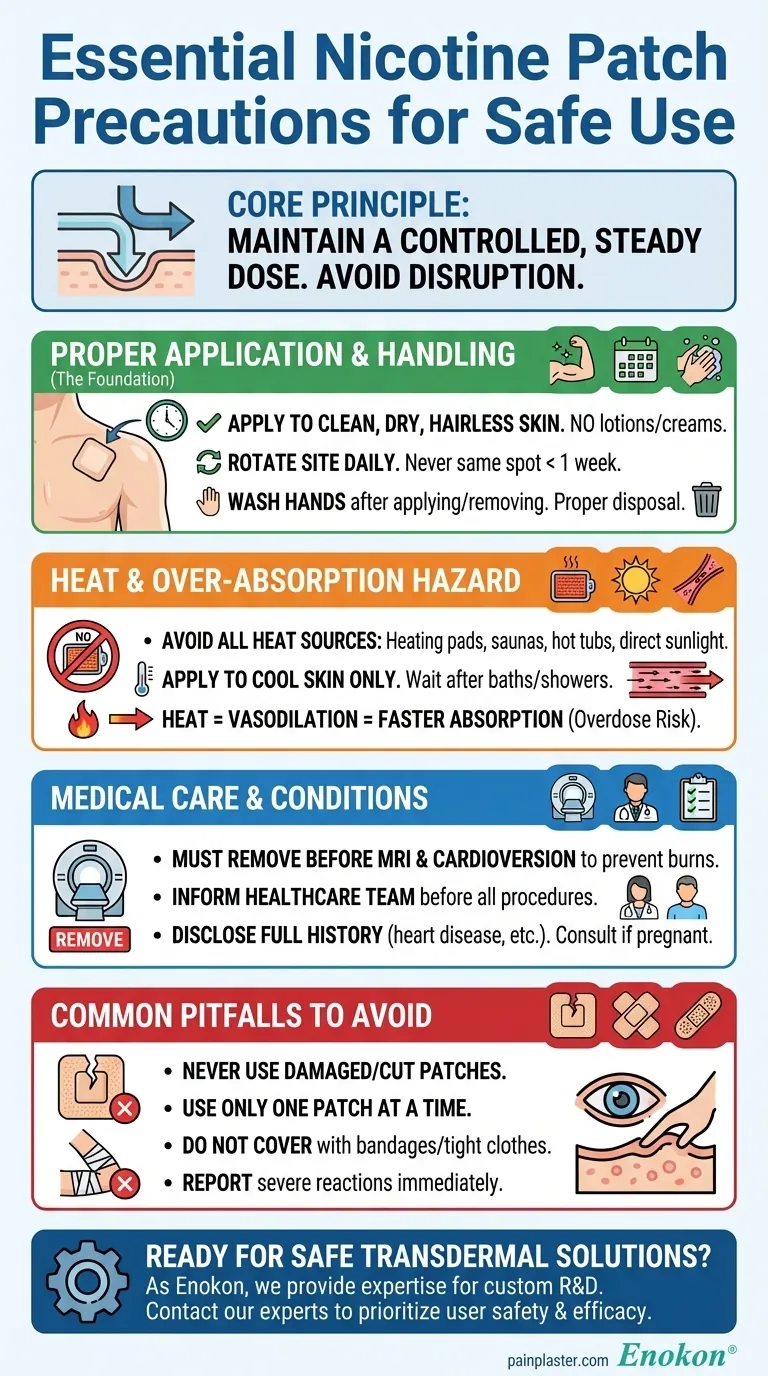
Visual Guide
Related Products
- Lidocaine Hydrogel Pain Relief Patch for Pain Relief
- Capsaicin Chili Medicated Pain Relief Patches
- Menthol Gel Pain Relief Patch
- Icy Hot Menthol Medicine Pain Relief Patch
- Mugwort Wormwood Pain Relief Patch for Neck Pain
People Also Ask
- How does the aqueous base in a lidocaine patch contribute to drug delivery? Unlocking Sustained Pain Relief Technology
- What are the advantages of topical anesthetics over invasive Lidocaine infiltration? Discover Safer, Scalable Relief
- Which pain patch is most effective for arthritis? Find the Best Relief for Your Joint Pain
- How should lidocaine patches be applied for optimal use? Maximize Pain Relief with Proper Application
- Will a GP routinely continue prescribing lidocaine patches after the initial period? Understanding Short-Term Pain Relief
















