
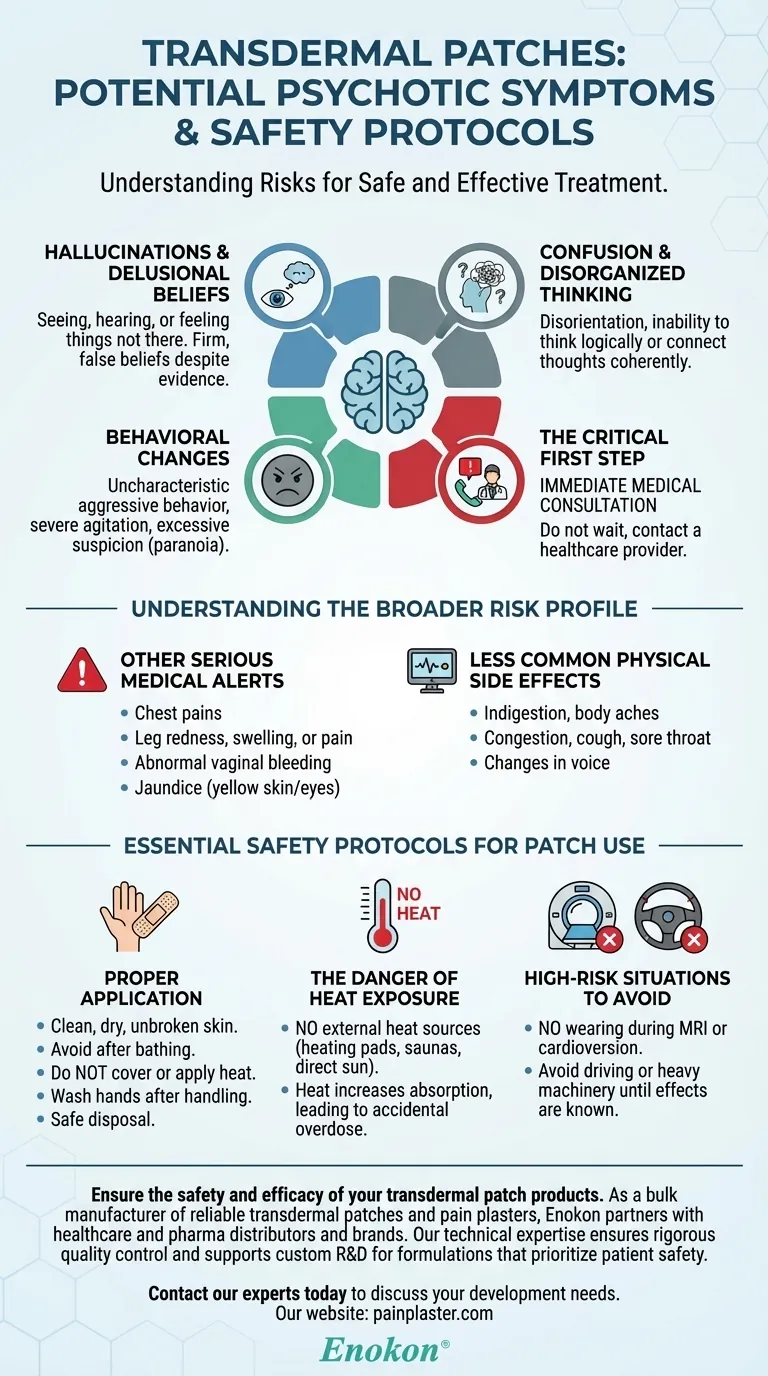
The use of certain transdermal patches can, in rare cases, trigger significant psychotic symptoms. These potential effects include hallucinations, confusion, excessive suspicion, aggressive behavior, agitation, delusional beliefs, and disorganized thinking. It is critical to understand that the appearance of any such symptom is a serious medical event that requires immediate consultation with a healthcare provider.
While specific psychotic symptoms like hallucinations or confusion are critical to identify, the underlying principle is one of caution. Understanding how to use the patch correctly and recognizing all serious warning signs is essential for safe and effective treatment.

A Closer Look at Psychotic Symptoms
When a medication induces psychosis, it is disrupting normal brain function. These symptoms can be distressing and disorienting for both the individual and those around them.
Hallucinations and Delusional Beliefs
A hallucination is the experience of seeing, hearing, or feeling things that are not actually there.
Delusional beliefs are firm, false beliefs that are maintained despite clear evidence to the contrary.
Disorganized Thinking and Confusion
This can manifest as an inability to think logically, connect thoughts coherently, or maintain a conversation.
Confusion is a more general state of disorientation, where a person may be unsure of their location, the time, or their own identity.
Behavioral Changes
Uncharacteristic aggressive behavior, severe agitation, or excessive suspicion (paranoia) toward others can also be signs of a psychotic reaction.
The Critical First Step
Any of these symptoms should be considered a medical emergency. Do not wait for them to resolve on their own. Contact a doctor immediately to report what is happening.
Understanding the Broader Risk Profile
Psychotic symptoms are among the most severe potential side effects, but it's important to be aware of the full range of possible reactions to understand the medication's impact.
Other Serious Medical Alerts
Beyond psychological effects, you must contact a healthcare provider immediately if you experience physical symptoms such as:
- Chest pains
- Redness, swelling, or pain in the legs
- Abnormal vaginal bleeding
- Jaundice (yellowing of the skin or eyes)
Less Common Physical Side Effects
A medication can also cause less severe side effects. While not typically emergencies, these should still be monitored.
They may include indigestion, body aches, congestion, cough, sore throat, or changes in your voice.
Essential Safety Protocols for Patch Use
Correct application and handling are not just about efficacy; they are a critical component of safety. The goal is to ensure a steady, predictable dose of medication.
Proper Application and Handling
Always apply a patch to clean, dry, and unbroken skin. Avoid applying it right after bathing.
Never cover the patch with a bandage or apply heat to it. After handling, wash your hands thoroughly and avoid touching your eyes, nose, or mouth.
Used patches still contain active medication. Fold them with the sticky sides together and dispose of them safely, out of reach of children and pets.
The Danger of Heat Exposure
Do not expose the patch site to external heat sources like heating pads, electric blankets, saunas, or direct, prolonged sunlight.
Heat dramatically increases the rate at which your body absorbs the medication, which can lead to an accidental overdose.
High-Risk Situations to Avoid
A patch should not be worn during an MRI or a cardioversion procedure, as the metallic components in some patches can cause serious skin burns.
Until you know how the medication affects you, avoid driving or operating heavy machinery.
How to Apply This to Your Situation
Your approach to safety should be guided by your primary concern at any given moment.
- If your primary focus is identifying immediate danger: Watch for hallucinations, sudden confusion, aggression, or delusional thoughts and contact a doctor without delay.
- If your primary focus is ensuring correct daily usage: Always apply the patch to clean, unbroken skin and strictly avoid any external heat sources on the area.
- If your primary focus is overall risk awareness: Be vigilant not only for psychological changes but also for serious physical symptoms like chest pain or severe leg swelling.
Proactive awareness of all potential side effects and adherence to safety protocols are the cornerstones of responsible treatment.
Summary Table:
| Potential Psychotic Symptom | Description |
|---|---|
| Hallucinations | Seeing, hearing, or feeling things that are not there. |
| Delusional Beliefs | Holding onto false beliefs despite evidence. |
| Confusion & Disorganized Thinking | Inability to think logically or feel oriented. |
| Aggressive Behavior & Agitation | Uncharacteristic anger, suspicion, or restlessness. |
Ensure the safety and efficacy of your transdermal patch products. As a bulk manufacturer of reliable transdermal patches and pain plasters, Enokon partners with healthcare and pharma distributors and brands. Our technical expertise ensures rigorous quality control and supports custom R&D for formulations that prioritize patient safety. Contact our experts today to discuss your development needs and how we can help you deliver trusted products to the market.
Visual Guide
Related Products
- Far Infrared Heat Pain Relief Patches Transdermal Patches
- Silicone Scar Sheets Patch Transdermal Drug Patch
- Icy Hot Menthol Medicine Pain Relief Patch
- Menthol Gel Pain Relief Patch
- Mugwort Wormwood Pain Relief Patch for Neck Pain
People Also Ask
- Why is the selection of matrix materials critical when developing customized transdermal patches? Optimize Efficacy
- What are the physical impacts of external heat exposure on the performance and safety of transdermal patches? - Guide
- What role does a skin tolerance scoring system play in the safety evaluation of transdermal patches? Key Safety Metrics
- What are the clinical advantages of local transdermal delivery systems? Unlock Safer, More Effective Pain Relief Solutions
- How does high-purity far-infrared ceramic powder contribute to the efficacy of far-infrared physical therapy patches?



















