
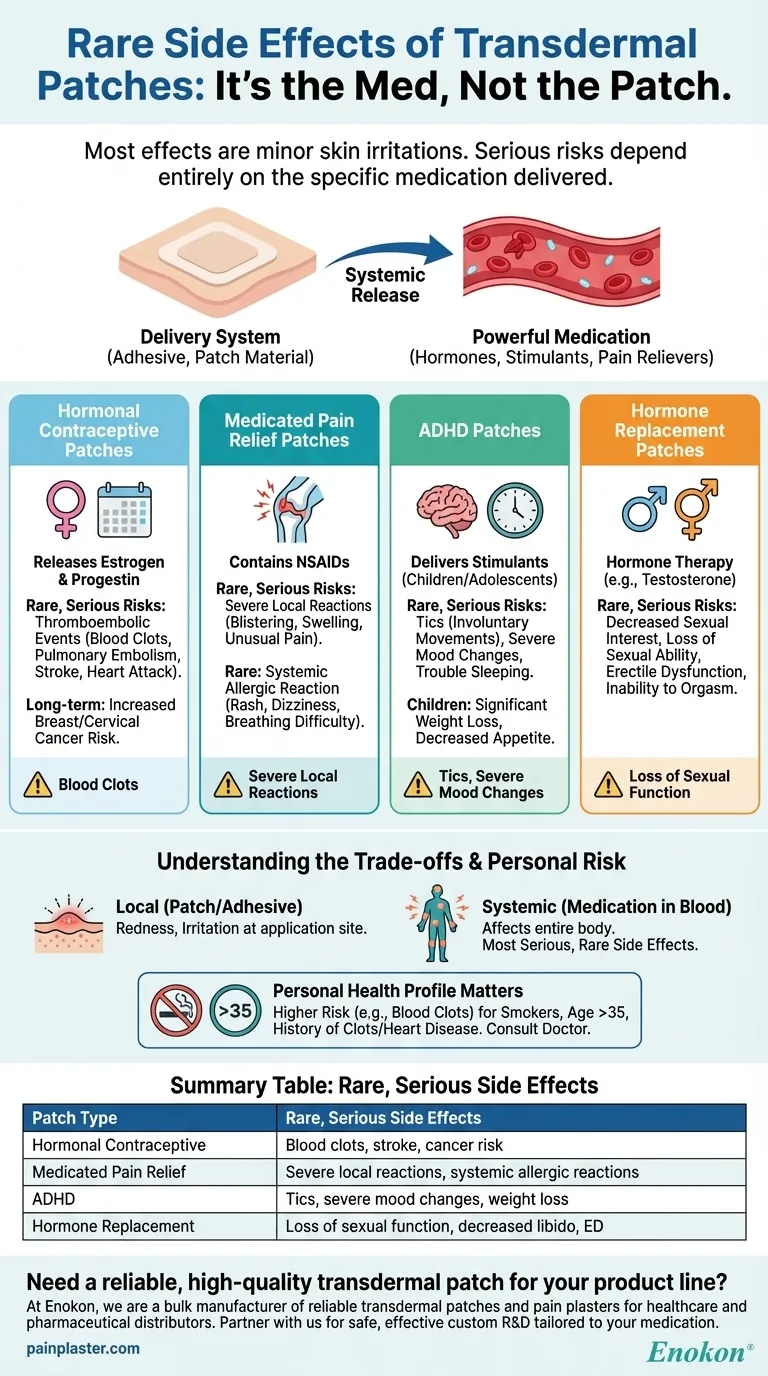
While most side effects are minor skin irritations, the rare and serious side effects associated with a transdermal patch depend entirely on the specific medication it delivers. These can range from life-threatening blood clots with hormonal contraceptive patches to significant mood changes or loss of sexual function with other types of medication.
The critical insight is that the patch is only a delivery system. The most severe risks are not from the patch itself but from the powerful medication—be it hormones, stimulants, or pain relievers—that it releases systemically into your body.

The Critical Distinction: What's In Your Patch?
A patch is simply a method for delivering medication through the skin. Therefore, the potential side effects are directly linked to the drug it contains. It's essential to identify the type of patch you are using to understand the relevant risks.
Hormonal Contraceptive Patches
These patches release estrogen and progestin. While effective, they carry rare but serious risks related to hormones.
The most severe potential side effects are thromboembolic events, which means the formation of blood clots. These clots can lead to a pulmonary embolism (in the lungs), myocardial infarction (heart attack), stroke, or deep vein thrombosis (in the leg).
Long-term use may also be associated with a slightly increased risk of breast and cervical cancer.
Medicated Pain Relief Patches
Patches containing NSAIDs like ketoprofen or diclofenac primarily pose risks at the application site.
While mild redness and itching are common, rare side effects involve a severe local reaction. This can include blistering, significant swelling, or unusual pain where the patch was applied.
In very rare cases, a serious systemic allergic reaction can occur, causing a widespread rash, severe dizziness, or difficulty breathing.
ADHD Patches
These patches, often used for children and adolescents, deliver stimulant medication.
Rare side effects are typically systemic and can be significant. They may include the development of tics (involuntary movements), severe mood changes, or trouble sleeping.
Other rare but serious effects noted in children include significant weight loss and decreased appetite.
Hormone Replacement Patches
Patches used for hormone therapy (e.g., testosterone) can have rare side effects that impact sexual health.
These may include a decreased interest in sexual intercourse, loss of sexual ability, or erectile dysfunction. Some users may experience an inability to have an orgasm.
Understanding the Trade-offs
The convenience of a patch must be weighed against its specific risk profile, which is dictated by the medication and your personal health.
Systemic vs. Local Effects
Nearly any patch can cause local effects like redness or irritation. This is a reaction to the adhesive and the concentrated medication on your skin.
The most serious, rare side effects are systemic, meaning they affect your entire body. This occurs because the drug enters your bloodstream and circulates, just as if you had taken a pill.
Your Personal Health Profile Matters
Risks are not the same for everyone. For hormonal contraceptive patches, the risk of blood clots is significantly higher for individuals who smoke or are over the age of 35.
A personal or family history of blood clots, heart disease, or certain cancers can also increase your risk with specific hormonal patches. Always discuss your full medical history with your doctor.
Making an Informed Decision
Your primary focus should be on the risks associated with the specific medication you have been prescribed, not just the delivery method.
- If you are using a hormonal contraceptive patch: Be most vigilant for symptoms of a blood clot, such as sudden leg pain, chest pain, shortness of breath, or a severe headache.
- If you are using a pain relief patch: Pay close attention to the application site for any reaction beyond mild redness, especially blistering, swelling, or intense pain.
- If you or your child use an ADHD patch: Monitor for any significant changes in behavior, mood, appetite, or the emergence of physical tics.
- If you are on hormone replacement therapy: Discuss any changes in sexual desire, performance, or function with your healthcare provider immediately.
Understanding which rare effects are relevant to your specific medication is the first step toward using any patch safely and effectively.
Summary Table:
| Patch Type | Rare, Serious Side Effects |
|---|---|
| Hormonal Contraceptive | Blood clots (pulmonary embolism, stroke), increased cancer risk |
| Medicated Pain Relief | Severe local reactions (blistering, swelling), systemic allergic reactions |
| ADHD | Development of tics, severe mood changes, significant weight loss |
| Hormone Replacement | Loss of sexual function, decreased libido, erectile dysfunction |
Need a reliable, high-quality transdermal patch for your product line?
At Enokon, we are a bulk manufacturer of reliable transdermal patches and pain plasters for healthcare and pharmaceutical distributors and brands. Our technical expertise ensures safe and effective custom R&D and development tailored to your specific medication.
Partner with us to mitigate risks and deliver superior patient outcomes. Contact our experts today to discuss your project requirements.
Visual Guide
Related Products
- Far Infrared Heat Pain Relief Patches Transdermal Patches
- Icy Hot Menthol Medicine Pain Relief Patch
- Silicone Scar Sheets Patch Transdermal Drug Patch
- Menthol Gel Pain Relief Patch
- Mugwort Wormwood Pain Relief Patch for Neck Pain
People Also Ask
- Why is the selection of matrix materials critical when developing customized transdermal patches? Optimize Efficacy
- What are the physical impacts of external heat exposure on the performance and safety of transdermal patches? - Guide
- What are the clinical advantages of local transdermal delivery systems? Unlock Safer, More Effective Pain Relief Solutions
- What role does a skin tolerance scoring system play in the safety evaluation of transdermal patches? Key Safety Metrics
- How does high-purity far-infrared ceramic powder contribute to the efficacy of far-infrared physical therapy patches?



















