UV-Visible Spectrometry is the cornerstone of quantitative validation in transdermal drug delivery development. This technology acts as the primary analytical tool for measuring drug permeation concentrations by capturing the specific light absorbance of molecules as they pass through skin barriers. By converting optical density into precise concentration data, it allows manufacturers to calculate flux, cumulative release, and bioavailability, ensuring that every transdermal patch or microneedle system meets rigorous pharmaceutical standards before reaching the market.
For enterprise-scale manufacturing and R&D, UV-Visible Spectrometry provides the objective metrics needed to prove delivery efficacy and safety. It transforms complex optical data into actionable insights, ensuring that custom formulations achieve the desired pharmacokinetic profile during high-volume production.
Quantifying Permeation at the R&D Level
The Mechanics of Absorbance and Precision
UV-Vis systems identify drugs by their unique chromophores, measuring light absorption at specific characteristic wavelengths, such as 244nm for certain hormones or 517nm for markers like Rhodamine B. This allows for high-precision detection of even trace amounts of active ingredients as they migrate from the patch into the receptor compartment of a Franz diffusion cell.
Standard Curves and Data Integrity
By comparing sample absorbance against a validated standard curve, researchers calculate exact drug concentrations with extreme accuracy. This process is essential for plotting cumulative permeation curves and determining the transdermal enhancement ratio, providing the empirical foundation for a product's technical dossier.
Evaluating Delivery Kinetics
The spectrometer allows for the accurate calculation of drug loading and encapsulation efficiency within carriers like nanofibers or hydrogels. By measuring the release medium at defined intervals, R&D teams can map the release kinetics, ensuring the drug is delivered at a steady, controlled rate over the intended wear time.
Scaling from Prototype to Mass Production
Ensuring Formulation Stability in High Volumes
In a B2B context, consistency across massive production runs is paramount for brand reputation. UV-Vis spectrophotometry verifies that every unit in a high-volume run contains the precise therapeutic dose, fulfilling the stringent requirements of GMP-certified manufacturing.
Benchmarking for Global Compliance
The data generated by UV-Vis analysis provides the objective quantitative metrics required by global regulatory bodies. This facilitates the turnkey development of reliable transdermal solutions, allowing brand owners to present verified data regarding drug release mass and delivery rates to stakeholders.
Supporting Custom Formulations
For partners seeking custom OEM/ODM solutions, UV-Vis analysis provides a rapid feedback loop during the formulation of new drug-device combinations. This speeds up the optimization of iontophoresis parameters or microneedle geometry, reducing the time from initial concept to commercial delivery.
Understanding the Trade-offs and Limitations
Sensitivity vs. Selectivity
While UV-Vis is highly sensitive for known substances, it can be susceptible to interference from other absorbing compounds in complex biological matrices or simulated body fluids. In cases where multiple active ingredients are present, manufacturers may need to combine UV-Vis with advanced extraction methods to ensure data purity.
Limits of Detection in Trace Analysis
For extremely low-dose potent drugs, standard UV-Vis equipment may approach its detection limit. Leading manufacturers mitigate this by utilizing high-sensitivity detectors and validated protocols to maintain data accuracy even when dealing with micro-dosages at an enterprise scale.
Maximizing ROI in Transdermal Manufacturing
How to Apply This to Your Project
- If your primary focus is rapid market entry: Select an OEM partner with comprehensive in-house UV-Vis capabilities to accelerate the R&D validation phase and streamline prototype testing.
- If your primary focus is high-potency formulations: Ensure your manufacturing partner uses high-sensitivity spectrophotometers to accurately track micro-dosages and drug flux rates throughout the stability testing phase.
- If your primary focus is global regulatory compliance: Prioritize facilities that integrate UV-Vis data into comprehensive, GMP-certified quality control reports to simplify the registration process in international markets.
Precision analytical tools like the UV-Visible Spectrometer are what transform a therapeutic concept into a high-performance, market-ready transdermal product.
Summary Table:
| Analytical Metric | Function in Transdermal R&D | Benefit for Brand Owners |
|---|---|---|
| Drug Permeation | Measures flux via Franz diffusion cells | Guarantees therapeutic efficacy |
| Release Kinetics | Maps delivery rate over intended wear time | Ensures stable, long-term dosing |
| Concentration Validation | Verifies drug loading and standard curves | Ensures GMP-certified consistency |
| Stability Testing | Monitors formulation integrity in bulk | Protects brand reputation & safety |
Partner with Enokon for Science-Backed Transdermal Manufacturing
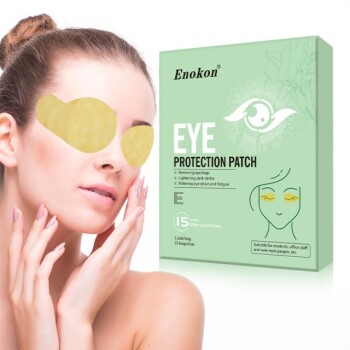
Elevate your product line with Enokon, a trusted manufacturer specializing in high-performance transdermal patches and turnkey R&D solutions. We leverage advanced analytical precision to ensure every patch—from Lidocaine and Menthol pain relief to Eye Protection and Detox formulations—meets rigorous pharmaceutical standards.
Why Choose Enokon as Your B2B Partner?
- Turnkey Custom R&D: Expert formulation and optimization tailored to your brand’s needs.
- Massive Production Scale: Reliable, high-volume delivery with GMP-certified quality control.
- Global Compliance: Comprehensive documentation and certifications to simplify international market entry.
- Wholesale Advantage: High-margin opportunities for distributors and resellers (Note: We specialize in standard transdermal delivery, excluding microneedle technology).
Ready to bring a high-quality transdermal product to market? Contact our expert team today to discuss your custom R&D or wholesale requirements!
References
- Yong-Hun Park, Jong Hwan Sung. Fabrication of degradable carboxymethyl cellulose (CMC) microneedle with laser writing and replica molding process for enhancement of transdermal drug delivery. DOI: 10.1007/s12257-015-0634-7
This article is also based on technical information from Enokon Knowledge Base .
Related Products
- Mugwort Wormwood Pain Relief Patch for Neck Pain
- Silicone Scar Sheets Patch Transdermal Drug Patch
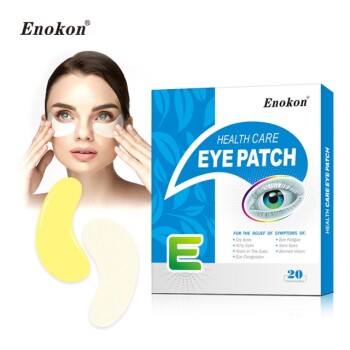
- Hydra Gel Health Care Eye Patch
- Far Infrared Heat Pain Relief Patches Transdermal Patches
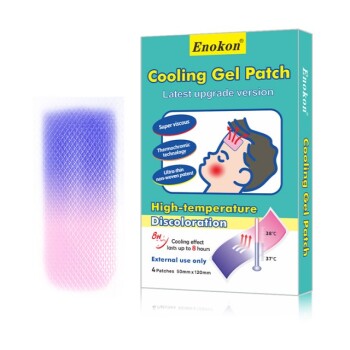
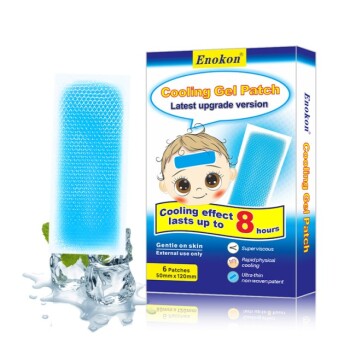
- Cooling Fever Patches Color Change Cold Fever Patch
People Also Ask
- How do pain relief patches provide targeted relief? Discover the Science Behind Effective Pain Management
- Are pain relief pills and patches available without a prescription? Choose the Right OTC Pain Relief
- How do pain relief patches compare to oral painkillers? Targeted Relief vs. Systemic Effects
- What are pain relief patches? Discover Targeted, Drug-Free Pain Management Solutions
- What are pain relief patches and how are they used? A Guide to Safe, Targeted Relief