
The most serious side effects of the Nitroglycerin Transdermal patch involve severe allergic reactions and significant cardiovascular events. These can include hives, difficulty breathing, swelling of the face or throat, worsening chest pain, a pounding or slow heart rate, and symptoms mirroring a heart attack such as pain spreading to the jaw or shoulder.
While effective for preventing angina, the nitroglycerin patch requires a clear understanding of its potential risks. Recognizing the signs of a severe reaction or overdose and knowing its critical drug interactions are paramount for safe use.

Recognizing Critical Warning Signs
The most dangerous side effects are those that affect the body's core systems, such as the cardiovascular system and the potential for a severe allergic response.
Allergic Reactions
An allergic reaction to the patch or its adhesive requires immediate attention.
Key signs include hives, difficulty breathing, or swelling of your face, lips, tongue, or throat.
Cardiovascular Symptoms
Nitroglycerin directly impacts your heart and blood vessels, and adverse effects are often related to this function.
Be alert for worsening chest pain, which is the opposite of the drug's intended effect.
Other critical symptoms include pounding heartbeats, a fluttering sensation in your chest, or an unusually slow heart rate.
Symptoms that may signal a heart attack, such as chest pressure, pain spreading to the jaw or shoulder, nausea, and sweating, demand emergency care.
Neurological and Systemic Effects
The medication's effect on blood flow can also lead to serious neurological symptoms.
While a mild headache can be a common side effect, a severe or throbbing headache can be a sign of a more serious issue or overdose.
Feeling light-headed to the point of fainting is a major warning sign.
Sudden vision problems, confusion, fever, or seizures are also symptoms of a severe reaction or potential overdose and require immediate medical intervention.
Understanding the Risks and Contraindications
Safe use of the nitroglycerin patch goes beyond recognizing side effects; it involves understanding who should not use it and what substances to avoid.
Absolute Contraindications
This medication should never be used if you have a known hypersensitivity to nitrates or the patch's adhesive.
Crucially, it is contraindicated if you have recently used PDE-5 inhibitors. This class of drugs includes sildenafil (Viagra), tadalafil (Cialis), and vardenafil (Levitra). The combination can cause a sudden and life-threatening drop in blood pressure.
Concomitant use with the guanylate cyclase stimulator riociguat is also strictly contraindicated.
Critical Drug Interactions
Beyond PDE-5 inhibitors, other drugs can cause severe interactions.
These include certain medications for migraines like ergotamine and dihydroergotamine, as well as others like bromocriptine and cabergoline. Always inform your doctor of all medications you are taking.
Physical Patch-Related Hazards
The patch itself can pose physical risks in specific medical situations.
Patches with metallic backings can cause burns during an MRI scan. Always inform the technician you are wearing a patch.
Similarly, skin burns can occur if a patch is worn during the use of a defibrillator.
Making the Right Choice for Your Health
Proactive awareness is the best strategy for using the nitroglycerin patch safely and effectively.
- If you are starting this medication: Discuss your complete medical history and all other drugs you take—prescription, over-the-counter, and recreational—with your doctor, paying special attention to any PDE-5 inhibitors.
- If you experience any concerning symptoms: Contact your healthcare provider immediately. For severe symptoms like chest pain, difficulty breathing, or fainting, seek emergency medical help without delay.
- If you are scheduled for any medical procedure: Inform all medical personnel, especially radiologists and emergency staff, that you are wearing a nitroglycerin patch.
Being informed about these potential risks empowers you to use this medication safely and seek help when it matters most.
Summary Table:
| Critical Risk Category | Key Warning Signs & Contraindications |
|---|---|
| Severe Allergic Reaction | Hives, difficulty breathing, swelling of the face/lips/tongue/throat. |
| Cardiovascular Events | Worsening chest pain, pounding/slow heart rate, pain spreading to jaw/shoulder (signs of a heart attack). |
| Neurological/Systemic Effects | Severe throbbing headache, fainting (light-headedness), sudden vision problems, confusion, fever, seizures. |
| Absolute Contraindications | Hypersensitivity to nitrates; recent use of PDE-5 inhibitors (e.g., Viagra, Cialis); use of riociguat. |
| Physical Hazards | Risk of burns during an MRI scan or defibrillator use due to metallic backing in some patches. |
Ensure the safety and efficacy of your transdermal pain relief products.
As a trusted bulk manufacturer, Enokon provides healthcare and pharma distributors and brands with reliable, high-quality transdermal patches. Our technical expertise supports custom R&D to develop formulations that prioritize patient safety and therapeutic effectiveness.
Partner with us to enhance your product line with dependable, well-researched transdermal solutions.
Contact our experts today to discuss your specific needs and how we can support your development goals.
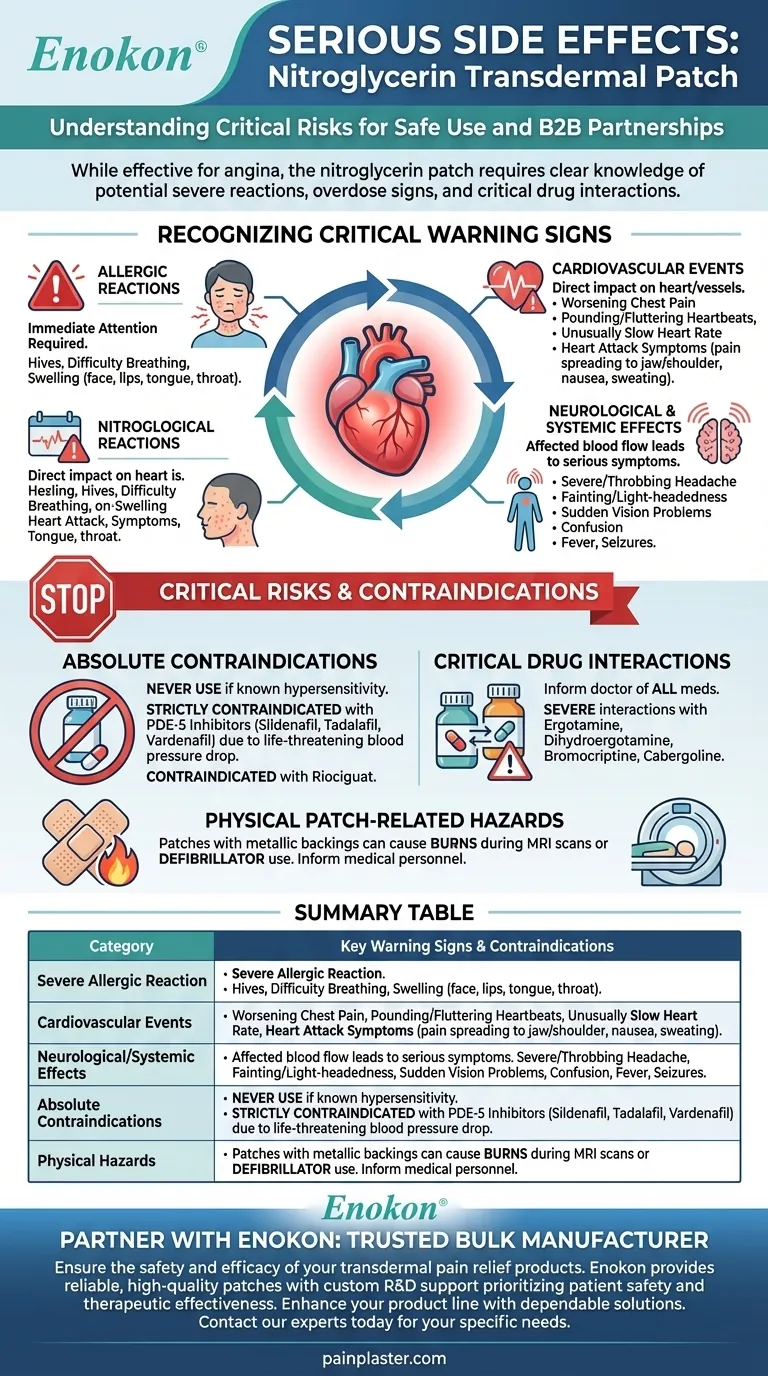
Visual Guide
Related Products
- Far Infrared Heat Pain Relief Patches Transdermal Patches
- Icy Hot Menthol Medicine Pain Relief Patch
- Menthol Gel Pain Relief Patch
- Silicone Scar Sheets Patch Transdermal Drug Patch
- Mugwort Wormwood Pain Relief Patch for Neck Pain
People Also Ask
- Why is the selection of matrix materials critical when developing customized transdermal patches? Optimize Efficacy
- What are the clinical advantages of local transdermal delivery systems? Unlock Safer, More Effective Pain Relief Solutions
- What role does a skin tolerance scoring system play in the safety evaluation of transdermal patches? Key Safety Metrics
- What are the physical impacts of external heat exposure on the performance and safety of transdermal patches? - Guide
- How does high-purity far-infrared ceramic powder contribute to the efficacy of far-infrared physical therapy patches?


















