
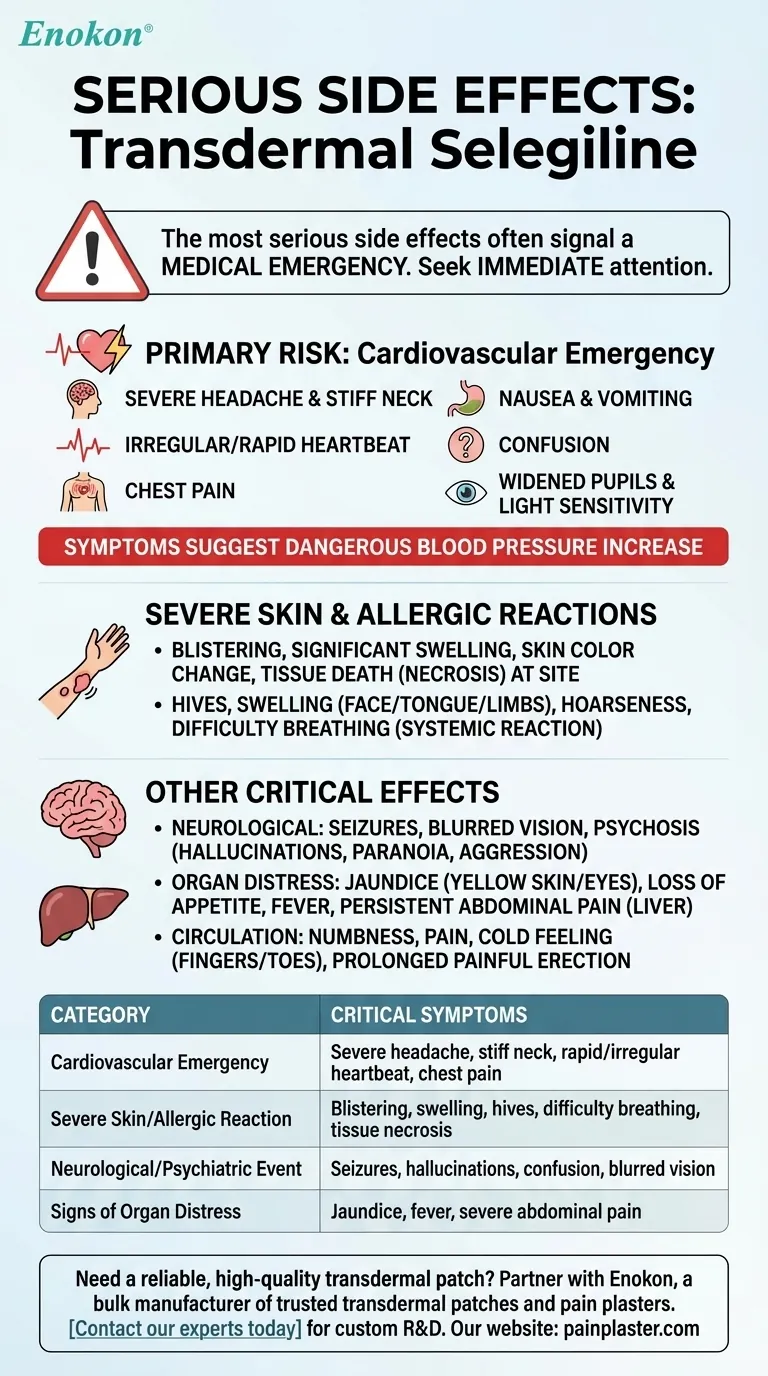
The most serious side effects of transdermal selegiline often signal a medical emergency. These include severe headache, stiff neck, irregular or rapid heartbeat, chest pain, nausea, vomiting, and confusion. If you experience any of these symptoms, you must seek immediate medical attention.
While many users experience only minor issues like skin irritation, the core risks of transdermal selegiline involve severe cardiovascular events and significant allergic or skin reactions that require immediate medical intervention.
The Primary Risk: Signs of a Cardiovascular Emergency
The most urgent side effects associated with transdermal selegiline are symptoms that suggest a rapid, dangerous increase in blood pressure or other cardiac stress. Recognizing these is critical.
Symptoms Requiring Immediate Action
These specific signs can appear together and demand an emergency response. They include a severe headache, a stiff neck, and a fast or irregular heartbeat.
You should also seek immediate help for chest pain, unexplained sweating, severe nausea or vomiting, and sudden confusion.
Visual and Sensory Changes
Other warning signs of a serious cardiovascular event include widened pupils and an unusual sensitivity to light. These are not to be ignored and should be treated as part of a potential medical emergency.
Severe Skin and Allergic Reactions
Because the medication is delivered through a patch, your skin can have a severe reaction that goes beyond typical redness or itching. A systemic allergic reaction is also possible.
Localized Skin Damage
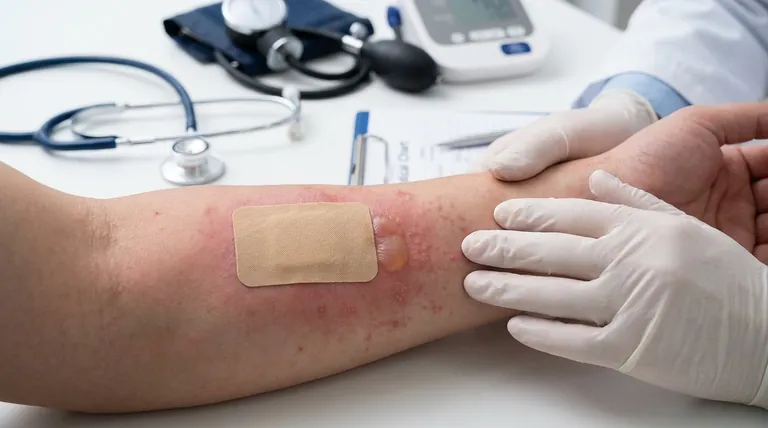
Pay close attention to the application site. Serious reactions include blistering, significant swelling, changes in skin color, or signs of tissue death (necrosis).
Systemic Allergic Reactions
A reaction is not always confined to the patch site. Seek immediate medical care if you experience hives, swelling of the face, tongue, or limbs, hoarseness, or any difficulty breathing.
Other Critical Side Effects to Monitor
Beyond cardiovascular and allergic events, transdermal selegiline can cause other serious side effects affecting the nervous system and major organs.
Neurological and Psychiatric Events
Immediate medical consultation is necessary if you experience seizures, blurred vision, or signs of psychosis, such as hallucinations, paranoia, or unusual aggression.
Signs of Organ Distress
Symptoms of liver damage require urgent attention. Be aware of jaundice (yellowing of the skin or eyes), loss of appetite, fever, or persistent abdominal pain.
Circulation and Other Issues
Report any signs of poor circulation, such as numbness, pain, or a cold feeling in your fingers or toes. Unexplained wounds or skin color changes in these areas are also serious. In rare cases, a painful or prolonged erection lasting four or more hours can occur and requires emergency care.
Understanding the Trade-offs: Common vs. Serious
It is vital to distinguish between common, manageable side effects and the serious warning signs that require a doctor's intervention.
Differentiating Common Side Effects
Many users may experience non-threatening side effects. These include temporary redness or itching at the patch site, insomnia, dry mouth, dizziness, or an upset stomach.
While these can be disruptive, they are not typically considered medical emergencies. However, you should still discuss them with your healthcare provider.
The Impact of Application
About one-third of patients experience some form of localized skin reaction. While most are mild, a small percentage (around 2%) may need to discontinue the medication due to their severity. Misusing the patch increases the risk of these effects.
When to Seek Immediate Medical Help
Your response should be dictated by the severity of your symptoms.
- If your primary concern is a sudden, severe headache with a stiff neck or chest pain: Treat this as a medical emergency and call 911, as it may signal a hypertensive crisis.
- If you notice blistering skin, hives, or swelling of the face or throat: Remove the patch and contact your doctor or seek emergency care immediately, as this indicates a severe reaction.
- If you experience hallucinations, confusion, or seizures: These are signs of a serious neurological event that requires prompt medical evaluation.
- If you develop yellowing skin, severe abdominal pain, or a persistent fever: Contact your doctor without delay, as these may be signs of liver damage.
Always prioritize direct communication with your healthcare provider to safely manage your treatment.
Summary Table:
| Side Effect Category | Critical Symptoms to Watch For |
|---|---|
| Cardiovascular Emergency | Severe headache, stiff neck, rapid/irregular heartbeat, chest pain |
| Severe Skin/Allergic Reaction | Blistering, swelling, hives, difficulty breathing, tissue necrosis |
| Neurological/Psychiatric Event | Seizures, hallucinations, confusion, blurred vision |
| Signs of Organ Distress | Jaundice, fever, severe abdominal pain (possible liver damage) |
Need a reliable, high-quality transdermal patch? Partner with Enokon, a bulk manufacturer of trusted transdermal patches and pain plasters for healthcare and pharmaceutical distributors and brands. Our technical expertise ensures superior product development and custom R&D to meet your specific needs. Contact our experts today to discuss your requirements and benefit from our manufacturing excellence.
Visual Guide
Related Products
- Silicone Scar Sheets Patch Transdermal Drug Patch
- Far Infrared Heat Pain Relief Patches Transdermal Patches
- Menthol Gel Pain Relief Patch
- Icy Hot Menthol Medicine Pain Relief Patch
- Mugwort Wormwood Pain Relief Patch for Neck Pain
People Also Ask
- What role does a silicone-based transdermal delivery system play in Parkinson's? Enhancing Early-Stage Patient Care
- How is the long-term skin tolerance of silicone-based transdermal patches evaluated in clinical settings? R&D and Safety
- Why is a polarizing microscope used to evaluate the long-term stability of transdermal drug patches? Ensure Efficacy.
- What are common adverse effects of transdermal drug delivery? Risks & Prevention Tips
- What are the advantages of transdermal drug patches? Optimize Medication Delivery with Patches












