
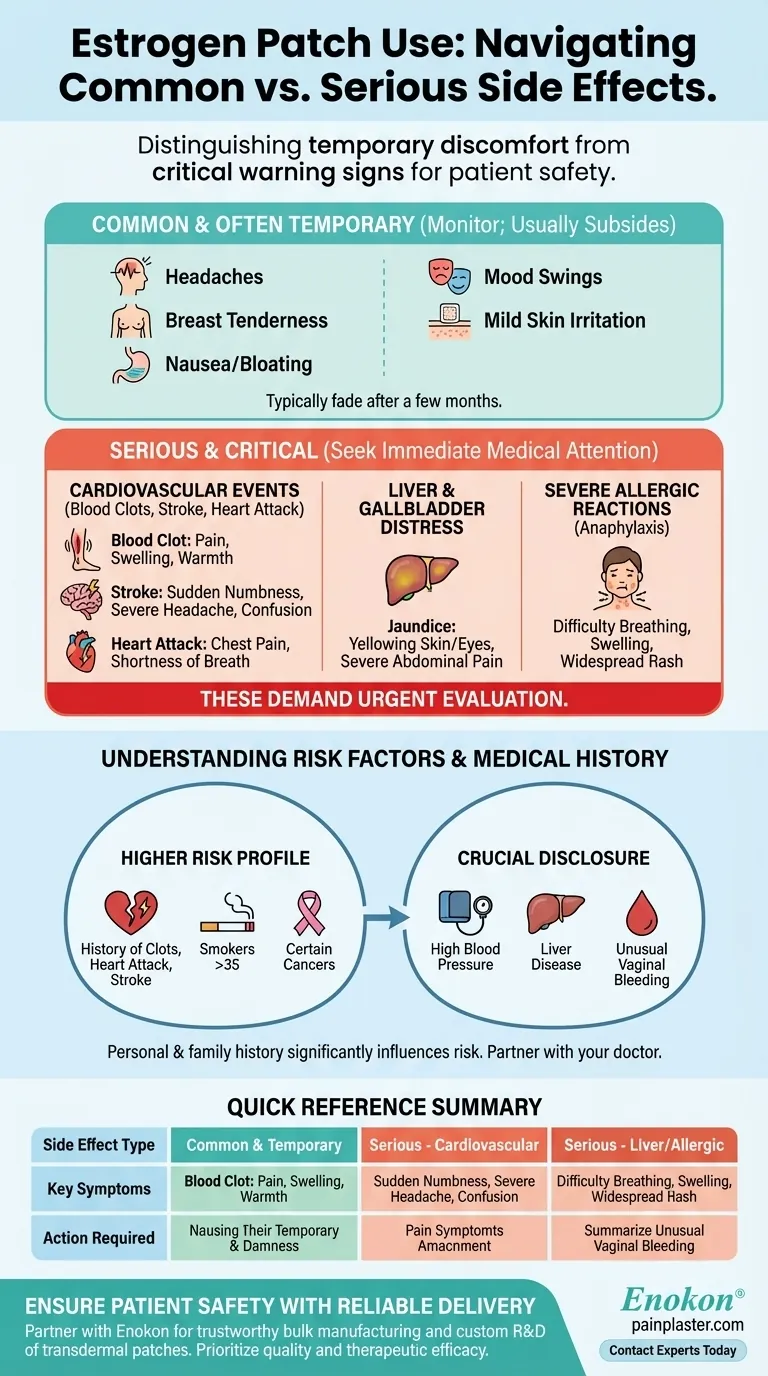
While many side effects are mild, the most serious risks associated with estrogen patch use involve cardiovascular events. These include an increased risk of blood clots, heart attack, and stroke, particularly for individuals with pre-existing risk factors. Severe allergic reactions or signs of liver distress, such as yellowing of the skin, also require immediate medical attention.
The central challenge is distinguishing between common, often temporary side effects and the rare but critical warning signs. While most users experience manageable issues like skin irritation or headaches, understanding the symptoms of a serious event like a blood clot is essential for your safety.

Distinguishing Common Discomfort from Serious Warning Signs
To use an estrogen patch safely, you must be able to differentiate between expected adjustments and genuine red flags.
Common, Often Temporary Side effects
Many of the most frequently reported side effects are the body's reaction to hormonal changes and often subside after a few months.
These can include headaches, breast tenderness, nausea, mood swings, and breakthrough vaginal bleeding or spotting.
You may also experience issues like bloating, acne, hair loss, or fatigue as your body adjusts.
Understanding Application Site Reactions
The most common side effect is a reaction where the patch is placed on the skin.
This typically involves mild redness, itching, or irritation that resolves on its own. Rotating the application site can help minimize this.
However, if you experience blistering, unusual pain, or significant swelling at the site, you should contact your doctor.
The Most Critical Risks: When to Seek Immediate Help
Certain symptoms are not normal adjustments and signal a potentially life-threatening condition. These demand urgent medical evaluation.
Cardiovascular Events (Blood Clots, Stroke, Heart Attack)
The most significant concern with estrogen therapy is its link to blood clots, which can travel to the lungs (pulmonary embolism), brain (stroke), or heart (heart attack).
Symptoms of a blood clot can include pain, swelling, warmth, or redness in a leg.
Signs of a stroke include sudden numbness or weakness (especially on one side of the body), severe headache, confusion, or trouble speaking or seeing.
Signs of a heart attack include chest pain or pressure, shortness of breath, and pain in the arm, back, neck, or jaw.
Signs of Liver or Gallbladder Distress
Estrogen can, in rare cases, impact liver function or contribute to gallbladder disease.
Pay close attention to any yellowing of the skin or eyes (jaundice), as this is a primary sign of liver problems.
Other warning signs include severe abdominal pain, loss of appetite, and persistent nausea or vomiting.
Severe Allergic Reactions
While very rare, a serious allergic reaction (anaphylaxis) is a medical emergency.
Seek immediate help for difficulty breathing or swallowing, swelling of the face, lips, tongue, or throat, a widespread rash, or severe dizziness.
Understanding the Trade-offs and Risk Factors
The decision to use an estrogen patch is a balance between its benefits and your personal health profile. The risks are not the same for everyone.
Who Is at Higher Risk?
Your personal and family medical history significantly influences your risk level.
Individuals with a history of blood clots, heart attack, stroke, or certain types of cancer are often advised against using estrogen patches.
The risk of cardiovascular events is notably higher for smokers, especially those over the age of 35.
The Importance of Medical History
Before prescribing an estrogen patch, your doctor must have your complete medical history.
Be sure to disclose any history of high blood pressure, liver disease, gallbladder problems, or unusual vaginal bleeding.
This information is crucial for determining if the patch is a safe and appropriate option for you.
Making an Informed Decision with Your Doctor
Partnering with your healthcare provider is the best way to use an estrogen patch safely and effectively.
- If your primary focus is safety before starting: Disclose your full medical history to your doctor, paying special attention to cardiovascular health, smoking habits, and any personal or family history of blood clots.
- If you are experiencing mild side effects: Monitor your symptoms, as they often fade within two to three months, but report anything persistent or bothersome to your provider.
- If you notice any signs of a serious side effect: Do not wait. Seek immediate medical attention for symptoms related to blood clots, stroke, heart attack, liver problems, or allergic reactions.
Ultimately, being informed about the risks empowers you to be a proactive advocate for your own health and safety.
Summary Table:
| Side Effect Type | Key Symptoms | Action Required |
|---|---|---|
| Common & Often Temporary | Headaches, breast tenderness, mild skin irritation | Monitor; usually subsides. Report if persistent. |
| Serious - Cardiovascular | Leg pain/swelling (clot), chest pain (heart attack), sudden numbness/weakness (stroke) | Seek immediate medical attention. |
| Serious - Liver/Allergic | Yellowing skin/eyes (jaundice), severe abdominal pain, difficulty breathing | Seek immediate medical attention. |
Ensure Patient Safety with Reliable Transdermal Delivery
As a healthcare distributor or brand, providing safe and effective hormone replacement therapy is paramount. The risks associated with estrogen patches underscore the need for superior manufacturing quality and precise dosing.
Partner with Enokon, a trusted bulk manufacturer of reliable transdermal patches and pain plasters. We combine technical expertise with rigorous quality control to support your product development.
Benefit from our custom R&D services to create patches that prioritize patient safety and therapeutic efficacy. Let's discuss how we can help you deliver trusted solutions to the market.
Contact our experts today for a consultation on your transdermal patch needs.
Visual Guide
Related Products
- Silicone Scar Sheets Patch Transdermal Drug Patch
- Far Infrared Heat Pain Relief Patches Transdermal Patches
- Menthol Gel Pain Relief Patch
- Icy Hot Menthol Medicine Pain Relief Patch
- Mugwort Wormwood Pain Relief Patch for Neck Pain
People Also Ask
- What role does a silicone-based transdermal delivery system play in Parkinson's? Enhancing Early-Stage Patient Care
- How is the long-term skin tolerance of silicone-based transdermal patches evaluated in clinical settings? R&D and Safety
- Why is a polarizing microscope used to evaluate the long-term stability of transdermal drug patches? Ensure Efficacy.
- What are common adverse effects of transdermal drug delivery? Risks & Prevention Tips
- What are the advantages of transdermal drug patches? Optimize Medication Delivery with Patches









