
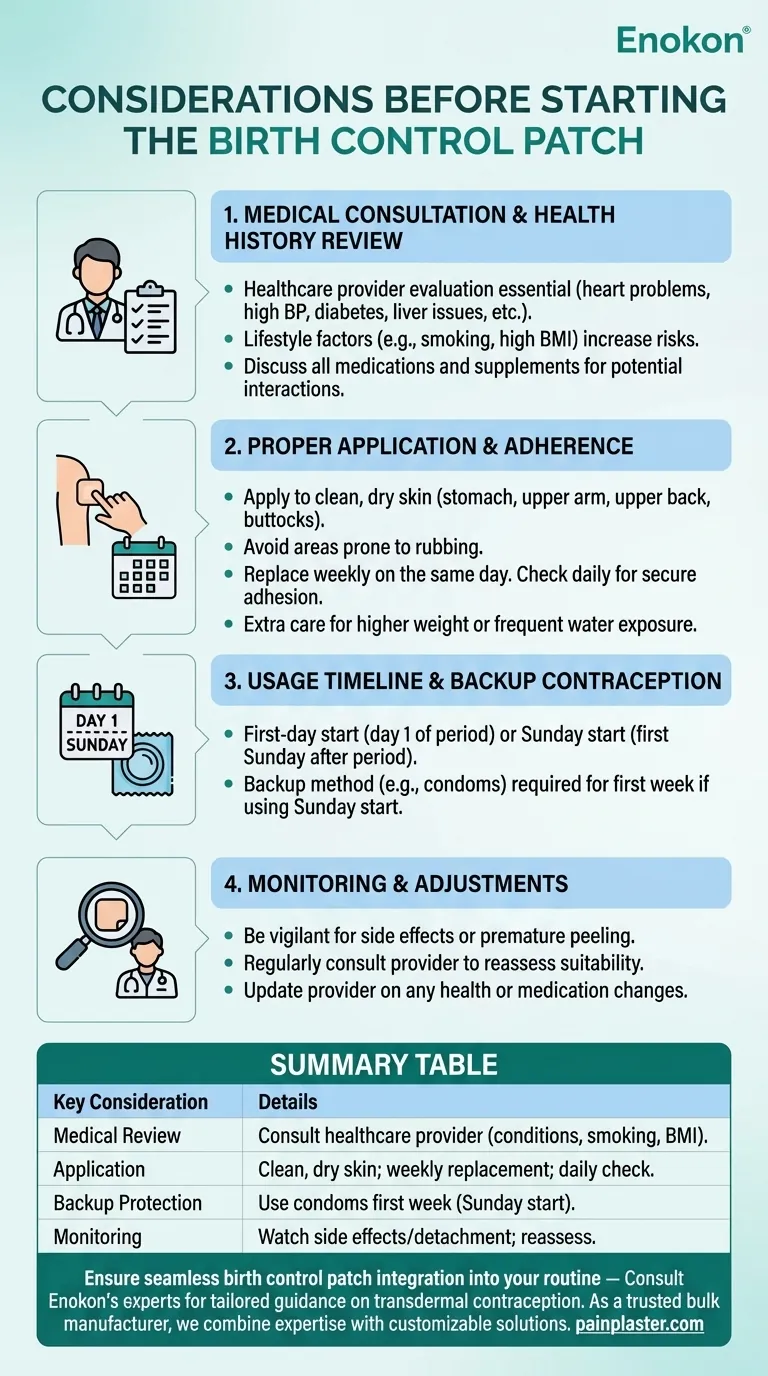
Before starting the birth control patch, several critical factors must be evaluated to ensure its safety and effectiveness. Key considerations include a thorough medical review with a healthcare provider, especially for individuals with specific health conditions or lifestyle factors like smoking or high BMI. Proper application and adherence to the patch schedule are crucial, along with awareness of potential medication interactions. Additionally, understanding the correct usage timeline and having a backup contraception method during the initial week is essential for optimal protection.

Key Points Explained:
-
Medical Consultation and Health History Review
- A healthcare provider should evaluate your medical history, particularly for conditions like heart problems, stroke, high blood pressure, diabetes, high cholesterol, or liver issues.
- Lifestyle factors such as smoking or having a high BMI can increase health risks and may affect the patch's suitability.
- Discuss all current medications and supplements to avoid interactions that could reduce the patch's effectiveness.
-
Proper Application and Adherence
- The estradiol td patch must be applied to clean, dry skin on areas like the stomach, upper arm, upper back, shoulder, or buttocks. Avoid areas prone to irritation or rubbing.
- Each patch lasts one week and should be replaced on the same day weekly. Daily checks are necessary to ensure it remains securely in place.
- For those with higher body weight or frequent water exposure (e.g., swimmers), extra care is needed to monitor adherence.
-
Usage Timeline and Backup Contraception
- If starting the patch for the first time, it can be applied on the first day of the period ("first-day start") or the first Sunday after the period begins ("Sunday start").
- A backup method (e.g., condoms) is required during the first week if using the "Sunday start" to ensure continuous protection.
-
Monitoring and Adjustments
- Be vigilant for side effects or signs of reduced effectiveness, such as the patch peeling off prematurely.
- Regularly consult your healthcare provider to reassess the patch's suitability, especially if health conditions or medications change.
Have you considered how your daily activities might impact the patch's adherence? This small yet powerful method of contraception quietly integrates into modern healthcare, offering convenience but requiring mindful usage for optimal results.
Summary Table:
| Key Consideration | Details |
|---|---|
| Medical Review | Consult a healthcare provider for conditions like heart disease, high BP, or liver issues. Smoking or high BMI may increase risks. |
| Application | Apply to clean, dry skin (stomach, arm, buttocks). Replace weekly and check daily for adhesion. |
| Backup Protection | Use condoms during the first week if starting mid-cycle. |
| Monitoring | Watch for side effects or patch detachment. Reassess suitability with lifestyle/health changes. |
Ensure seamless birth control patch integration into your routine — Consult Enokon’s experts for tailored guidance on transdermal contraception. As a trusted bulk manufacturer of medical patches, we combine pharmaceutical expertise with customizable solutions for distributors and healthcare brands. Let us optimize your product’s safety and user compliance.
Visual Guide
Related Products
- Prostate Pain Kidney Health Care Patch for Men
- Heating Pain Relief Patches for Menstrual Cramps
- Silicone Scar Sheets Patch Transdermal Drug Patch
- Menthol Gel Pain Relief Patch
- Icy Hot Menthol Medicine Pain Relief Patch
People Also Ask
- What are the key components of Chinese herbal pain patches? Discover the Science Behind Natural Pain Relief
- How can Chinese pain patches help with back pain? Natural Relief & Healing Benefits
- What are Chinese pain patches used for? Natural Relief for Joint & Muscle Pain
- What additional practices can enhance the effectiveness of Chinese pain patches? Boost Relief with Holistic Strategies
- What are some popular Chinese pain patches and their uses? Discover Top Herbal Solutions for Pain Relief








