
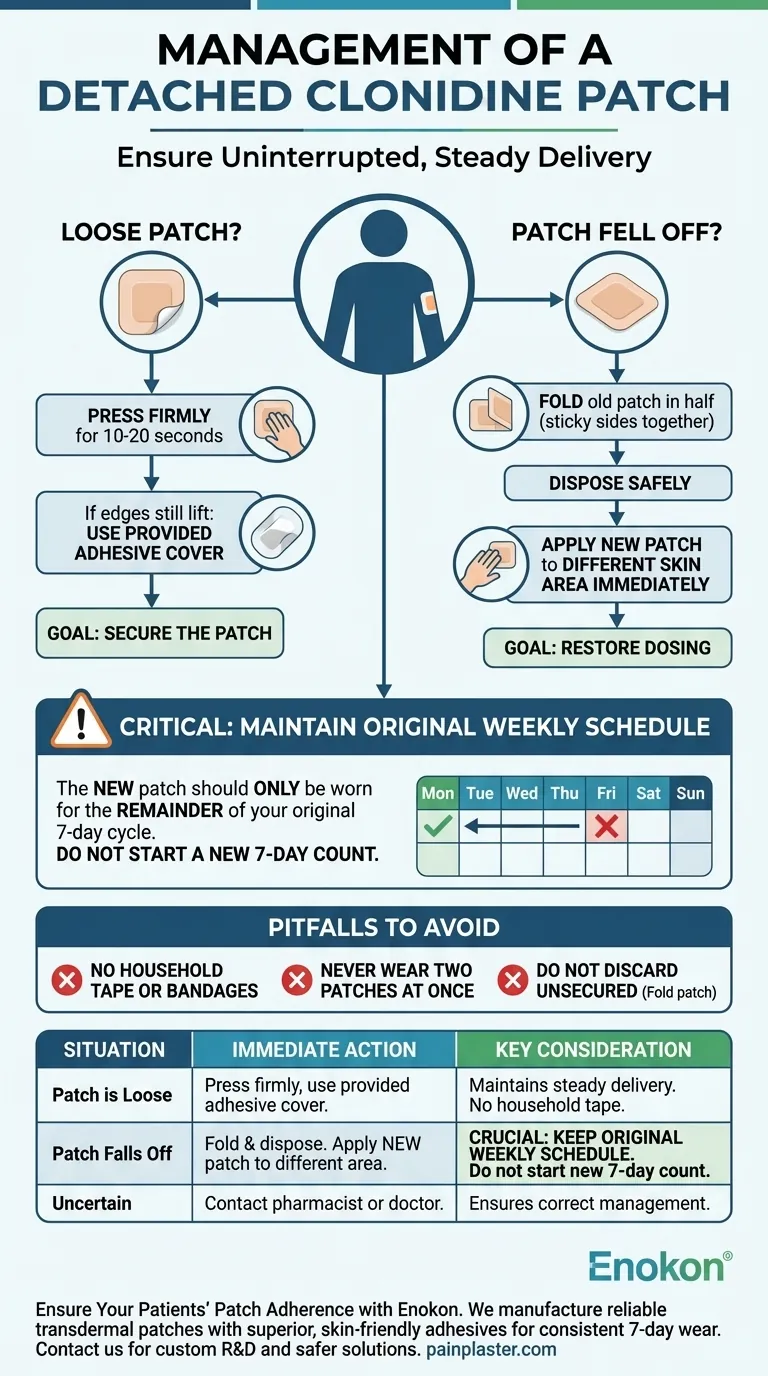
If your clonidine patch loosens or falls off, the immediate goal is to restore the consistent dose of medication. For a loose patch, press it firmly back on or apply the adhesive cover that came with it. If it has fallen off or will not stick, you must remove it and apply a new patch to a different area of skin immediately.
Your primary objective is to ensure the uninterrupted, steady delivery of clonidine. A loose or detached patch compromises this, so you must act quickly to replace it while maintaining your original weekly replacement schedule.
Why a Secure Patch is Non-Negotiable
A transdermal patch like clonidine is a sophisticated drug delivery system. It's not just a medicated sticker; it's designed to release a precise amount of medication through your skin at a steady rate over a full seven days.
The Role of Skin Contact
Continuous, direct contact between the patch's adhesive and your skin is essential for the medication to be absorbed correctly.
Even a small section of the patch lifting off the skin can disrupt this process, potentially reducing the dose you receive.
The Risk of Inconsistent Dosing
An inconsistent dose of clonidine can lead to fluctuations in your blood pressure or the return of the symptoms the medication is meant to control.
Maintaining a secure patch ensures you receive the stable, therapeutic level of medication your body needs to function optimally.
Step-by-Step Actions for a Detached Patch
Follow a clear protocol based on whether the patch is simply loose or has fallen off completely.
For a Partially Loosened Patch
First, try to press the patch firmly back onto the skin with the palm of your hand for about 10-20 seconds.
If the edges continue to lift, use the adhesive cover specifically provided with your medication. This cover is designed to go over the clonidine patch to hold it securely in place.
When the Patch Falls Off Completely
Do not attempt to reattach a patch that is no longer sticky, has folded onto itself, or has stuck to another surface.
Instead, carefully fold the old patch in half with the sticky sides together and dispose of it safely, out of the reach of children and pets. Apply a brand-new patch to a clean, dry, and different area of skin immediately.
Maintaining Your Original Schedule
This is the most critical point. The new patch you just applied should only be worn for the remainder of your original 7-day cycle.
For example, if you normally change your patch on a Monday and it falls off on a Thursday, you apply a new one on that Thursday and still replace it on the upcoming Monday as you always would. Do not start a new 7-day count.
Common Pitfalls to Avoid
Mistakes in managing a detached patch can lead to incorrect dosing. Understanding what not to do is as important as knowing the correct steps.
Do Not Use Household Tape
Never use standard household tape or other bandages to secure a clonidine patch. These materials are not approved for medical use and could potentially damage the patch's membrane, altering how the medication is released.
Never Wear Two Patches
If a patch falls off, replace it. Do not apply a new one without removing the old one first. Wearing two patches at once can lead to an overdose, which can be dangerous.
Ensure Safe Disposal
A used clonidine patch still contains active medication. Folding it onto itself seals in the remaining drug, preventing accidental exposure to a child or pet who might find it in the trash.
Applying This to Your Situation
Your response should be guided by the state of the patch and the unwavering principle of maintaining your schedule.
- If your patch is just loose at the edges: Press it down firmly or apply the provided adhesive cover to secure it for the rest of the week.
- If your patch has fallen off or won't stick: Immediately apply a new patch to a different location, but be prepared to change it again on your original, scheduled day.
- If you are ever in doubt: Contact your pharmacist or doctor for guidance to ensure you are managing your medication correctly.
Proactively managing your patch ensures you receive the consistent therapeutic benefits your doctor intended.
Summary Table:
| Situation | Immediate Action | Key Consideration |
|---|---|---|
| Patch is Loose | Press firmly for 10-20 seconds; use the provided adhesive cover. | Maintains steady drug delivery. Do not use household tape. |
| Patch Falls Off | Remove and dispose of safely. Apply a new patch to a different, clean, dry skin area. | Crucial: Keep your original weekly replacement schedule. Do not start a new 7-day count. |
| Uncertain What to Do | Contact your pharmacist or doctor immediately for guidance. | Ensures correct medication management and safety. |
Ensure Your Patients' Patch Adherence with Enokon
A loose or detached transdermal patch can compromise patient safety and treatment efficacy. As a bulk manufacturer of reliable transdermal patches and pain plasters, Enokon understands that consistent, secure adhesion is non-negotiable.
We partner with healthcare and pharmaceutical distributors and brands to deliver patches with superior, skin-friendly adhesives designed for reliable 7-day wear. Benefit from our technical expertise for custom R&D and development to create a product that minimizes the risk of detachment and ensures consistent dosing for your patients.
Let's develop a safer, more reliable solution together. Contact our experts today to discuss your needs.
Visual Guide
Related Products
- Lidocaine Hydrogel Pain Relief Patch for Pain Relief
- Herbal Medicated Anti Diarrhea Patch for Digestive Relief
- Menthol Gel Pain Relief Patch
- Asthma Cough and Pain Relief Patch for Adults and Kids
- Icy Hot Menthol Medicine Pain Relief Patch
People Also Ask
- How does the aqueous base in a lidocaine patch contribute to drug delivery? Unlocking Sustained Pain Relief Technology
- What are the advantages of topical anesthetics over invasive Lidocaine infiltration? Discover Safer, Scalable Relief
- Which pain patch is most effective for arthritis? Find the Best Relief for Your Joint Pain
- Why are lidocaine patches preferred over oral medications? Targeted Relief & Scale Your Brand with OEM R&D Solutions
- Will a GP routinely continue prescribing lidocaine patches after the initial period? Understanding Short-Term Pain Relief



















