
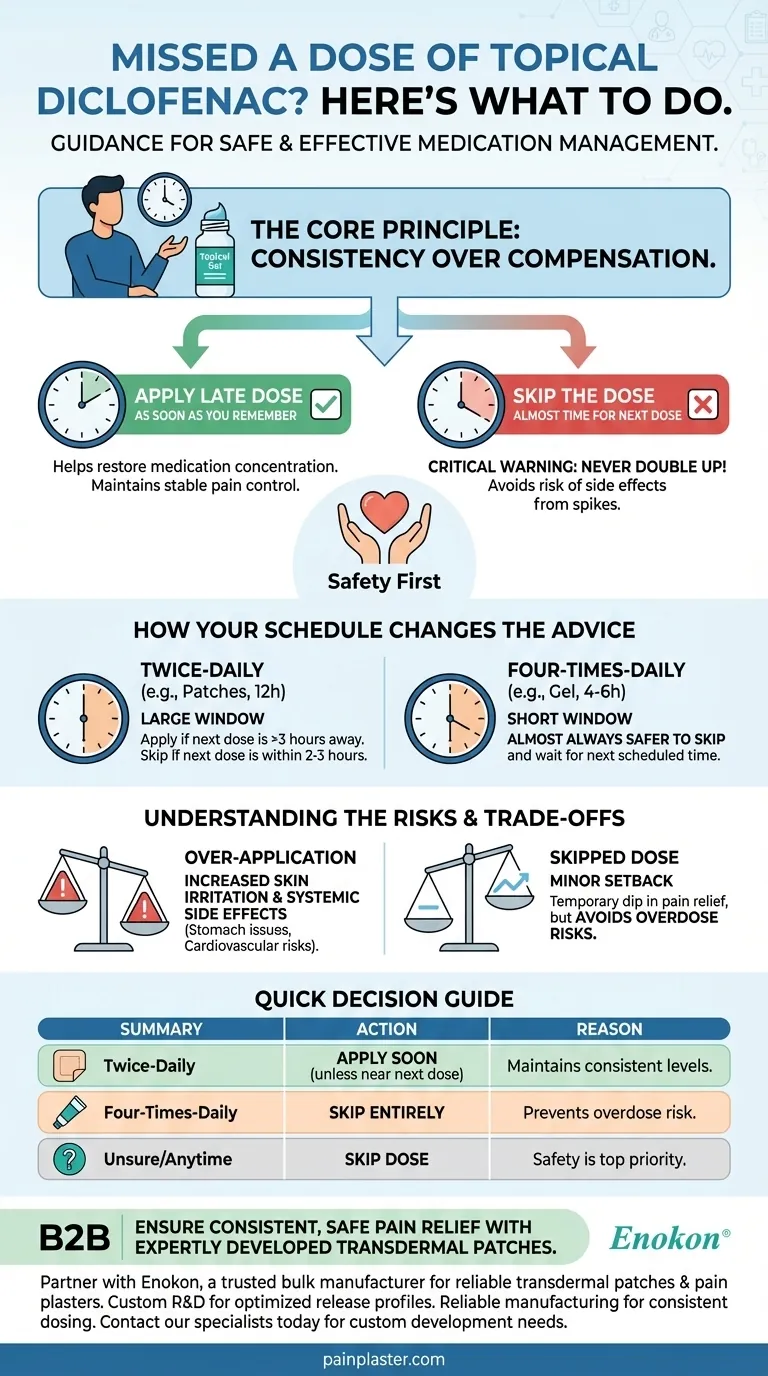
When you miss a dose of topical diclofenac, the correct action depends on how close you are to your next scheduled application. You should apply the missed dose as soon as you remember, unless it is almost time for your next one. In that case, simply skip the missed dose and resume your normal schedule. Never apply a double dose to make up for the one you missed.
The primary goal is to maintain a consistent therapeutic level of medication without overloading your system. Skipping a dose is always safer than applying two doses too close together, which increases the risk of side effects.
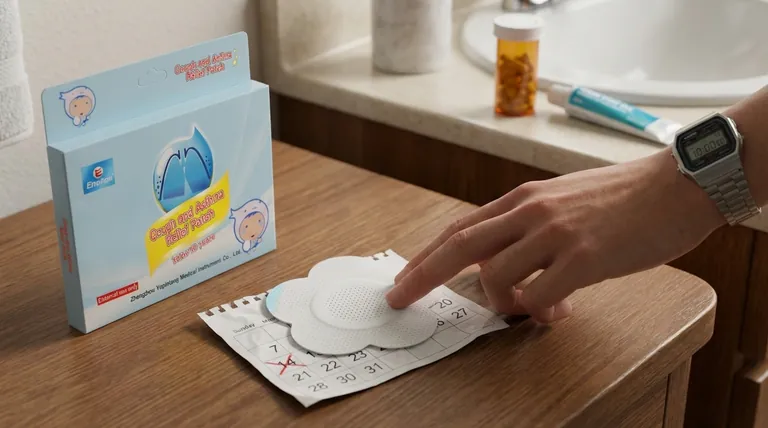
The Principle: Consistency Over Compensation
The guidance for a missed dose is designed to balance the medication's effectiveness with your safety. Topical diclofenac works by being absorbed through the skin to reduce local inflammation and pain.
Why You Should Apply a Late Dose (If Possible)
Applying a dose as soon as you remember helps restore the medication's concentration in the targeted tissue. This maintains a more stable level of pain and inflammation control throughout the day.
The "Too Close" Rule Explained
The instruction to "skip the dose if it's almost time for the next one" is a critical safety measure. Applying two doses in rapid succession can cause a spike in the amount of drug absorbed into your bloodstream.
This spike does not typically improve pain relief but can significantly increase your risk of experiencing side effects.
The Critical Warning: Never Double Up
Under no circumstances should you apply extra gel, solution, or a second patch to "catch up." Doubling the dose dramatically increases systemic absorption and elevates the risk of adverse effects, ranging from skin irritation to more serious issues like stomach problems.
How Your Dosing Schedule Changes the Advice
The time between your scheduled applications is the most important factor in your decision. A more frequent schedule leaves a smaller window to apply a missed dose.
For Twice-Daily Applications
If your prescription is for twice-daily use (e.g., a patch applied every 12 hours), you have a large window. Applying a missed dose even several hours late is generally acceptable. However, if your next dose is only 2-3 hours away, it's better to skip the missed one.
For Four-Times-Daily Applications
If you use the medication four times a day (e.g., 1% gel for osteoarthritis), the window between doses is much shorter (roughly 4-6 hours). In this scenario, it is almost always safer to simply skip the missed dose and wait for the next scheduled application time.
Understanding the Trade-offs and Risks
Making an informed choice requires understanding the potential consequences of each action.
The Risk of Over-Application
The most significant risk comes from applying too much diclofenac. This can lead to increased skin irritation at the application site or, more concerningly, systemic side effects similar to those of oral NSAIDs, such as stomach upset, ulcers, or cardiovascular complications.
The Impact of a Skipped Dose
Missing a single dose is unlikely to cause a major problem. The primary consequence is a temporary dip in the medication's local effect, which might result in a brief increase in pain or stiffness. This is a minor setback compared to the risks of an overdose.
Making the Right Choice for Your Schedule
Your decision should be guided by your specific dosing frequency to ensure safety and efficacy.
- If your primary focus is a twice-a-day schedule (e.g., patches): Apply the missed dose as soon as you remember, unless your next dose is just a few hours away.
- If your primary focus is a four-times-a-day schedule (e.g., 1% gel): It is generally safest to skip the missed dose entirely and just apply your next dose at its regular time.
- If your primary focus is safety above all: When in doubt about timing, always choose to skip the missed dose.
Following these simple rules ensures you can manage your treatment safely and effectively.
Summary Table:
| Your Dosing Schedule | Action for a Missed Dose | Key Reason |
|---|---|---|
| Twice-Daily (e.g., every 12 hours) | Apply as soon as remembered, unless next dose is within 2-3 hours. | Maintains consistent pain relief with a large safety window. |
| Four-Times-Daily (e.g., every 4-6 hours) | Skip the missed dose and resume your normal schedule. | Prevents overdose risk due to the short time between doses. |
| Unsure or Anytime | Skip the missed dose. Safety is always the top priority. | Avoids potential side effects from over-application. |
Ensure Consistent, Safe Pain Relief with Expertly Developed Transdermal Patches
Managing a medication schedule can be challenging. Partner with Enokon, a trusted bulk manufacturer of reliable transdermal patches and pain plasters for healthcare and pharmaceutical distributors and brands. We understand the critical importance of consistent dosing and patient safety.
Let us help you deliver superior pain management solutions:
- Custom R&D: Our technical experts can develop patches with optimized release profiles for better dosing consistency.
- Reliable Manufacturing: Ensure your patients receive consistent, high-quality medication delivery with every patch.
Ready to enhance your topical analgesic products? Contact our specialists today to discuss your custom development needs.
Visual Guide
Related Products
- Far Infrared Heat Pain Relief Patches Transdermal Patches
- Menthol Gel Pain Relief Patch
- Icy Hot Menthol Medicine Pain Relief Patch
- Silicone Scar Sheets Patch Transdermal Drug Patch
- Mugwort Wormwood Pain Relief Patch for Neck Pain
People Also Ask
- Why is the selection of matrix materials critical when developing customized transdermal patches? Optimize Efficacy
- What are the physical impacts of external heat exposure on the performance and safety of transdermal patches? - Guide
- What are the clinical advantages of local transdermal delivery systems? Unlock Safer, More Effective Pain Relief Solutions
- What role does a skin tolerance scoring system play in the safety evaluation of transdermal patches? Key Safety Metrics
- How does high-purity far-infrared ceramic powder contribute to the efficacy of far-infrared physical therapy patches?

















